

Magnesium is an essential mineral used throughout the body for normal muscle and nerve function, energy production, blood sugar and blood pressure regulation, bone structure, and many enzyme reactions. Most people should build their intake from food first; supplements can be useful in specific situations, but the form, amount, medications, and kidney function all matter. [1]
QUICK NUTRIENT PROFILE
Nutrient: Magnesium — an essential mineral.
Main roles: Muscle and nerve function, energy production, normal heart rhythm, blood glucose and blood pressure regulation, protein/DNA synthesis, and bone structure. [1]
Best food sources: Pumpkin and chia seeds, almonds and cashews, spinach, beans, whole grains, and some fortified foods. [1]
Adult daily target: About 310–420 mg/day depending on age and sex; pregnancy needs are generally 350–360 mg/day. [1]
Common supplement forms: Citrate, chloride, lactate, aspartate, oxide, and other magnesium salts/chelates; the label lists elemental magnesium. [1]
Key safety point: The adult upper limit of 350 mg/day applies to magnesium from supplements and medications—not magnesium naturally present in food—unless a clinician directs otherwise. [1]
What Magnesium Does in the Body
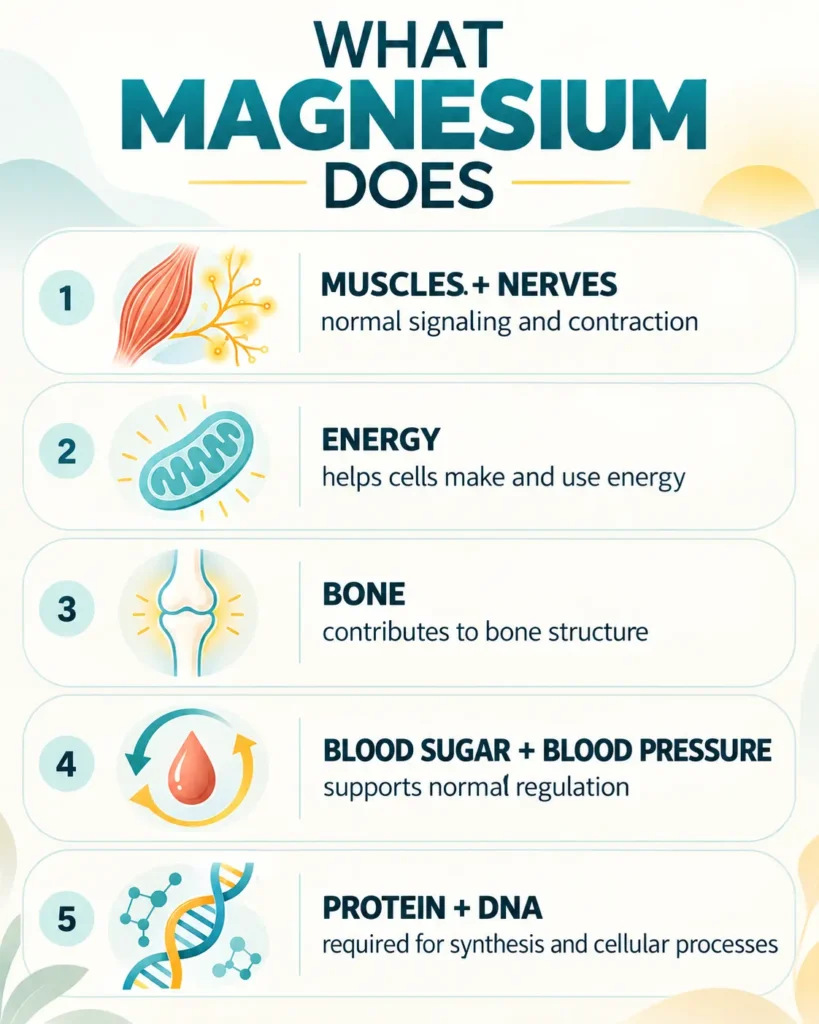
Magnesium is not a single-purpose “relaxation mineral.” It is a cofactor in more than 300 enzyme systems, so its everyday job is broad: it helps cells make and use energy, supports normal nerve signaling and muscle contraction, contributes to bone structure, and participates in protein, DNA, and RNA synthesis. It also helps regulate movement of calcium and potassium across cell membranes, which matters for normal nerve impulses and heart rhythm. [1]
Muscles and nerves: Magnesium helps normal nerve signaling and muscle contraction. Low magnesium can contribute to cramps or neuromuscular symptoms, but cramps alone do not prove a magnesium deficiency.
Energy metabolism: Magnesium participates in reactions that make and use ATP, the cell’s main energy currency. This does not mean extra magnesium works as a stimulant when intake is already adequate.
Bone: A large share of the body’s magnesium is stored in bone, where it contributes to structure and mineral metabolism.
Blood sugar and blood pressure regulation: Magnesium is part of normal glucose metabolism and vascular regulation. That normal role is different from claiming a supplement treats diabetes or hypertension.
Protein and genetic material: Magnesium supports protein synthesis and the production and stability of DNA and RNA.
Best Food Sources of Magnesium
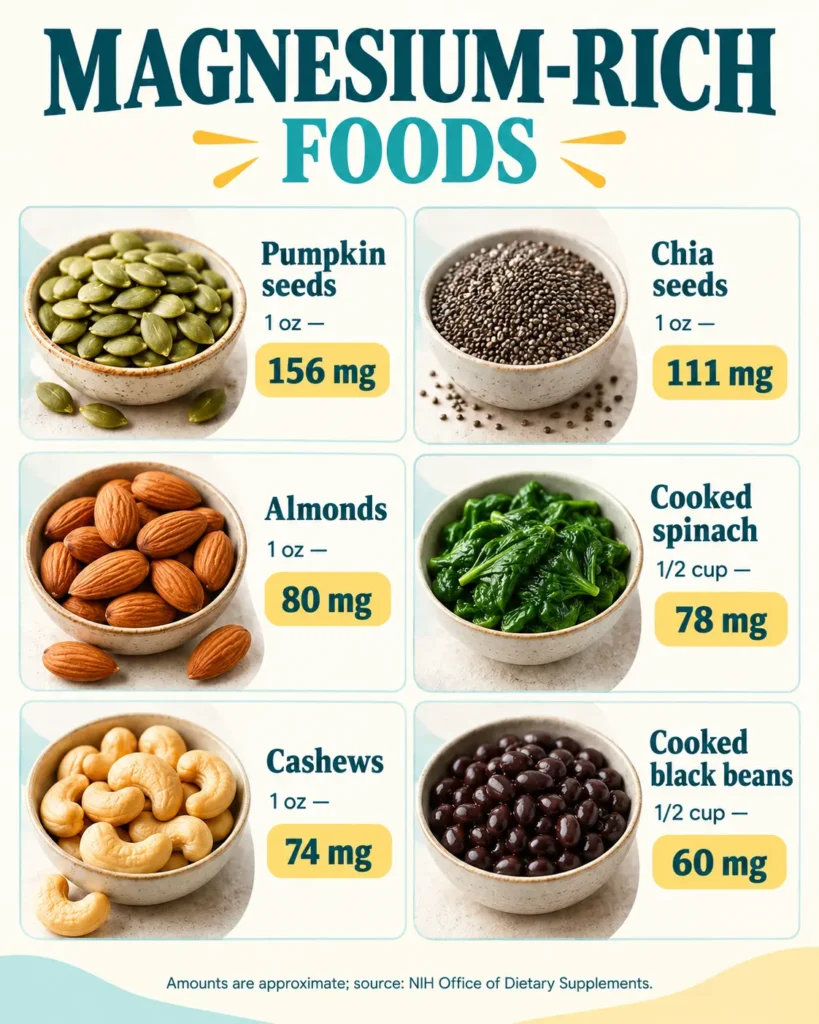
Food is the simplest place to start. Seeds, nuts, legumes, leafy greens, and whole grains can add meaningful amounts without needing a special “magnesium diet.” Processing can reduce magnesium in grains when the bran and germ are removed. [1]
| Food | Serving | Magnesium | % Daily Value |
|---|---|---|---|
| Pumpkin seeds, roasted | 1 oz. | 156 mg | 37% |
| Chia seeds | 1 oz. | 111 mg | 26% |
| Almonds, dry roasted | 1 oz. | 80 mg | 19% |
| Spinach, boiled | 1/2 cup | 78 mg | 19% |
These are examples, not a required menu. Beans, edamame, peanut butter, brown rice, oatmeal, yogurt, potatoes, whole-wheat bread, and many other foods also contribute. The FDA Daily Value (DV) for magnesium is 420 mg for adults and children age 4 and older; %DV is mainly a label-comparison tool, not an individualized prescription. [1][2]
How Much Magnesium Do You Need?
The Recommended Dietary Allowance (RDA) is meant to meet the needs of nearly all healthy people in a life-stage group. It is not the same as the FDA Daily Value on labels, and it is not a treatment dose. [1][2]
| Adult group | RDA |
|---|---|
| Men 19–30 | 400 mg/day |
| Women 19–30 | 310 mg/day |
| Men 31+ | 420 mg/day |
| Women 31+ | 320 mg/day |
| Pregnancy 19–30 | 350 mg/day |
| Pregnancy 31–50 | 360 mg/day |
If you are using a food label, the 420 mg Daily Value helps compare products. If you are planning your overall intake, the age- and sex-specific RDA is the more relevant reference. [1][2]
Low Intake and Magnesium Deficiency
Eating less than the RDA is not the same thing as having a clinical magnesium deficiency. The body can conserve magnesium, and overt deficiency from diet alone is uncommon in otherwise healthy people. Risk rises when low intake is combined with poor absorption, increased losses, certain medications, or health conditions. [1]
Groups more likely to have inadequate magnesium include some people with chronic gastrointestinal disease or malabsorption, type 2 diabetes, alcohol dependence, and older adults. Long-term use of certain medications—including some proton pump inhibitors and diuretics—can also affect magnesium status. [1]
Early deficiency symptoms can include loss of appetite, nausea, fatigue, and weakness; more severe deficiency can cause numbness, tingling, muscle contractions or cramps, seizures, and abnormal heart rhythms. These symptoms are nonspecific, so they are not a reliable self-diagnosis. Magnesium status can also be difficult to assess because serum magnesium does not perfectly reflect total body stores. [1]
Magnesium Supplements: Forms and How They Differ
The most useful number on a Supplement Facts panel is the amount of elemental magnesium per serving. A label may say “magnesium citrate” or “magnesium oxide,” but the listed magnesium amount is the elemental magnesium the serving provides—not the full weight of the compound. [1]
Citrate, chloride, lactate, and aspartate: NIH notes that these forms tend to be more bioavailable than magnesium oxide and magnesium sulfate because more soluble forms are generally absorbed more completely. [1]
Magnesium oxide: Common and inexpensive, but generally less bioavailable than several more soluble forms. Unabsorbed magnesium salts can also contribute to gastrointestinal effects. [1]
Other forms and chelates: Store shelves include many additional forms. Do not assume a form is superior because the label uses words such as “premium,” “calming,” or “high absorption.” Compare elemental amount, intended use, tolerance, and evidence rather than marketing language.
Antacids and laxatives: Some over-the-counter medicines contain substantial magnesium. Count those sources when considering supplemental exposure, especially if you use them regularly. [1]

When a Magnesium Supplement May Make Sense
A supplement can be reasonable when food intake is consistently low, a clinician identifies a deficiency or higher-risk situation, or a specific evidence-based use is being considered. It is not automatically useful simply because magnesium has many roles in the body.
Closing an intake gap: A modest supplement may help someone reach an appropriate intake when diet alone is not meeting needs. Food still contributes other nutrients and fiber that a magnesium pill does not.
Blood pressure: A 2025 meta-analysis of 38 randomized trials found small average blood-pressure reductions with magnesium supplementation, with larger effects in people with hypertension or low magnesium status; the studies were heterogeneous, and normotensive groups did not show a significant benefit. Magnesium should not replace prescribed blood-pressure treatment. [4]
Migraine prevention: Magnesium has been studied for migraine prevention, but evidence is not uniform. NIH notes that commonly studied amounts may exceed the supplemental upper limit, so this use is better handled with clinician guidance rather than self-escalating the dose. [1]
Other condition-specific uses: Stress, sleep, metabolic health, bone health, and other applications deserve their own evidence review because the answer depends on baseline status, population, dose, and outcome. A universal nutrient profile should not turn every possible association into a treatment claim.
SAFETY
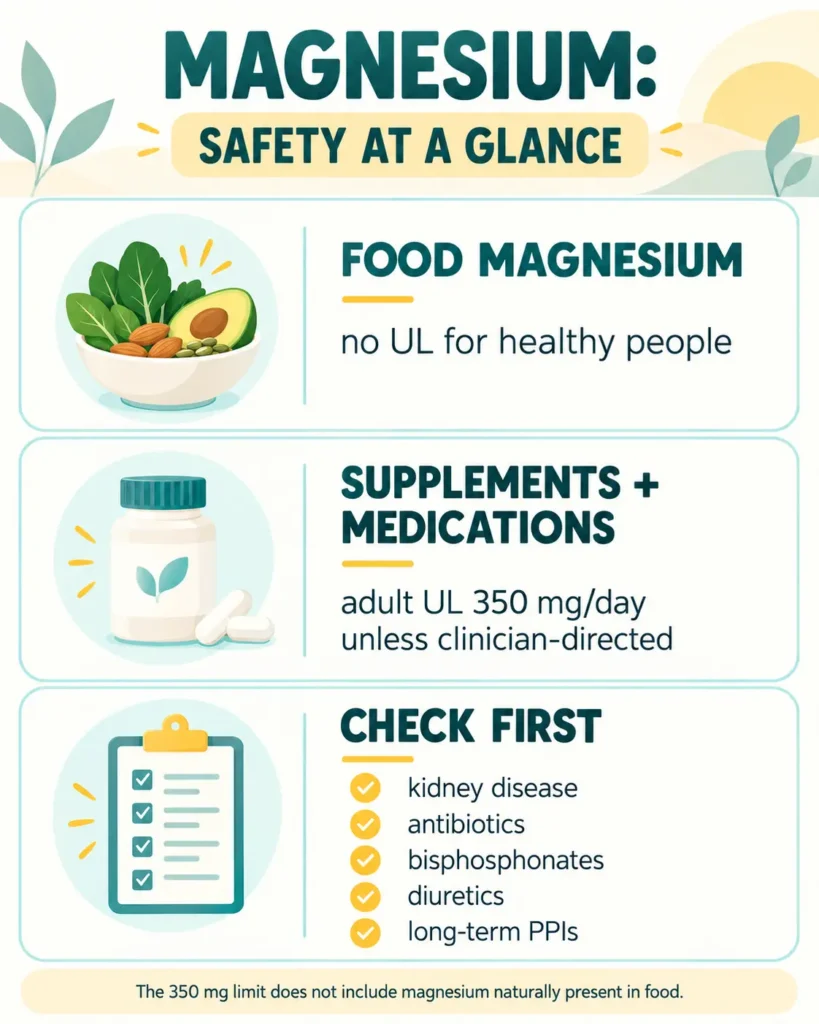
For adults, 350 mg/day is the Tolerable Upper Intake Level for magnesium from dietary supplements and medications. It does not include magnesium naturally present in food and beverages. Clinician-supervised treatment may use different amounts. [1]
Common excess-intake effects: High supplemental amounts can cause diarrhea, nausea, and abdominal cramping. [1]
Kidney function: Toxicity risk rises when kidney function is impaired because excess magnesium may not be cleared normally. People with kidney disease should not self-treat with high-dose magnesium. [1]
Antibiotics: Magnesium can reduce absorption of tetracycline and quinolone antibiotics when taken too close together. Timing depends on the medicine; follow the prescription instructions or ask a pharmacist. [1]
Bisphosphonates: Magnesium can reduce absorption of some oral osteoporosis medicines. Separation in timing may be required. [1]
Diuretics and proton pump inhibitors: Some diuretics change magnesium losses, and long-term proton pump inhibitor use can contribute to low magnesium in some people. [1]
Very high doses: Severe magnesium toxicity is uncommon but can cause dangerous low blood pressure, breathing problems, abnormal heart rhythms, and cardiac arrest. [1]
Quality and Buying Basics
A magnesium label should make it easy to answer four questions:
- How much elemental magnesium is in one serving?
- What form or forms provide that magnesium?
- How many capsules, tablets, scoops, or gummies make one serving?
- What else is in the product—especially other minerals, herbs, stimulants, or proprietary blends?
Dietary supplements are not FDA-approved for safety and effectiveness before they reach the market. FDA regulates them, but manufacturers are responsible for safety and truthful labeling before marketing. Independent quality-testing programs can add information about identity and manufacturing quality, although a verification seal does not prove that a supplement is effective or appropriate for you. [3][5]
What to Explore Next
Magnesium is only one piece of a broader wellness picture. For a practical look at nutrition, movement, mental strategies, lifestyle, and other options that can influence how people cope with ongoing demands, see Stress: A Whole-Picture Guide.
FAQ
Is magnesium from food subject to the 350 mg upper limit? No. The adult 350 mg UL applies to magnesium from supplements and medications, not magnesium naturally present in food and beverages. [1]
Is one magnesium form best for everyone? No. Absorption, gastrointestinal tolerance, intended use, elemental amount, and cost all matter. NIH notes that several more soluble forms—including citrate, chloride, lactate, and aspartate—tend to be better absorbed than oxide and sulfate, but that does not make one form universally best. [1]
Can symptoms tell me whether I am magnesium deficient? Not reliably. Fatigue, weakness, or muscle cramps have many possible causes, and serum magnesium has limitations as a measure of total body status. Persistent or concerning symptoms deserve appropriate evaluation rather than self-diagnosis. [1]
Do I need a magnesium supplement if my diet is low in magnesium? Not necessarily. A food-first approach may be enough, depending on your overall diet and health. A supplement can be useful when an intake gap persists or a clinician identifies a need, but more is not automatically better.
References
1. NIH Office of Dietary Supplements — Magnesium: Fact Sheet for Health Professionals
2. U.S. Food and Drug Administration — Daily Value on the Nutrition and Supplement Facts Labels
3. U.S. Food and Drug Administration — FDA 101: Dietary Supplements
5. NIH Office of Dietary Supplements — Frequently Asked Questions