
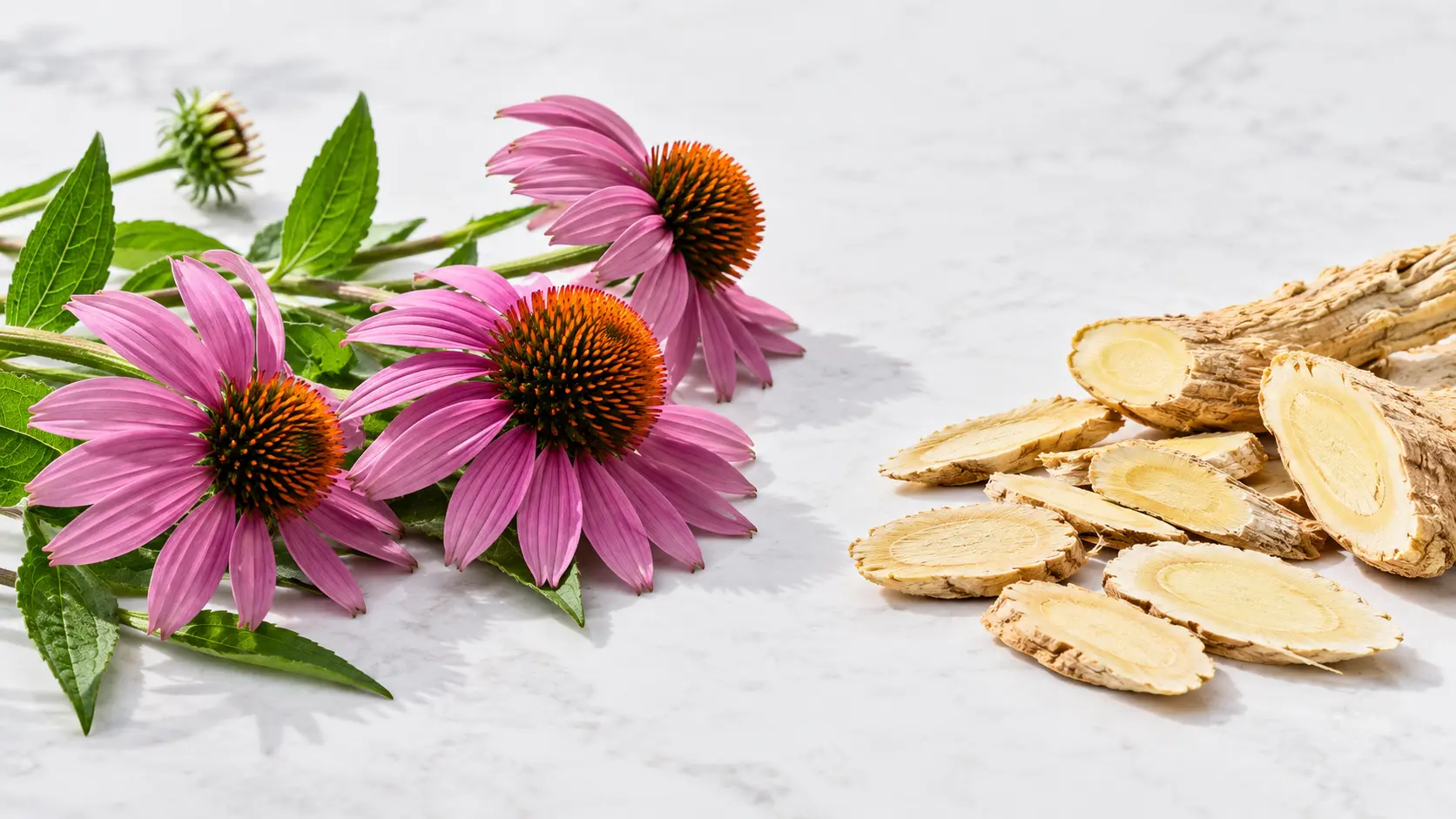
Echinacea and astragalus are two different botanicals that happen to be discussed in some of the same wellness conversations. A useful comparison starts with the basics: what part of the plant is used, how people typically use it, and what evidence and safety questions apply.
At a glance
| Feature | Echinacea | Astragalus |
|---|---|---|
| Commonly used part | Root and/or aerial parts, depending on species/product | Root |
| Typical format | Tea, tincture/extract, capsule, lozenge | Decoction, extract, capsule, powdered root |
| Common wellness context | Often used short-term around upper-respiratory symptoms | Often used as a longer-term tonic-style botanical in traditional practice |
| Plant family | Asteraceae | Fabaceae |
Why the distinction matters
A label that simply says “immune support” does not tell you which botanical is appropriate, how concentrated the product is, or whether the preparation resembles what has actually been studied. The plant species, plant part, extraction method, and dose all matter.
Echinacea
Commercial echinacea products vary widely. Products may use Echinacea purpurea, E. angustifolia, or other species, and may use root, aerial parts, or combinations. That variability is one reason results across products and studies are not always directly comparable.
Astragalus
Astragalus root has a long history of traditional use and is sold in teas, powders, capsules, and extracts. Human evidence for many modern “immune boosting” claims remains limited or product-specific, so broad claims should be treated cautiously.
Safety note
Botanicals can interact with medicines and may not be appropriate for everyone. People who are pregnant, breastfeeding, have autoimmune conditions, take immunosuppressive medicines, or have significant medical conditions should discuss use with a qualified healthcare professional.
References
National Center for Complementary and Integrative Health — Astragalus
National Center for Complementary and Integrative Health — Echinacea: Usefulness and Safety