
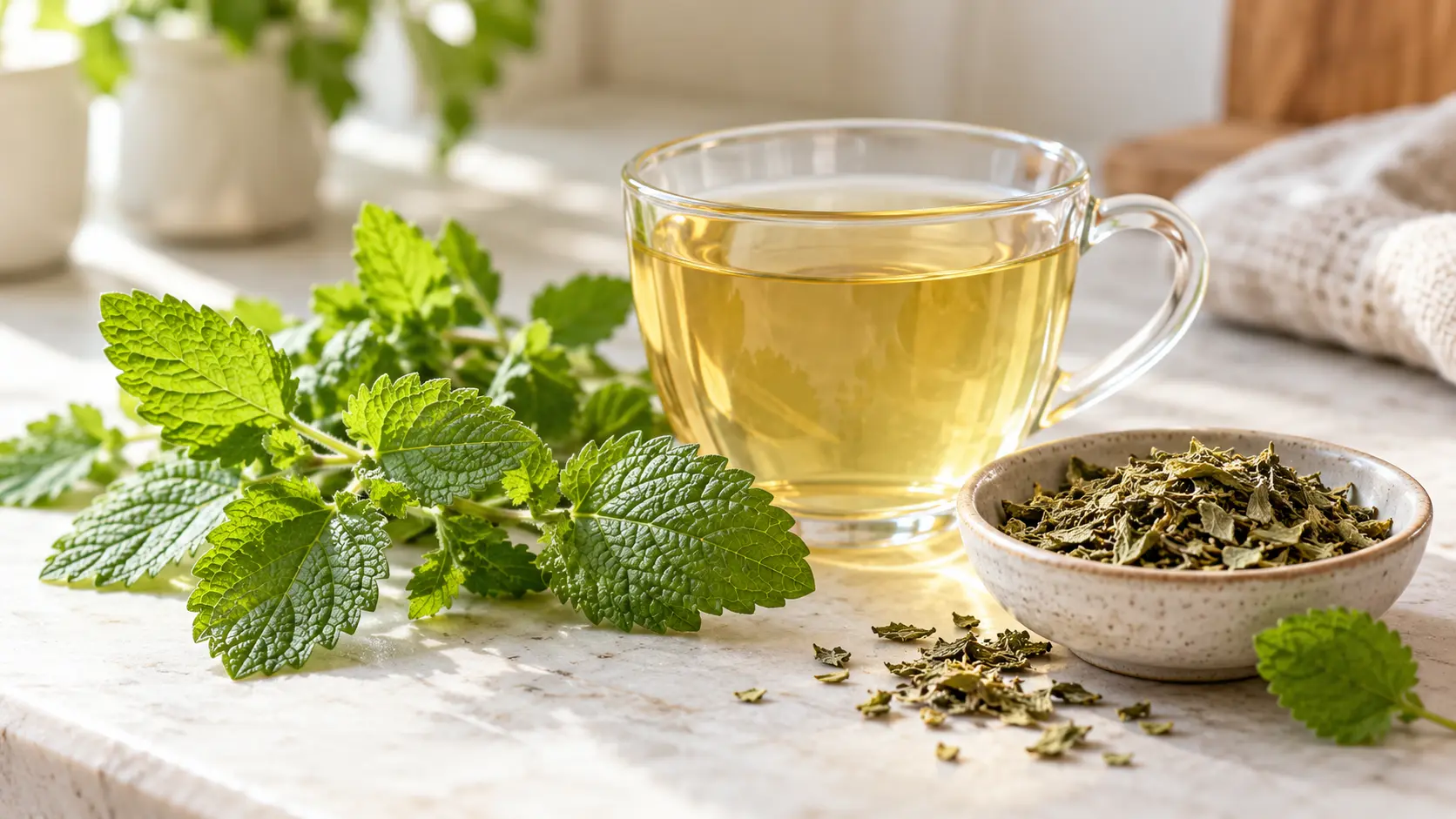
A simple cup of tea can be an inviting reason to stop for a few minutes. The trick is to keep the recipe simple, know what herb you are using, and avoid treating a cozy ritual like a proven stress treatment.
QUICK INSIGHT
Lemon Balm herbal tea
Start with one clearly identified tea herb, hot water, and a strainer. Lemon balm leaf is a reasonable beginner choice for its gently lemony taste and history of traditional use for mild stress. The tea is not the same as a concentrated extract, and the act of pausing may be as valuable as the drink itself.
A calming tea does not need a complicated herb collection
It is easy to imagine that six ingredients must work better than one. In practice, a single-herb tea is easier to prepare, easier to identify, and easier to stop using if something does not agree with you. We will use dried lemon balm leaf (Melissa officinalis), not essential oil, tincture, or unidentified garden leaves.
What you need
- Dried lemon balm leaf from a reputable tea supplier, labeled Melissa officinalis.
- Hot water, a mug or heat-safe pot, and a strainer or tea infuser.
- Optional: a lid or small plate to cover the mug while the leaves steep.
A practical one-cup starting method
The European Medicines Agency describes 1.5–4.5 g of cut dried lemon balm leaf in 150 mL of boiling water as a traditional herbal tea preparation for people over age 12. This is monograph context—not a personalized dose or proof that the tea treats stress. A kitchen scale is more dependable than teaspoons, because leaf size changes how much fits on a spoon.
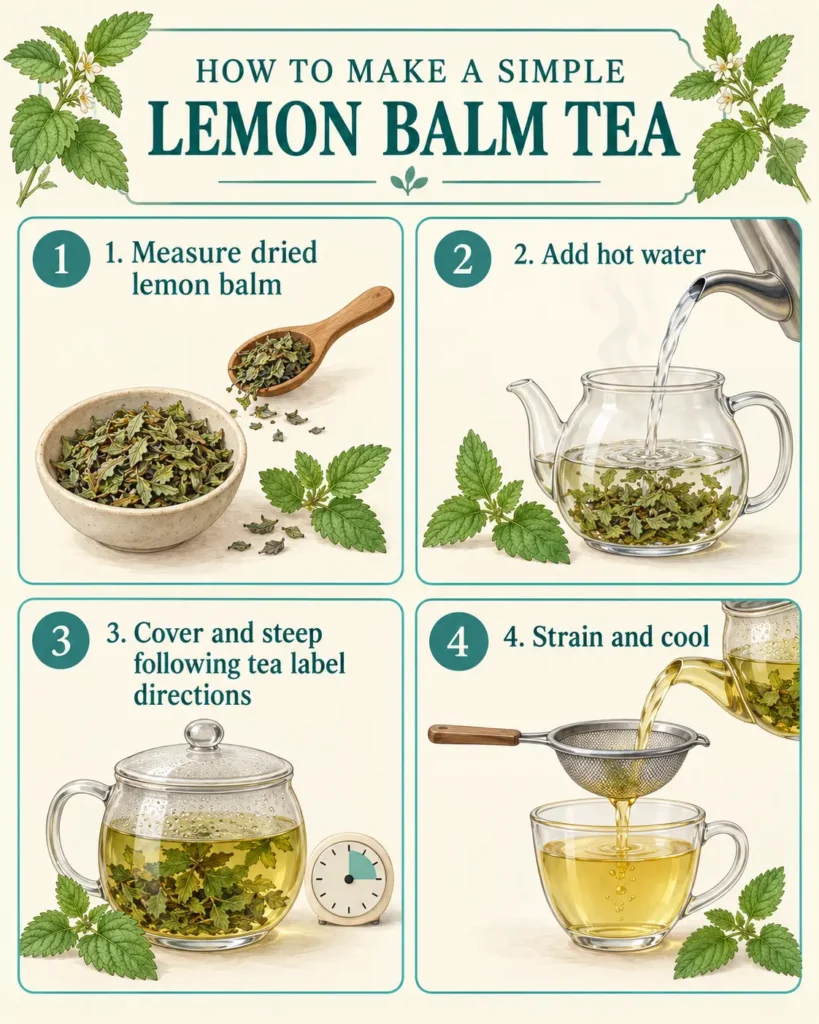
How to make a simple herbal tea
What you need:
- 1 teaspoon dried herb
- 1 cup hot water
- Mug or teapot
- Strainer
- Put the measured dried lemon balm leaf into your infuser or heat-safe mug.
- Pour approximately 150 mL freshly boiled water over the leaves. Take care with the hot water.
- Cover loosely while it infuses. Use the steeping directions on the tea product; if none are given, let it steep for about 5–10 minutes as a kitchen preparation preference, not a clinically established therapeutic interval.
- Strain, allow the tea to reach a comfortable drinking temperature, and enjoy it without rushing.
Helpful note: Some herbs need different preparation methods, so always follow the instructions for the specific herb.
What can you realistically expect?
Lemon balm tea offers a pleasant, mild herbal drink and an opportunity to pause. Its use for mild mental stress is recognized in a European traditional-use monograph, meaning long-standing use—not robust proof from large clinical trials. Studies of specialized lemon balm products do not necessarily tell us what an ordinary cup of tea will do.
Try pairing the tea ritual with one small non-herbal action: put your phone down, take a comfortable slow breath, or write down the next manageable task. This keeps expectations realistic and makes the pause useful even when the tea itself has no noticeable effect.
Three easy mistakes to avoid
- Do not substitute essential oil or concentrated liquid extracts for dried tea leaf. The preparations are not interchangeable.
- Do not assume that stronger, longer, or more herbs automatically means better.
- Do not use unlabeled plant material or a blend with ingredients whose safety you have not checked.
Can you add chamomile?
You can choose a commercially prepared chamomile tea as a separate option, but combining herbs complicates safety and makes effects harder to interpret. People allergic to ragweed, chrysanthemums, marigolds, or daisies may react to chamomile, and chamomile may interact with medicines including warfarin and sedatives. If you are new to herbal teas, starting with one identified herb is simpler.
Safety and when to get advice
Avoid lemon balm if you are allergic to it. The European monograph does not recommend medicinal use in children under 12 because evidence is insufficient. During pregnancy or breastfeeding, or when taking medicines—especially those affecting alertness—ask a qualified clinician or pharmacist before using herbal preparations regularly. Do not drive if you feel drowsy. If stress symptoms worsen, disrupt your daily life, or persist beyond two weeks, seek professional support rather than increasing the tea.
For urgent mental health concerns or immediate danger, seek prompt emergency support. A cup of tea is not a substitute for professional treatment.
Practical takeaway
One herb, a clearly labeled product, a measured cup, and a few unhurried minutes: that is enough to make the ritual approachable. What matters is choosing a preparation you understand and keeping your expectations grounded.
Related reading
Stress: A Whole-Picture Guide https://ugetwell.com/health/stress-whole-picture-guide
Lemon Balm: Uses, Evidence, Safety, and How It’s Used https://ugetwell.com/herbs/lemon-balm
Lemon Balm for Stress: Calming Herb or Mostly Tradition? https://ugetwell.com/herbal/lemon-balm-stress-calming-herb-mostly-tradition
References
European Medicines Agency — Melissa leaf overview https://www.ema.europa.eu/en/medicines/herbal/melissae-folium
European Medicines Agency — Lemon balm leaf traditional monograph (PDF) https://www.ema.europa.eu/en/documents/herbal-monograph/final-community-herbal-monograph-melissa-officinalis-l-folium_en.pdf
NIH NCCIH — Chamomile: Usefulness and Safety https://www.nccih.nih.gov/health/chamomile