

A morning coffee may help you feel alert. But on an already demanding day, the same cup—or the second or third one—might leave you jittery, tense, or wide awake long after you wanted to sleep. That does not mean coffee is “bad.” It means your timing, amount, and sensitivity deserve a closer look.
The useful question is not “Must I quit caffeine?” It is “Is caffeine helping my day, or adding another layer of strain?”
QUICK INSIGHT
What is Caffeine
Caffeine is a stimulant. For some people, it increases nervousness, a racing-heart sensation, or sleep disruption. Try noticing the amount, timing, and symptoms before changing anything. Adjust gradually if you decide to cut back; no single caffeine rule suits everybody.
Why caffeine can feel like stress
Caffeine promotes wakefulness by blocking adenosine signaling. That can be useful when you need to concentrate. It can also make physical sensations—restlessness, shakiness, or a faster heartbeat—more noticeable. Those sensations can resemble stress even when caffeine is the immediate trigger. Sensitivity varies, and not everyone experiences these effects.
Think of two ordinary afternoons. One person enjoys an espresso after lunch and sleeps well. Another feels unusually keyed up after a strong iced coffee and spends the evening checking the clock. The drink is similar; the response is not.
Three ways caffeine and stressful days can interact
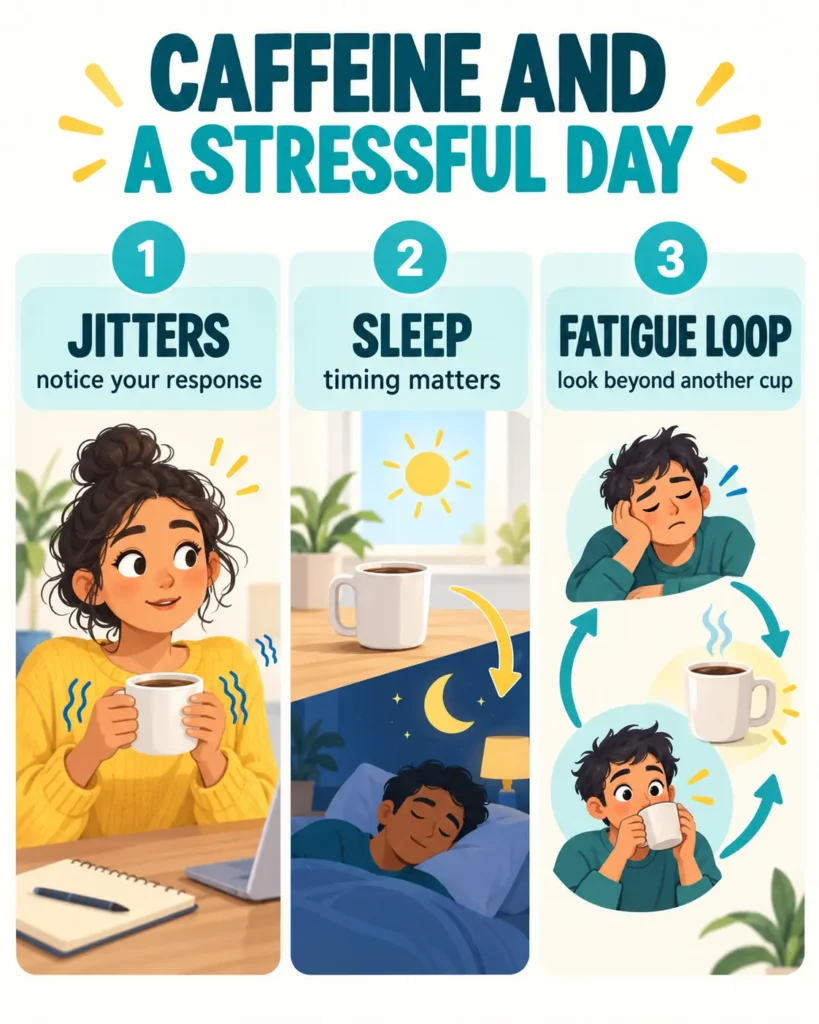
1. More alertness is not always more calm
Caffeine may support alertness, but a bigger boost can feel uncomfortable when you are already on edge. Palpitations, shakiness, irritability, or an upset stomach are reasons to reassess your intake—not proof that caffeine caused an anxiety disorder.
2. Sleep can become the hidden link
A late cup may delay sleep or reduce sleep quality, which can make tomorrow feel harder. In one small experimental study, 400 mg of caffeine taken even six hours before bedtime disrupted sleep. That was a substantial study dose, not a prediction about every cup or every person. The CDC advises avoiding caffeine in the afternoon or evening as a general sleep habit.
3. The tired-and-caffeinated loop
When sleep is short, another coffee can seem like the only way through the workday. But if caffeine interferes with the following night’s sleep, the cycle may repeat. Addressing workload, sleep opportunity, meals, and recovery still matters; cutting caffeine alone cannot solve every source of stress.
What does the evidence actually show?
Controlled studies and a 2026 systematic review report that caffeine can increase anxiety-like symptoms, particularly at higher doses, although study settings and participants vary. Those results are not the same as proving that everyday coffee causes chronic stress, or that avoiding it treats an anxiety disorder. Observations about stress are also affected by sleep, baseline anxiety, and the reasons people reach for caffeine.
For most healthy adults, the FDA cites 400 mg of caffeine per day as an amount not generally associated with negative effects. This is a broad safety reference—not a personal goal, not a guarantee of comfort, and not a special threshold for stress. Some people notice unpleasant effects at much lower amounts.
A simple check-in before changing your routine
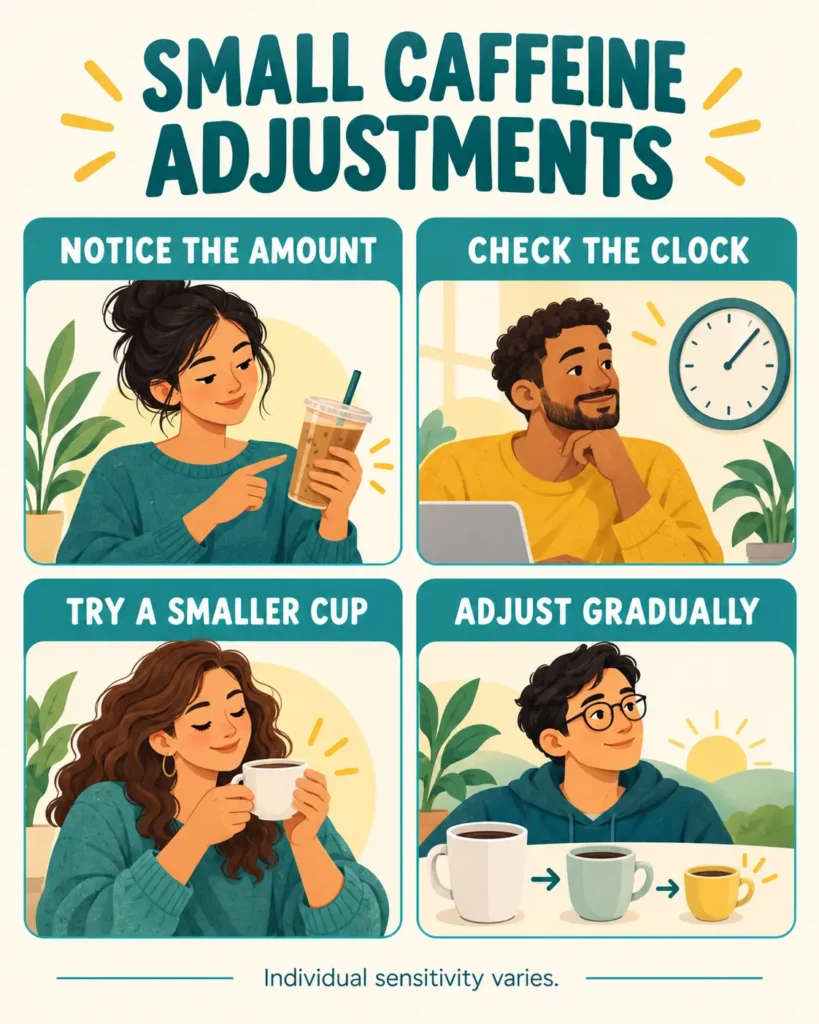
- Notice your drinks. For two or three days, record coffee, tea, energy drinks, pre-workouts, and other caffeine sources; check labels where available.
- Write down timing. Was the last caffeine before lunch, midafternoon, or close to bedtime?
- Watch your pattern. Note nervousness, racing heart, stomach discomfort, difficulty falling asleep, and next-day tiredness without assuming caffeine explains everything.
- Try one modest adjustment. Consider a smaller serving, a half-caf option, or moving caffeine earlier—then see whether the change matters.
- Keep other supports in view. Food, hydration, adequate sleep opportunity, movement, manageable demands, and professional support are relevant when stress persists.
Practical options: choose the smallest helpful change
| If you notice… | A reasonable experiment | Remember |
|---|---|---|
| Jitters after strong coffee | Try a smaller or weaker serving | Check total caffeine, including other drinks |
| Trouble sleeping | Move the last caffeinated drink earlier | Individual sensitivity and sleep schedule vary |
| Several cups to compensate for fatigue | Reduce gradually and protect sleep opportunities | Withdrawal headache or fatigue can occur |
| Coffee on a hectic, meal-skipping day | Try regular meals and monitor caffeine response | Neither food nor caffeine fixes chronic overload |
When to be more careful
Consult a qualified clinician about caffeine use if you are pregnant or breastfeeding, have a heart rhythm concern, uncontrolled blood pressure, significant anxiety or sleep problems, or take medicines or supplements that could interact with stimulants. Children and adolescents need different guidance; adult limits do not apply to them.
Avoid pure or highly concentrated caffeine powders and liquids: dosing mistakes can be dangerous. Seek urgent medical attention for chest pain, fainting, or severe or persistent palpitations rather than assuming they are “just caffeine.” If you consume caffeine daily, abrupt stopping may cause headache, fatigue, or irritability; gradual reductions are generally easier.
A better question than “Is coffee healthy?”
Ask whether your current caffeine habit fits the life you want: steady energy, a manageable evening, and sleep that leaves you better prepared for tomorrow. If it does, there may be no reason to overhaul it. If it does not, one small change can provide useful information—not a diagnosis, and not a promise of stress relief.
Common questions
Does caffeine cause stress?
It can make some people feel more anxious or physically activated, especially at higher amounts. Stress has many causes; caffeine is one possible contributor, not a universal explanation.
Is decaf completely caffeine-free?
Usually not. Decaffeinated beverages generally contain less caffeine, but the amount is not always zero.
How quickly should I cut back?
People who use caffeine regularly often tolerate smaller, gradual changes better than stopping suddenly. A clinician can help when withdrawal, medication interactions, or health concerns complicate the decision.
Related reading
The following UGetWell pages are marked Published in the Registry:
Stress: A Whole-Picture Guide https://ugetwell.com/health/stress-whole-picture-guide
Anxiety: A Whole-Picture Guide https://ugetwell.com/health/anxiety
References
U.S. Food and Drug Administration — Spilling the Beans: How Much Caffeine Is Too Much? https://www.fda.gov/consumers/consumer-updates/spilling-beans-how-much-caffeine-too-much
Nascimento and colleagues (2026) — Systematic review of caffeine and anxiety behavior https://pubmed.ncbi.nlm.nih.gov/41549915/
Drake and colleagues (2013) — Caffeine 0, 3, or 6 hours before bedtime https://pmc.ncbi.nlm.nih.gov/articles/PMC3805807/
CDC — About Sleep https://www.cdc.gov/sleep/about/index.html
NCCIH — Stress https://www.nccih.nih.gov/health/stress