

A few disrupted nights are common. But when sleep difficulties persist, affect your daytime life, or suggest another health problem, professional advice can help you find a sensible next step. You do not need to wait until poor sleep becomes unbearable to ask for help.
QUICK INSIGHT
About Sleep Problems
Talk with a healthcare professional when problems falling asleep, staying asleep, or excessive daytime sleepiness are recurring or interfering with daily life. Loud snoring with breathing pauses or gasping deserves assessment for possible sleep apnea. Dangerous sleepiness—especially while driving—requires immediate action to protect yourself and others. The right next step depends on your symptoms, not simply the number of bad nights.
When is it time to make an appointment?
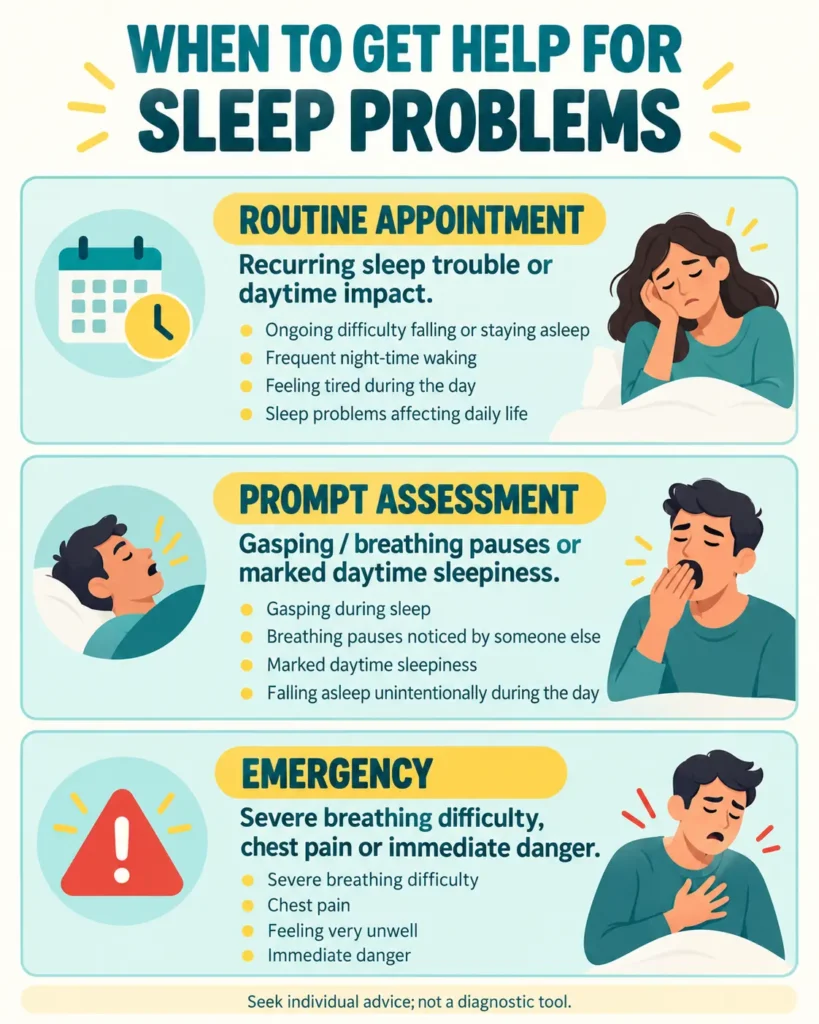
A primary care clinician is a reasonable starting point if sleep problems are frequent, continue despite manageable sleep-habit changes, or affect concentration, mood, relationships, work, or safety. Insomnia can involve trouble falling asleep, waking during the night, waking earlier than intended, or feeling unrefreshed despite an opportunity to sleep. These patterns are symptoms, not a self-diagnosis.
Clinical definitions sometimes describe chronic insomnia as difficulties on at least three nights per week for three months or longer. That definition is not a rule for how long you should wait to seek care: earlier assessment is reasonable when symptoms are distressing or impairing.
Also mention persistent daytime sleepiness, unrefreshing sleep, restless or uncomfortable legs at night, unusual sleep-related behaviors, or sleep trouble that began after a medication change. Conditions such as breathing-related sleep disorders, pain, mood symptoms, shift schedules, and medication effects may need different approaches.
How urgent is the situation?
| Situation | Reasonable next step |
|---|---|
| Recurring sleep trouble, daytime fatigue, difficulty functioning | Schedule a routine medical appointment; seek earlier advice if symptoms worsen or risks increase. |
| Loud snoring with witnessed breathing pauses or waking gasping; marked daytime sleepiness | Arrange a prompt clinical assessment rather than relying on self-treatment. A clinician can evaluate whether sleep-apnea testing is warranted. |
| Sleepiness while driving or operating equipment | Stop driving or operating equipment and get to a safe place. Do not try to push through drowsiness; arrange safe transportation and discuss recurring sleepiness with a clinician. |
| Severe breathing difficulty, chest pain, loss of consciousness, or immediate risk of self-harm | Seek emergency assistance now, according to local emergency services. These are general emergency signs, not a diagnosis of a sleep disorder. |
Urgency can change with other illnesses, medications, pregnancy, age, and the severity of symptoms. When unsure, contact an appropriate healthcare service for individual guidance.
Who can help?
Primary care can review the sleep concern alongside your general health, medications, and daily routines. Depending on the findings, your clinician may recommend evaluation by a sleep-medicine specialist or another qualified professional. For chronic insomnia, cognitive behavioral therapy for insomnia (CBT-I) is an evidence-based first-line treatment for many adults; it is different from generic sleep-hygiene tips and is best discussed with a qualified provider.
A sleep study is not necessary for every person with insomnia. A clinician may consider testing when symptoms suggest sleep apnea, another sleep disorder, or a different medical explanation.
What happens at a sleep appointment?
Expect questions about the timing and pattern of your sleep, how rested or sleepy you feel, your work and caregiving schedule, snoring or gasping, caffeine and alcohol, other symptoms, and prescription or over-the-counter medicines. Your clinician may examine you, review possible contributors, or decide whether testing or referral is appropriate. None of these steps is automatic for everyone.
A one- to two-week sleep diary can make the conversation more useful. Record approximate bedtimes, awakenings, final wake times, naps, and daytime alertness. Avoid treating tracking devices as definitive diagnostic tests.

How to prepare: a practical checklist
- Bring a short timeline: when the issue began, how often it happens, and what changed around that time.
- Describe the main problem in ordinary words: falling asleep, staying asleep, early awakening, unrefreshing sleep, or unplanned dozing.
- Note daytime effects—including difficulty concentrating, mood changes, missed obligations, or driving concerns.
- List medications, supplements, caffeine, alcohol, and any recent dose changes; do not stop a prescribed treatment without advice.
- If relevant, ask a sleep partner whether they have noticed loud snoring, breathing pauses, or unusual movements.
- Ask: What might explain these symptoms? Do I need a sleep study? Is CBT-I appropriate? What should prompt earlier follow-up?
What can you do while waiting?
Try a realistic, consistent sleep and wake schedule, make your sleeping space reasonably dark and quiet, and note whether caffeine, alcohol, light, or late naps seem to affect sleep. Treat these as supportive practices, not a substitute for assessment when symptoms persist or warning signs appear. Avoid experimenting with sedating supplements or combining sleep aids without checking for interactions and risks.
If you become dangerously sleepy, avoid driving or high-risk tasks. If symptoms become severe or change suddenly, seek appropriate medical advice rather than waiting for a routine appointment.
The next useful step
You do not have to work out the cause of a sleep problem before seeking help. Bring a clear description of what is happening and how it affects you. A qualified professional can help decide whether reassurance, structured insomnia treatment, evaluation for another sleep disorder, or additional care is appropriate.
For background on common sleep concerns and available approaches, see our Sleep & Rest guide.
References
NHLBI — Insomnia diagnosis — https://www.nhlbi.nih.gov/health/insomnia/diagnosis
NHLBI — Insomnia symptoms — https://www.nhlbi.nih.gov/health/insomnia/symptoms
NHLBI — Sleep apnea symptoms — https://www.nhlbi.nih.gov/health/sleep-apnea/symptoms
NHLBI — Sleep apnea diagnosis — https://www.nhlbi.nih.gov/health/sleep-apnea/diagnosis
NHLBI — Sleep deprivation assessment — https://www.nhlbi.nih.gov/health/sleep-deprivation/diagnosis-treatment
AASM — Behavioral treatment guideline for chronic insomnia — https://pmc.ncbi.nlm.nih.gov/articles/PMC7853203/
CDC/NIOSH — Driver fatigue — https://www.cdc.gov/niosh/motor-vehicle/driver-fatigue/index.html