
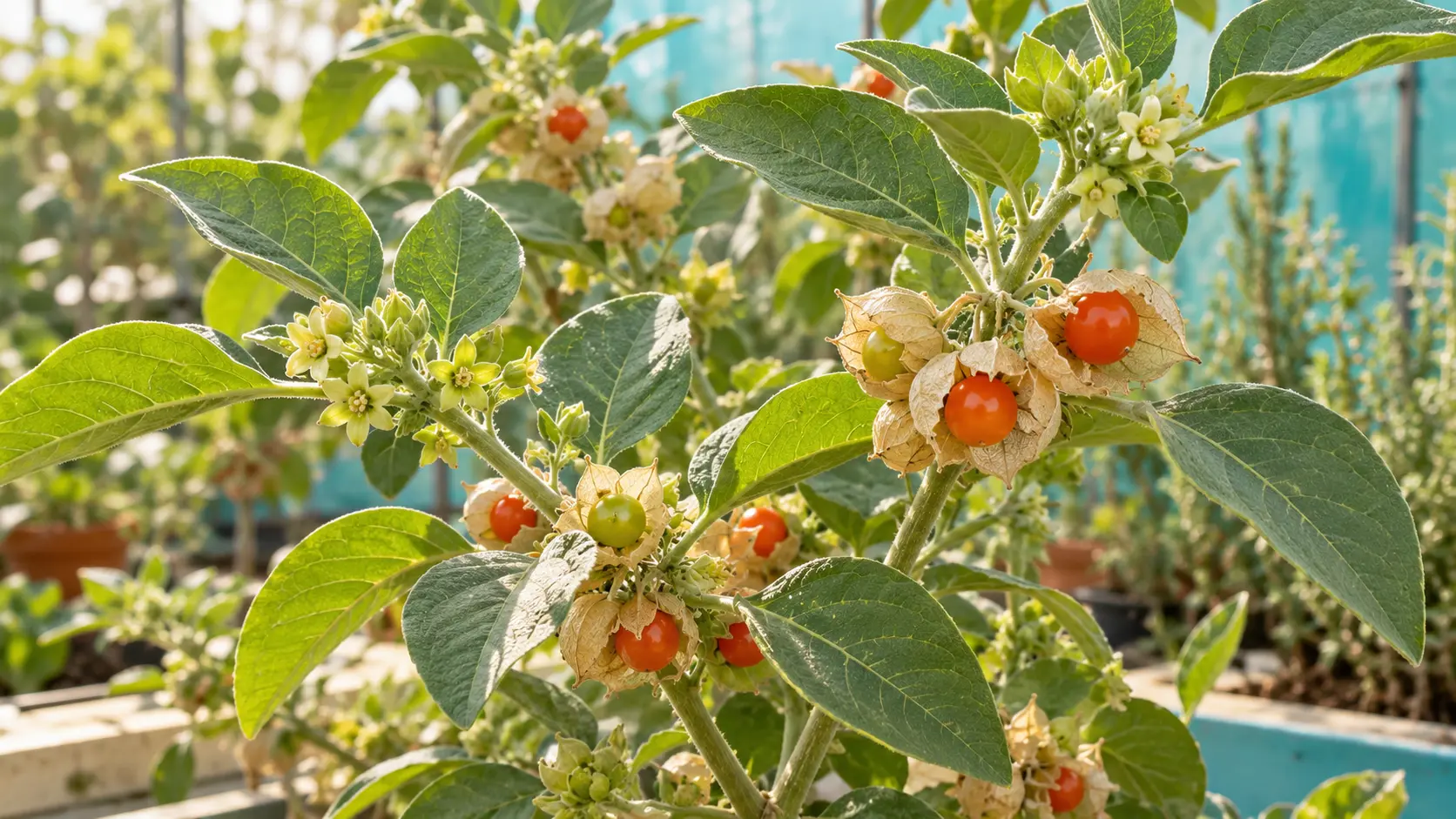
Ashwagandha is an herb commonly used in supplements marketed for coping with stress and supporting sleep. Herbalists often describe it as an adaptogen, a traditional term for an herb used to support the body’s response to demands. Unlike a familiar cup of chamomile tea, ashwagandha is often sold as concentrated capsules or extracts, and safety deserves attention before trying it.
Some specific extracts have shown modest benefits for perceived stress or sleep in small, short studies. That does not mean every ashwagandha product has the same effects—or that it is safe for everyone. [1,2]
Quick Herb Profile
| Field | At a glance |
|---|---|
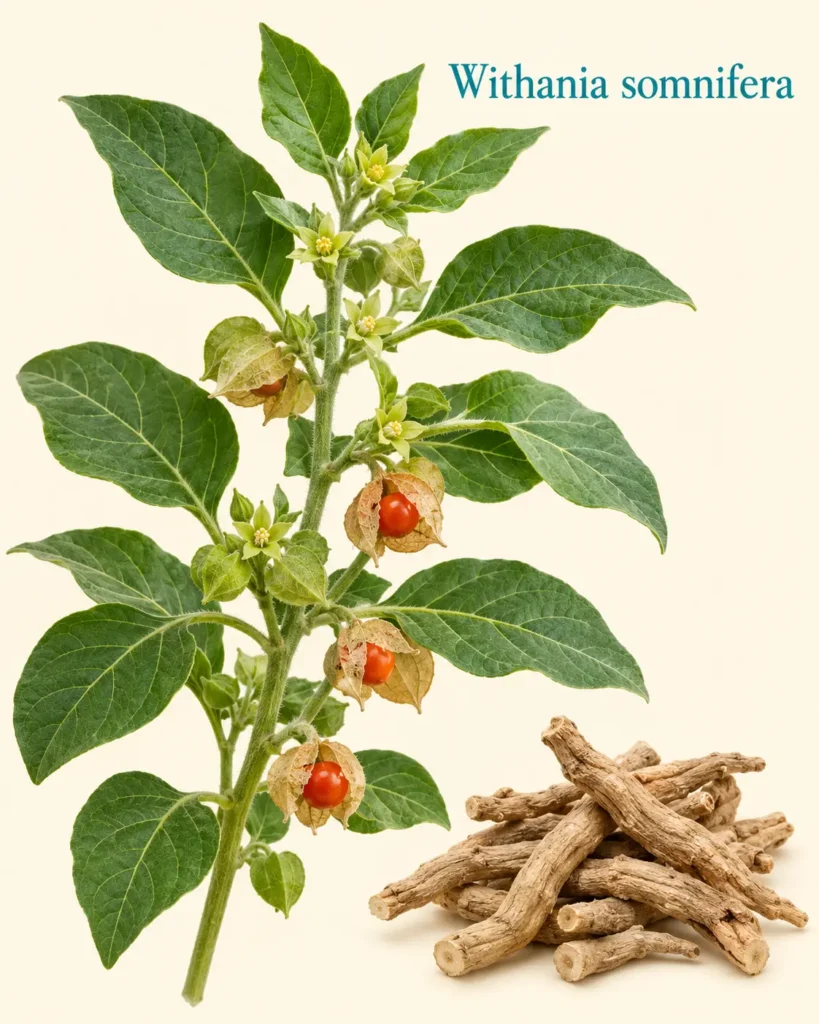
| Common name | Ashwagandha; sometimes called Indian ginseng or winter cherry (not a true ginseng). |
| Botanical name | Withania somnifera (L.) Dunal |
| Part used | Most commonly the root; some commercial extracts combine root and leaf. |
| Herbal role | Adaptogen: traditionally used to support the response to stress; commonly marketed for rest and sleep. |
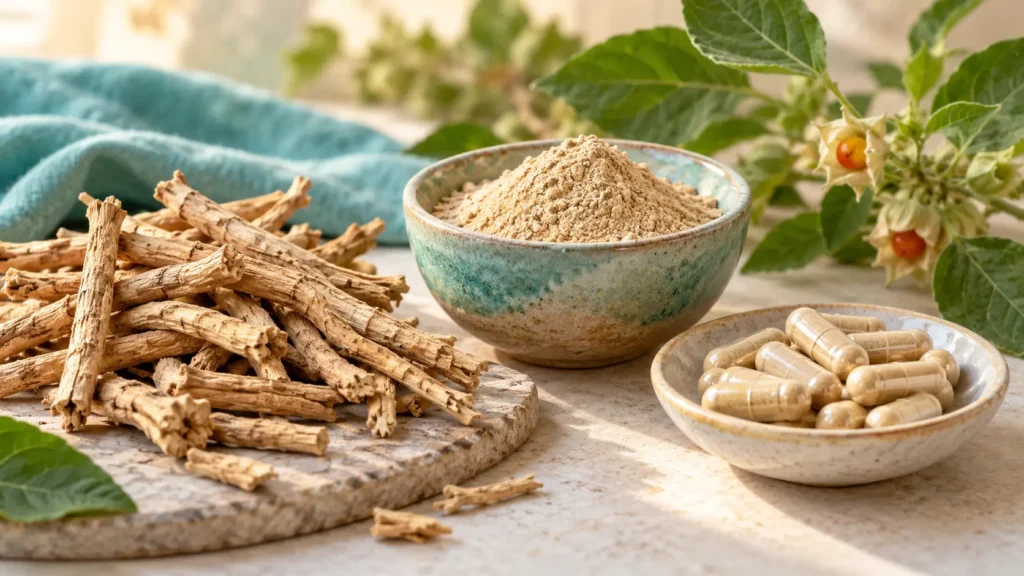
| Common forms | Dried root powder, capsules, tablets, and standardized root or root-and-leaf extracts. |
Herbal Role and Functions
Ashwagandha is most often discussed for stress-related wellbeing and rest. Its functional descriptions are useful ways to understand how people use it—not proof of a treatment effect.
Adaptogen: A traditional category for herbs used during periods of physical or emotional strain. The term is broad, and the biological response is more complicated than “lowering cortisol.”
Rest and sleep support: Some concentrated oral extracts have been studied for sleep quality and the time it takes to fall asleep. Findings have been modest and do not establish ashwagandha as a substitute for recommended insomnia care. [1,2]
General tonic: A traditional description of use to support resilience or vitality. Claims about athletic performance, memory, immune protection, and hormonal “balancing” are not established across products. [1]
Common Forms and How They’re Used
Root powder: Ground dried root found in capsules or loose powders. Its composition and amount are not equivalent to standardized extracts.
Root extract capsules: Concentrated products vary in extraction methods and withanolide content. Evidence for one extract cannot be transferred to another simply because both list “ashwagandha.” [2]
Root-and-leaf extracts: Some trials use combined plant parts. Root and leaf chemistry differ, so check the botanical part on the label. [2]
Tea or beverage blends: Sometimes sold as powders or mixed drinks, but results from concentrated extract trials do not establish the same effects for an ordinary beverage. Added herbs and caffeine can also change the product’s profile.
Where Ashwagandha May Help
Perceived stress: Small clinical trials suggest certain extracts may reduce self-reported stress over several weeks. Most studies were relatively short and used different preparations; results are not a guarantee for an individual product. [1,2]
Sleep: A few small studies report improvements in sleep quality or duration, generally modest. People with persistent insomnia should not rely on a supplement instead of medical evaluation and evidence-based care. [1,2]
Anxiety: Studies report some promising changes in anxiety ratings, but NCCIH describes the evidence specifically for anxiety as unclear. Do not present ashwagandha as a proven anxiety-disorder treatment. [1]
Other marketed uses: Evidence remains insufficient for broad claims about athletic performance, cognition, immunity, menopause, or most other conditions. [1]
Safety First
Ashwagandha is not automatically safe because it is a plant. Much of the human research covers short-term use only; long-term safety is not established. [1,2]
Common adverse effects: Drowsiness, nausea, diarrhea, or stomach upset can occur. Do not drive or perform hazardous work if a product makes you sleepy. [1]
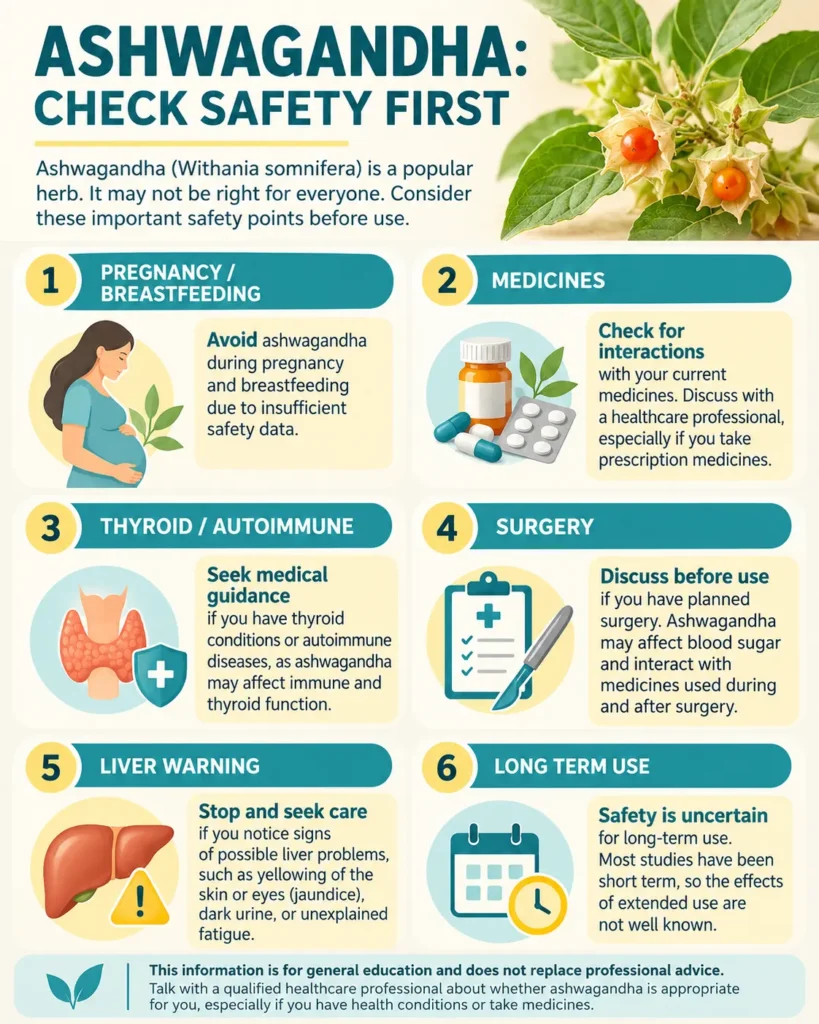
Pregnancy and breastfeeding: Avoid ashwagandha during pregnancy; it is not recommended while breastfeeding. [1]
Thyroid, autoimmune conditions, and surgery: NCCIH advises against use in people with thyroid or autoimmune disorders and in those approaching surgery. Speak with a clinician rather than self-starting. [1]
Medication interactions: Potential interactions include thyroid hormone, immunosuppressants, sedatives, antiseizure drugs, and medicines for diabetes or high blood pressure. Have a clinician or pharmacist review the full label. [1]
Liver injury: Rare cases of clinically important liver injury have been linked to ashwagandha supplements. Stop the product and seek prompt medical evaluation for yellow skin or eyes, dark urine, unusually pale stools, persistent vomiting, or severe unexplained itching. Avoid self-experimentation if you have liver disease. [1,3]
Prostate cancer: People with hormone-sensitive prostate cancer should avoid ashwagandha because of potential hormonal effects. [1]
For children, there is insufficient reliable safety information to recommend routine use without specialist guidance. Do not combine concentrated supplements casually, especially when medications are involved.
Quality and Buying Basics
If a healthcare professional considers a supplement appropriate, read the label rather than choosing by advertising. Confirm the full botanical name, plant part, extract type, serving amount, other ingredients, and manufacturer contact information. Independent quality testing can help assess identity and contamination, but it cannot prove an herb works or is safe for every person.
Avoid products promising to cure anxiety, fix hormone levels, or detoxify the body. We are not recommending a product or a personal dose here: studied extracts and doses vary too widely to justify a universal recommendation. [2]
How It Fits With Other Herbs
Lemon balm: A different herb, commonly used in calming teas. It should not be assumed to have the same activity or interaction profile as ashwagandha.
Chamomile: Often chosen as a beverage ritual; a tea ritual is not a substitute for assessment of persistent insomnia, and combinations do not have proven added benefit.
Lavender: Aromatic preparations differ fundamentally from oral ashwagandha extracts. Effects and risks cannot be generalized across forms.
More herbs do not necessarily mean better results. Combining sedating ingredients or herbs with medicines increases uncertainty; check for interactions before mixing products.
References
1. National Center for Complementary and Integrative Health (NCCIH). Ashwagandha: Usefulness and Safety.
https://www.nccih.nih.gov/health/ashwagandha
2. NIH Office of Dietary Supplements. Ashwagandha: Is It Helpful for Stress, Anxiety, or Sleep? Health Professional Fact Sheet.
https://ods.od.nih.gov/factsheets/Ashwagandha-HealthProfessional
3. National Library of Medicine, LiverTox. Ashwagandha.