
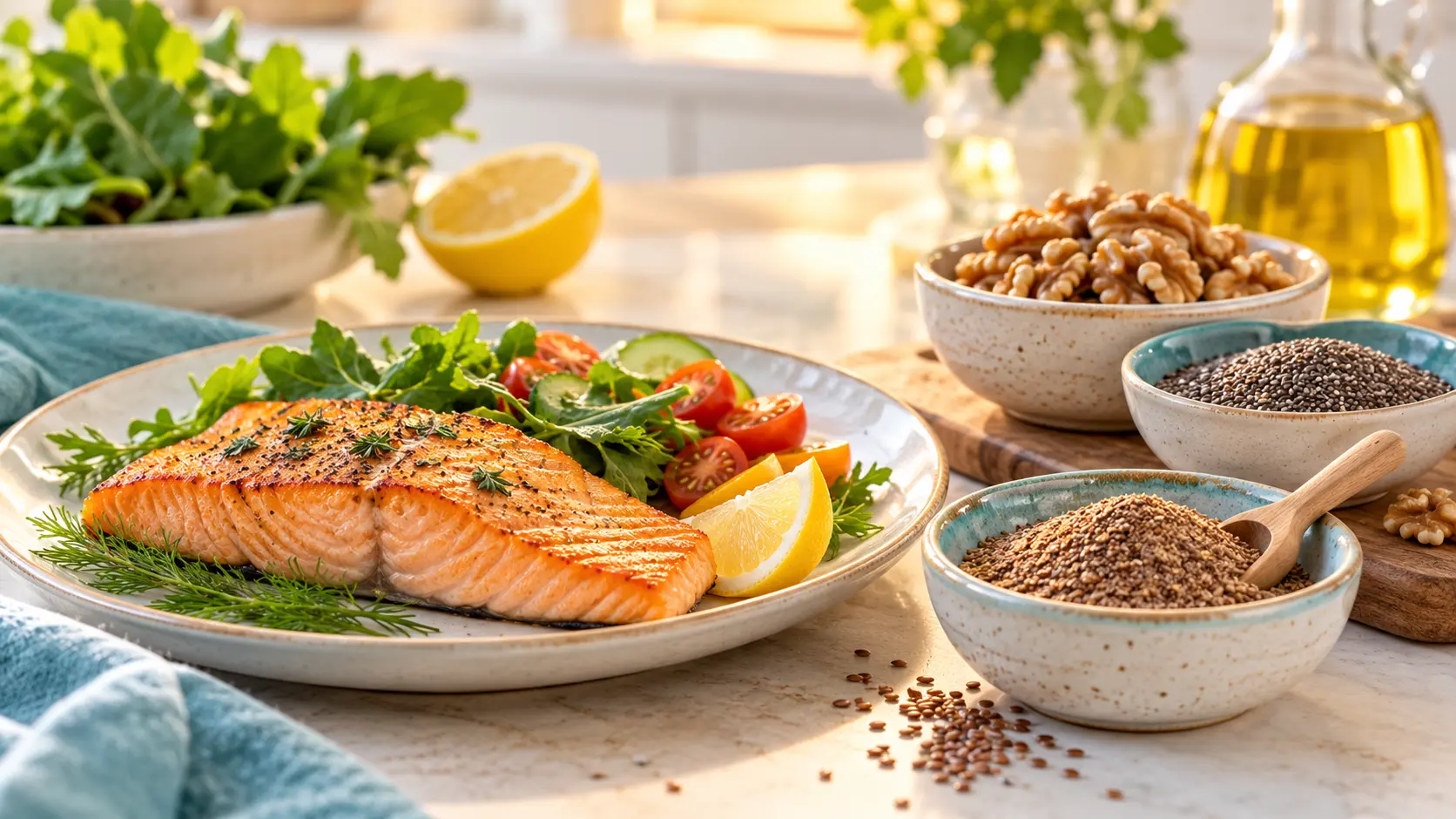
Omega-3 fatty acids are essential parts of a balanced eating pattern. They help form cell membranes and support normal functions in the brain, eyes, and other tissues. You can get omega-3s from foods such as salmon, sardines, flaxseed, chia seeds, and walnuts; supplements have a more specific, situation-dependent role. [1,2]
The useful starting point is to know which omega-3 you are looking at. Plant-based ALA and the marine omega-3s EPA and DHA are related, but they are not interchangeable. [1]
Quick Nutrient Profile
| Field | Quick answer |
|---|---|
| Nutrient | Omega-3 fatty acids: ALA (alpha-linolenic acid), EPA (eicosapentaenoic acid), DHA (docosahexaenoic acid). |
| Main roles | Cell membranes; DHA is especially prominent in the brain and retina; omega-3s participate in normal signaling processes. |
| Best food sources | Fatty fish (EPA/DHA); flaxseed, chia, walnuts, and certain plant oils (ALA); algae-derived DHA/EPA in some foods and supplements. |
| Adult daily target | Established U.S. Adequate Intake (AI) applies to ALA: 1.6 g/day for adult men; 1.1 g/day for adult women; 1.4 g/day in pregnancy; 1.3 g/day in lactation. No U.S. RDA or AI is established for EPA or DHA. [1] |
| Common supplement forms | Fish oil, algal oil, krill oil, and plant ALA oils; actual EPA and DHA amounts differ by product. |
| Key safety point | There is no established U.S. Tolerable Upper Intake Level (UL) for omega-3s. High-dose EPA/DHA warrants medical supervision, especially with medicines affecting clotting or atrial-fibrillation risk. [1,3] |
What omega-3 fatty acids do in the body
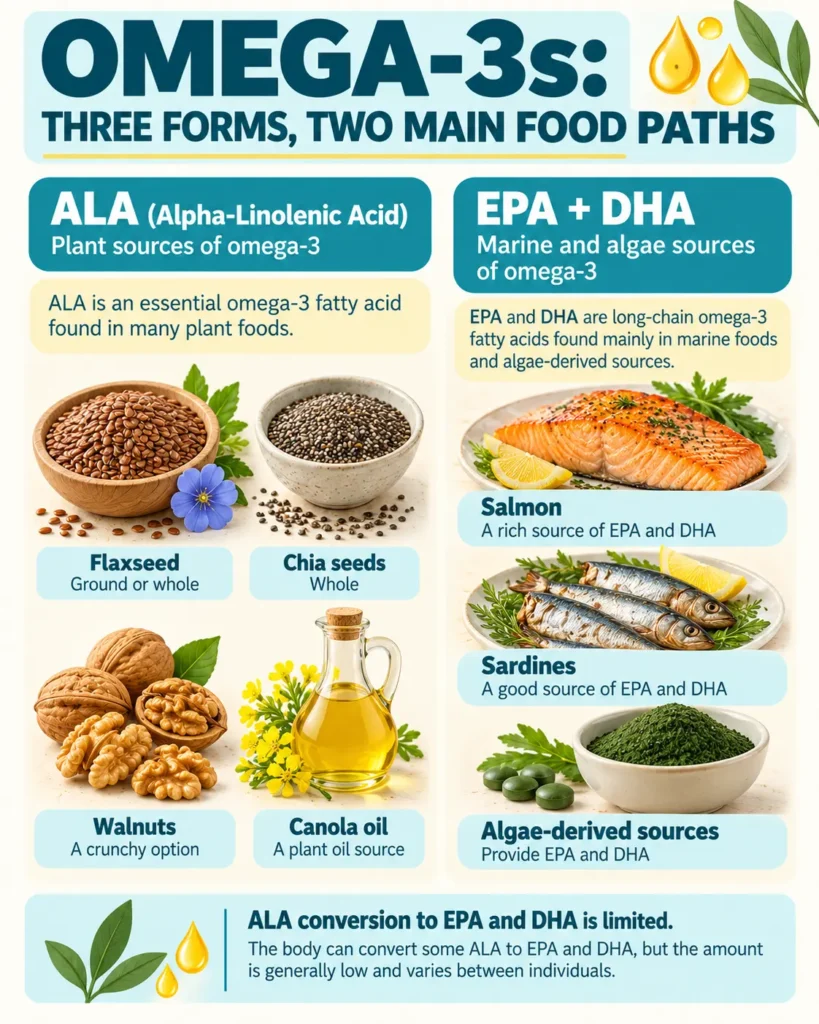
ALA is an essential fatty acid: your body cannot make enough of it, so it must come from food. Your body can convert some ALA to EPA and DHA, but that conversion is limited. EPA and DHA are long-chain omega-3s present in seafood and some algae-derived products. DHA is an important structural component of cell membranes, including in the brain and retina. [1]
These are normal biological roles. They do not mean that taking extra omega-3 supplements will automatically sharpen memory, relieve anxiety, or prevent disease.
Food sources: start with what you eat
Fatty fish such as salmon, sardines, herring, and trout supply EPA and DHA. Plant foods such as ground flaxseed, chia seeds, walnuts, and canola or flaxseed oil supply ALA. Fortified foods may supply additional omega-3s; the particular type and amount vary. [1,2]
| Source | Main omega-3 type | Simple way to use it |
|---|---|---|
| Salmon, sardines, herring | EPA and DHA | Choose a seafood meal you enjoy and can access. |
| Ground flaxseed or chia seeds | ALA | Add to oats, yogurt, or another familiar meal. |
| Walnuts | ALA | Use as a snack or topping if safe for you. |
| Algae-derived food or supplement | Usually DHA; sometimes EPA | Check the specific label for type and amount. |
How much omega-3 do adults need?
U.S. Dietary Reference Intakes specify Adequate Intakes (AIs) for ALA—not separate RDAs for EPA or DHA. AI means an intake level estimated to support nutritional adequacy where evidence is insufficient to establish an RDA. [1]
| Adult life stage | ALA Adequate Intake (AI) |
|---|---|
| Men, 19 years and older | 1.6 g/day |
| Women, 19 years and older | 1.1 g/day |
| Pregnancy | 1.4 g/day |
| Lactation | 1.3 g/day |
These values are for ALA alone, not a combined EPA+DHA supplement target. Some expert organizations advise fish or seafood intake and offer EPA/DHA guidance for specific contexts, but those recommendations should not be relabeled as a U.S. EPA/DHA RDA. [1,3]
Low intake and deficiency
Very low essential-fatty-acid intake can cause problems, but overt essential-fatty-acid deficiency is uncommon in people eating varied diets. A person who seldom eats fish may have low EPA/DHA intake without necessarily having a diagnosed deficiency. Nonspecific fatigue, mood changes, or dry skin cannot identify an omega-3 deficiency. A dietitian or clinician can help interpret a restricted diet, malabsorption concerns, or a specific medical need. [1]
Supplement forms and how they differ
- Fish oil: often contains EPA and DHA; the bottle may state total fish oil separately from its EPA and DHA content.
- Algal oil: a vegetarian source of DHA and, in some products, EPA. Read the actual amount per serving.
- Krill oil: another marine source; amounts of EPA and DHA vary by formulation.
- Flaxseed oil: provides ALA rather than the same EPA/DHA amounts found in fish or algal oils.
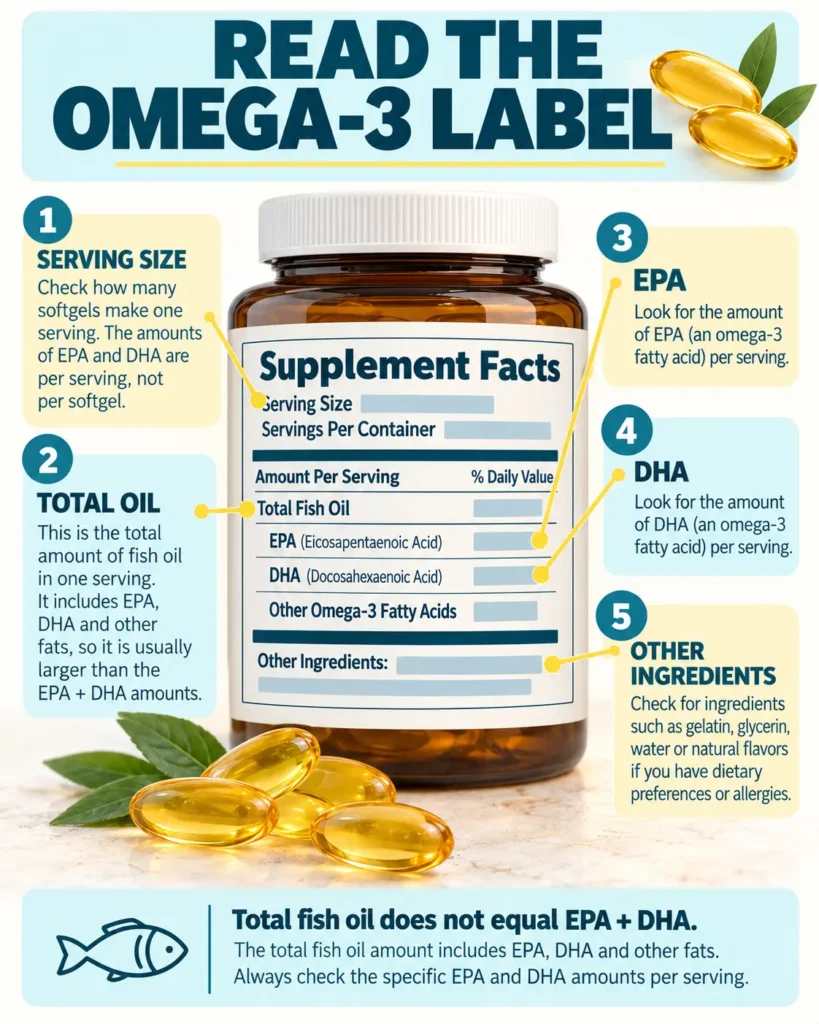
Do not assume that a capsule labeled “1,000 mg fish oil” contains 1,000 mg EPA+DHA. Check the Supplement Facts panel for each fatty acid and the serving size. Different chemical forms and brands also differ, so no single supplement form is universally best. [1]
When might a supplement make sense?
Food is a sensible foundation for most readers. An omega-3 supplement may be relevant when seafood intake is low, during particular life stages, or when a clinician recommends a specific preparation. For example, prescription-strength omega-3 products are sometimes used to treat high triglycerides, but prescription therapy is not equivalent to an ordinary over-the-counter fish-oil capsule. [1,3]
Evidence for broad prevention of heart disease with supplements is mixed and depends on the population and product studied. Evidence for mood, cognition, or inflammatory conditions is also outcome-specific; a biological mechanism or a favorable trial in one group does not prove a general benefit. [1,3]
SAFETY FIRST
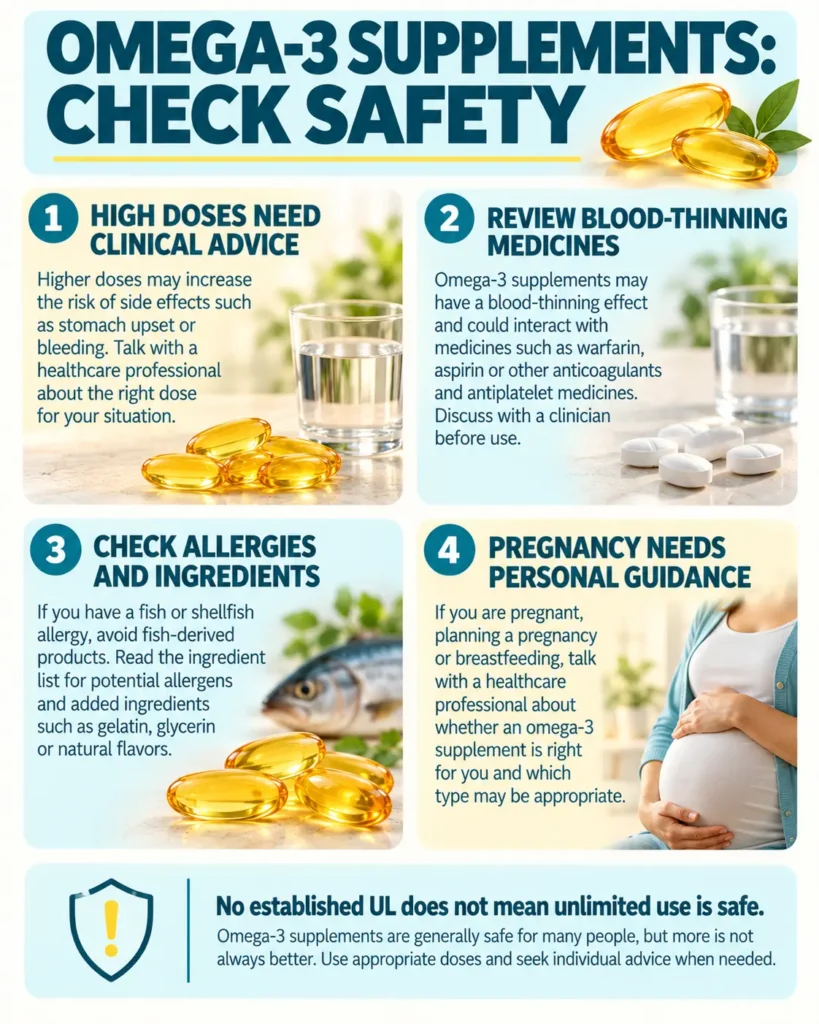
- High doses: clinical trials of approximately 4 g/day EPA/DHA products found a modest increase in atrial fibrillation risk in some people with cardiovascular disease or elevated risk. Do not treat this as an everyday self-supplementation target. [1]
- Medication interactions: discuss supplements with a clinician or pharmacist if you take anticoagulants or medicines affecting clotting, have a bleeding disorder, or are preparing for surgery. [1,3]
- Common adverse effects: unpleasant taste, reflux, nausea, and loose stools can occur. [1]
- Fish or shellfish allergy: check sources and seek personal guidance rather than assuming an oil preparation is safe. [3]
- Pregnancy and breastfeeding: DHA needs and seafood-selection concerns differ by life stage. Choose lower-mercury seafood when appropriate, and discuss supplements with prenatal care professionals. [1,4]
- Children: needs and suitable products differ from adult guidance. Do not apply adult supplement doses to children.
A “no established UL” finding is not a statement that any dose is safe. High-dose products require context, and a clinician may use prescription preparations for specific indications. [1]
Quality and buying basics
- Identify which fatty acid you want: ALA, EPA, DHA, or a combination.
- Compare the stated EPA and DHA per serving—not just the amount of “fish oil.”
- Check serving size, additional vitamins (especially in cod liver oil), allergens, and expiration information.
- Consider credible third-party quality testing where available; avoid products claiming to cure or prevent medical conditions without strong evidence.
References
1. NIH Office of Dietary Supplements — Omega-3 Fatty Acids: Fact Sheet for Health Professionals
https://ods.od.nih.gov/factsheets/Omega3FattyAcids-HealthProfessional
2. NIH Office of Dietary Supplements — Omega-3 Fatty Acids: Fact Sheet for Consumers
https://ods.od.nih.gov/factsheets/Omega3FattyAcids-Consumer
3. National Center for Complementary and Integrative Health — Omega-3 Supplements: What You Need To Know
https://www.nccih.nih.gov/health/omega3-supplements-what-you-need-to-know
4. NIH Office of Dietary Supplements — Dietary Supplements and Life Stages: Pregnancy
https://ods.od.nih.gov/factsheets/Pregnancy-HealthProfessional