
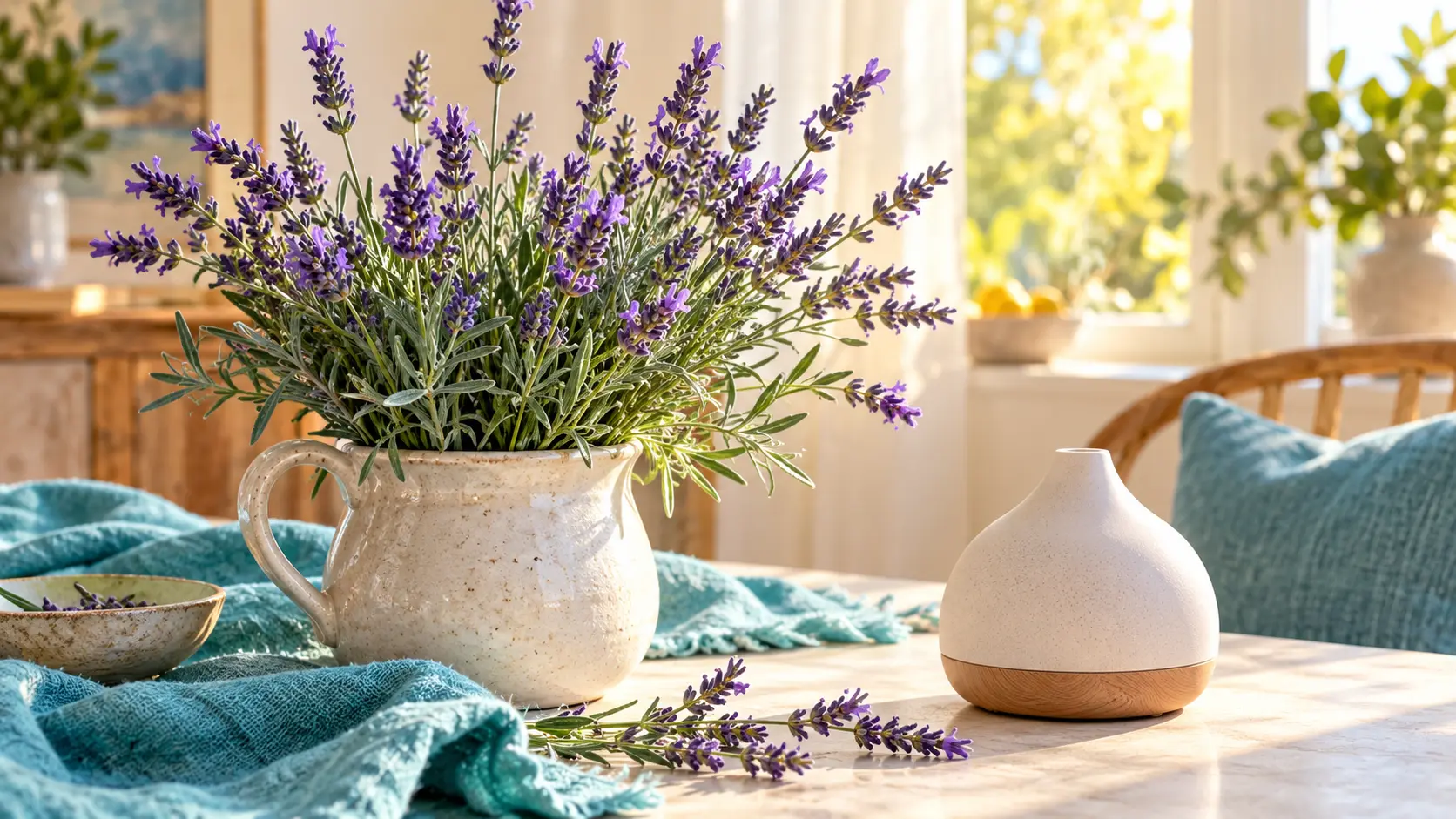
Lavender may seem like one simple calming herb, but inhaling its fragrance and swallowing a specially prepared lavender-oil capsule are very different interventions. When we look at research on stress, those distinctions matter more than a product’s relaxing scent or marketing language.
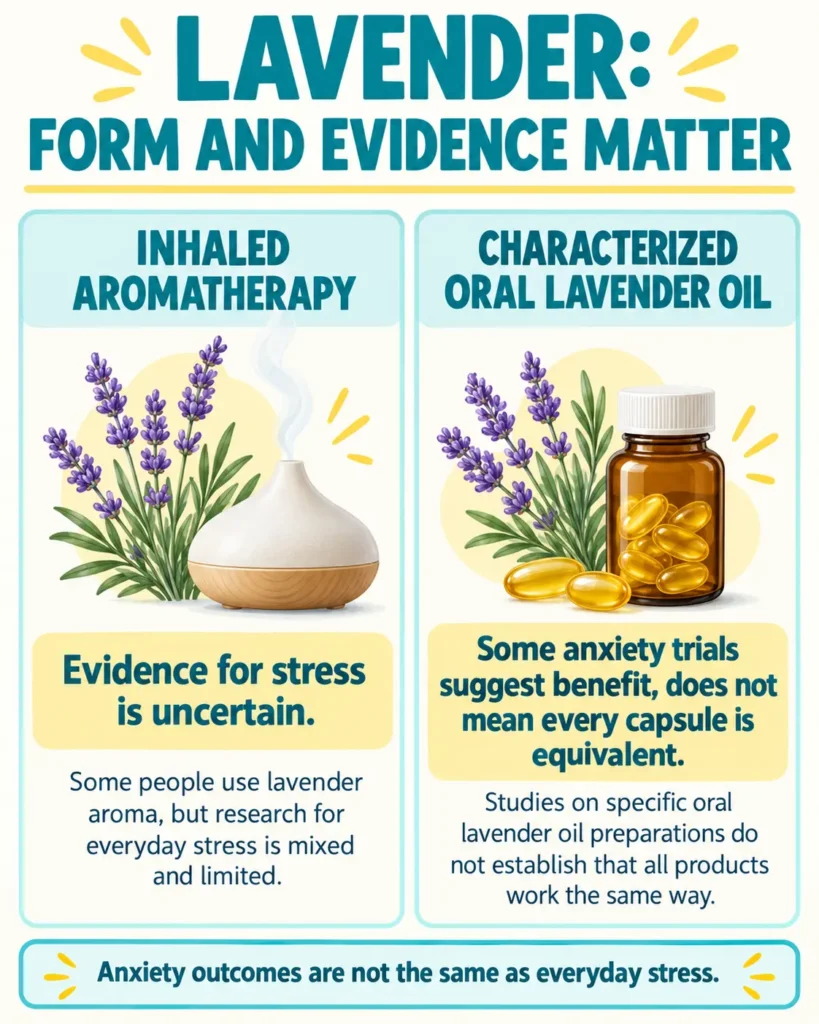
Some trials of a specific oral lavender-oil preparation suggest benefits for anxiety symptoms, while evidence that lavender aromatherapy meaningfully reduces everyday stress remains uncertain. Neither approach replaces addressing the causes of ongoing stress or seeking professional care when needed. [1–4]
QUICK INSIGHT
About Lavender for Stress
Bottom line: Lavender may be a pleasant sensory ritual, but reliable benefits for stress itself are not established. Specific oral oil products have a more encouraging—though still limited—evidence base for anxiety symptoms.
Evidence snapshot: Limited and preparation-specific; many aromatherapy studies are heterogeneous or methodologically weak.
Preparation / form that matters: Inhaled Lavandula angustifolia fragrance is not equivalent to a manufactured, characterized oral lavender-oil capsule used in trials.
Practical route: For a pleasant fragrance, use aroma products according to directions if tolerated; discuss any oral lavender supplement with a clinician or pharmacist before use.
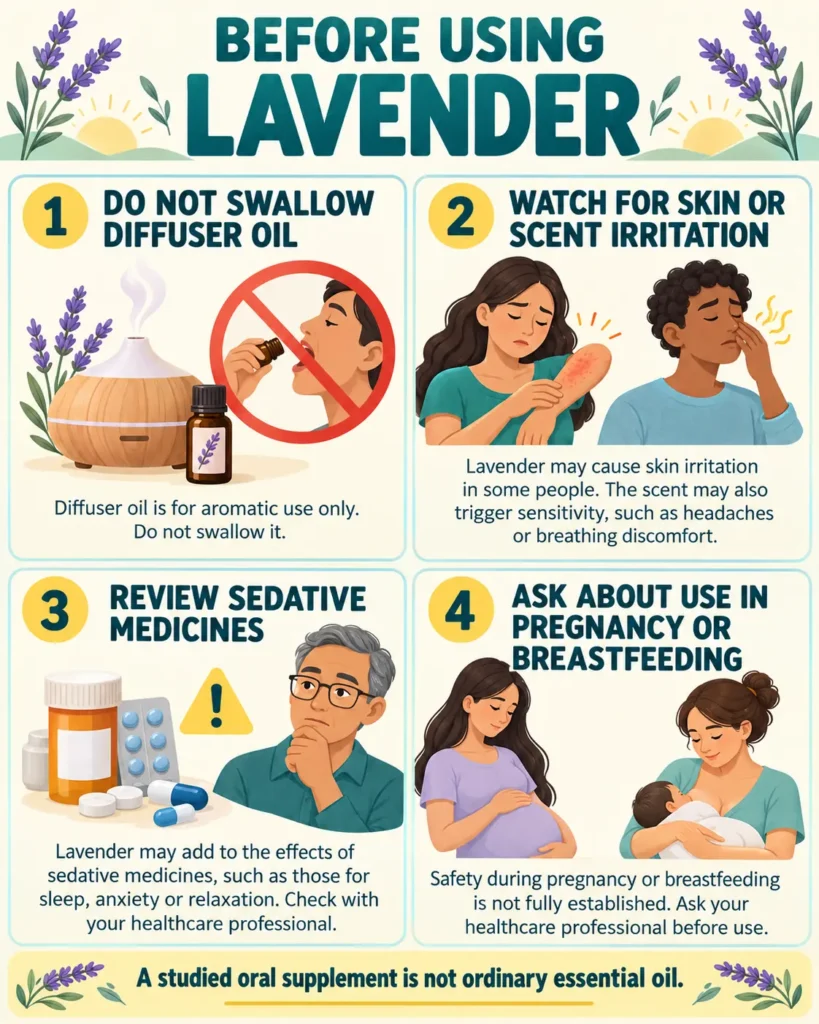
Key safety point: Do not ingest ordinary diffuser or cosmetic essential oil. Lavender products may cause irritation or side effects, and sedative-drug interactions are possible.
How Lavender Connects to Stress
English lavender (Lavandula angustifolia) is used as an aromatic herb and is also the source of preparations studied in some clinical trials. Stress is a normal response to demands; the trials most often cited for oral lavender measured anxiety symptoms or clinically defined anxiety, which is related but not identical to everyday stress. [1,2]
The aroma may be associated with comfort or a familiar winding-down routine. That experience can matter personally, but enjoyment of a scent should not be confused with proof that it changes cortisol, treats chronic stress, or prevents illness.
What the Evidence Shows
Oral lavender oil: a signal mainly from anxiety studies
Several randomized, placebo-controlled studies have evaluated a proprietary oral lavender-oil preparation commonly known as Silexan, usually in adults with anxiety symptoms or anxiety disorders. Analyses suggest that this specific intervention may improve measured anxiety symptoms over weeks, but study size, funding and independent replication, participant diversity, and generalizability limit certainty. These are not definitive trials of generic lavender capsules for ordinary life stress. [1–3]
Study material details—including its formulation and route—are central to interpreting those results. Naming a studied preparation is not a recommendation to buy it or an assurance that another capsule is equivalent.
Lavender aromatherapy: stress outcomes remain uncertain
Aromatherapy research uses widely varying methods: inhalation in hospital settings, use before procedures, massage with lavender oil, and ordinary fragrance exposure. Some trials report short-term reductions in anxiety ratings; others do not establish a lavender-specific advantage. Results differ in comparison groups, blinding, context, and outcome measures. Reviews describe low average study quality and substantial heterogeneity. [1,2,4]
For example, an NCCIH overview describes a study of people under stress in which lavender fragrance did not improve measured stress indicators. This does not mean nobody can enjoy the scent; it means we should not promise a physiological stress treatment from it. [4]
Why Preparation, Route, and Species Matter
| Form / route | What can reasonably be inferred | What cannot be inferred |
|---|---|---|
| Aromatherapy, inhaled lavender scent | May be a pleasant, low-effort routine; studies of anxiety and stress are mixed. | Results from oral capsule trials apply to inhalation. |
| Characterized oral lavender-oil capsules | Specific tested products have been studied for anxiety symptoms. | All retail oils/capsules are equivalent or safe to ingest. |
| Lavender tea or culinary lavender | Small culinary quantities are generally considered safe; familiar ritual may be enjoyable. | Tea has the same effect as studied oral oil capsules. |
| Topical diluted fragrance | May be part of massage or self-care for some people. | A massage-study result isolates lavender from touch or context. |
Botanical identity and preparation also matter. Research on L. angustifolia cannot automatically be applied to unrelated “lavender” blends, perfume fragrance, concentrated diffuser oils, or other species. [1]
Who Might Find Lavender Useful—and Where Evidence Is Less Certain
Adults who enjoy lavender fragrance may choose it as an optional sensory cue in a routine that also protects sleep, movement, social support, and manageable demands. This is a preference-based choice rather than established treatment. The oral capsule studies involve selected adult groups and anxiety endpoints; they do not justify a claim about children, pregnancy, chronic stress recovery, or replacing mental health care. [1,2]
What Research Amounts Do—and Do Not—Tell Us
Some oral Silexan trials used 80 mg of a particular manufactured lavender-oil product daily for several weeks; some studies examined different trial arms. This amount describes the studied intervention, not a general dosage recommendation. The concentration, manufacturing specifications, and safety profile of an ordinary essential-oil bottle cannot be assumed comparable. [2,3]
A Practical Decision Guide
- Decide what you want: a pleasant aroma ritual, or evidence-based help with persistent stress symptoms.
- If trying a scent, choose a product intended for inhalation, follow its directions, ensure ventilation, and stop if it irritates you.
- Never swallow aromatherapy or cosmetic essential oil; discuss oral lavender-oil products with a clinician or pharmacist.
- Check medicines, allergies, pregnancy or breastfeeding status, and upcoming surgery before using supplements.
- Reassess your actual stressors: workload, sleep, safety, support, and health symptoms matter more than any single herb.
SAFETY
Essential oils for diffusers are not food or medicines. Do not ingest an essential oil unless it is a specifically manufactured oral product used under appropriate professional guidance. Do not apply undiluted essential oil to skin, and do not use essential oil on infants or children without pediatric guidance.
- Medicines and surgery: lavender may add to effects of sedating drugs or herbs in theory; discuss supplements before surgery and with your pharmacist or clinician. [1]
- Oral preparations: reported effects include belching, nausea, diarrhea, or headache. Stop and seek guidance for troublesome reactions. [1]
- Aromatherapy and skin: fragrance can provoke cough, headache, or irritation; topical preparations may trigger allergic skin reactions. [1]
- Pregnancy, breastfeeding, and children: safety data are insufficient for routine supplemental use; ask a qualified clinician. [1]
What to do: Check the product label and ask a pharmacist or other qualified health professional when you are unsure whether a product is appropriate for you.
If stress comes with disabling anxiety, ongoing sleep disruption, depression, significant impairment, or symptoms that could indicate a medical problem, seek assessment. Seek urgent help for immediate danger or thoughts of self-harm. Lavender is not a substitute for medical or mental health care.
References
1. NIH NCCIH. Lavender: Usefulness and Safety (updated February 2025).
https://www.nccih.nih.gov/health/lavender
2. NIH NCCIH. Anxiety and Complementary Health Approaches: What the Science Says.
3. Donelli D, et al. Effects of lavender on anxiety: a systematic review and meta-analysis. Phytomedicine (2019).
https://pubmed.ncbi.nlm.nih.gov/31655395
4. NIH NCCIH. Aromatherapy.