
Anxiety can be a normal reaction to uncertainty, change, or perceived threat. It becomes more concerning when fear or worry is persistent, hard to control, or starts interfering with sleep, work, school, relationships, or everyday activities. [1] We look at anxiety through five connected support approaches: Herbal, Nutrition, Physical, Mental, and Lifestyle.
These approaches do not all have the same evidence or safety profile. Psychological therapies—especially cognitive behavioral therapy (CBT), and exposure-based approaches for appropriate anxiety problems—have some of the strongest evidence, while lifestyle and complementary strategies can be useful additions when they fit the person and situation. [1] [2]
QUICK INSIGHT
What anxiety can affect
What it is: Anxiety can involve worry or fear together with physical symptoms such as tension, restlessness, a racing heart, stomach discomfort, trembling, or sleep difficulty.
What matters most: Occasional anxiety is common. Persistent, excessive, or impairing anxiety deserves a broader plan, and effective professional treatments are available. [1] [2]
Start here: Use the five support approaches below as an options map, then choose the few that best match your symptoms, triggers, health history, and level of impairment.

The Whole Picture of Anxiety Support
The five approaches below are not five separate treatment plans. They are a way to see the whole picture: tools that may calm short-term arousal, support basic health, build physical regulation, change unhelpful anxiety patterns, and reduce daily factors that keep the system activated.
1. Herbal
For anxiety, the most relevant herbal strategy is usually gentle calming support rather than trying to “sedate away” fear or worry. Calming nervines and aromatic relaxants may help with tension or winding down, but evidence is product-specific and generally weaker than evidence for established psychotherapy. [6]
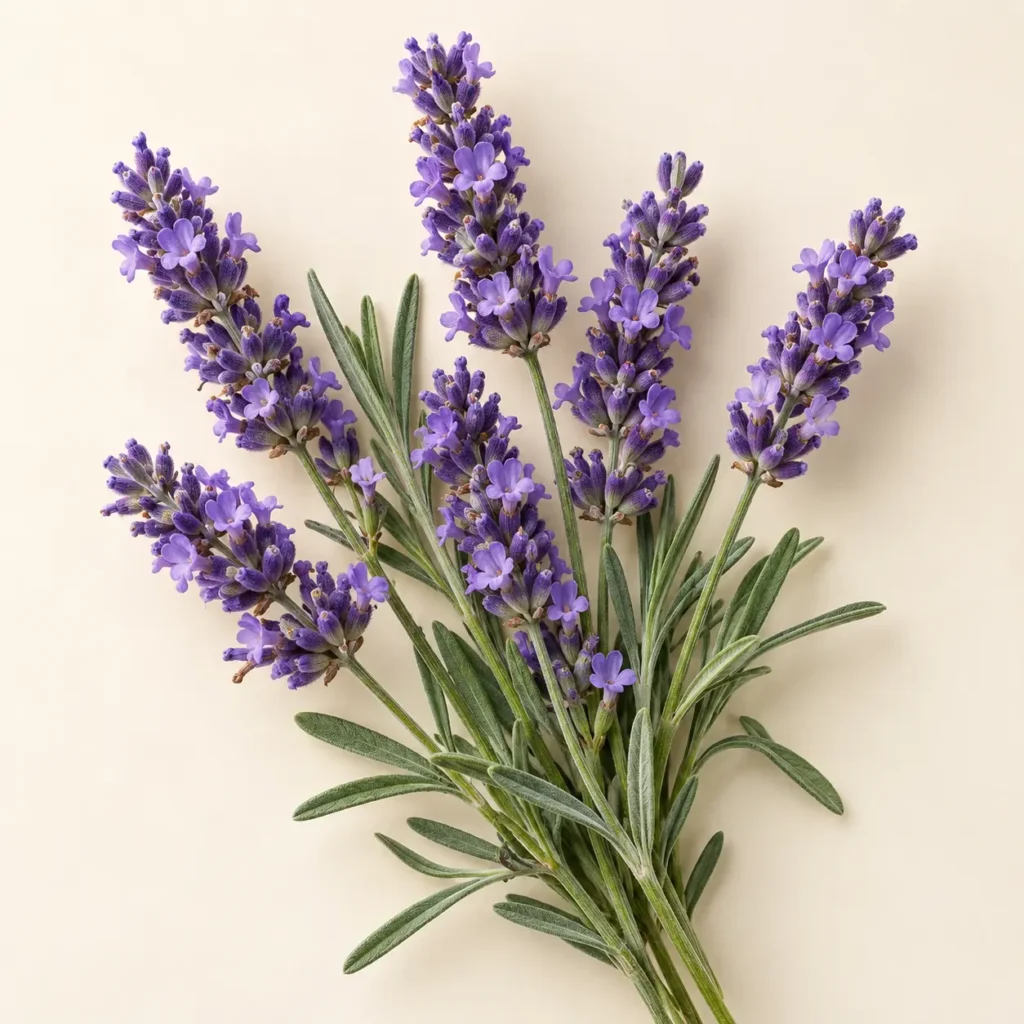
Lavender
Aromatic calming herb; studies of a specific oral lavender-oil product suggest possible benefit for anxiety symptoms, but those results do not automatically apply to every essential oil, tea, or topical product. Common forms include standardized oral products, aromatherapy products, and tea. [6] [9]
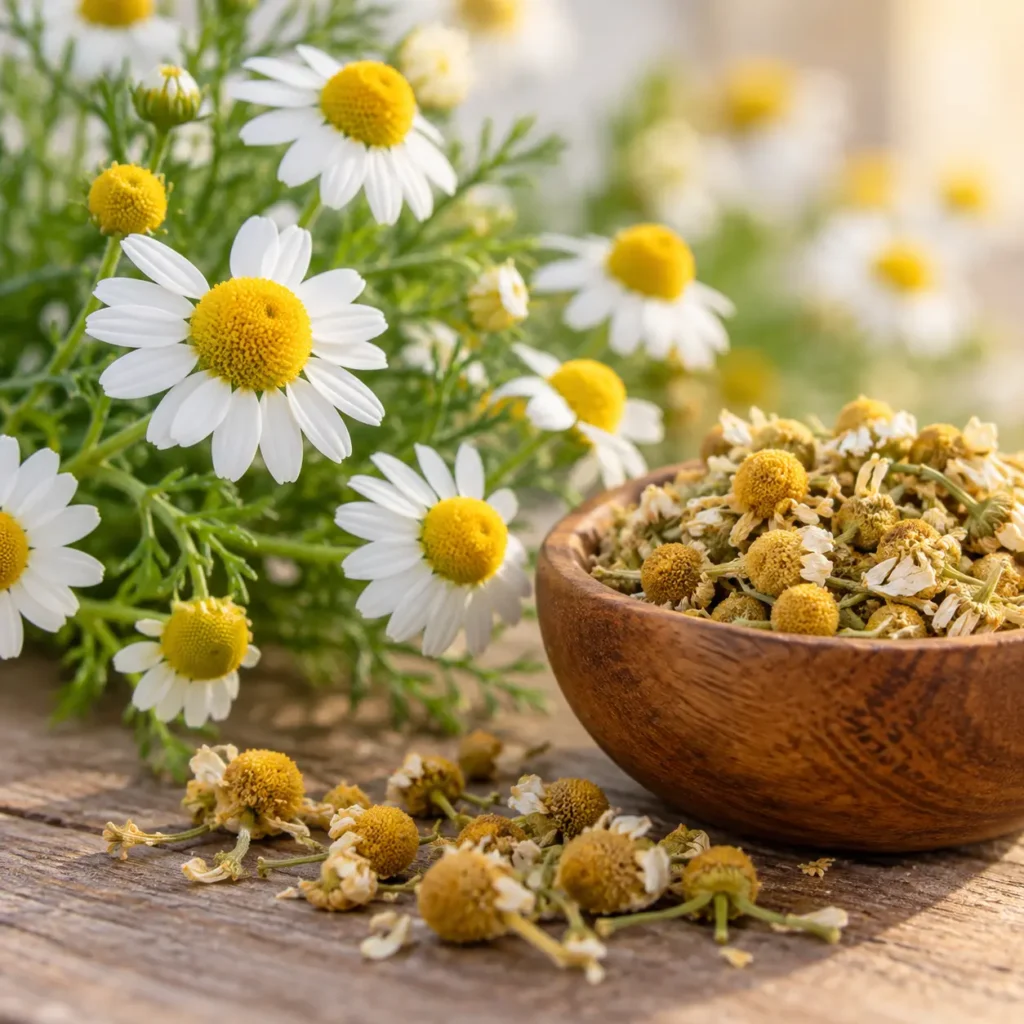
Chamomile
Gentle calming herb; preliminary studies of chamomile supplements in generalized anxiety disorder are promising but not conclusive. Tea and standardized extracts are common forms. People with allergies to ragweed-family plants should use extra caution. [6] [10]
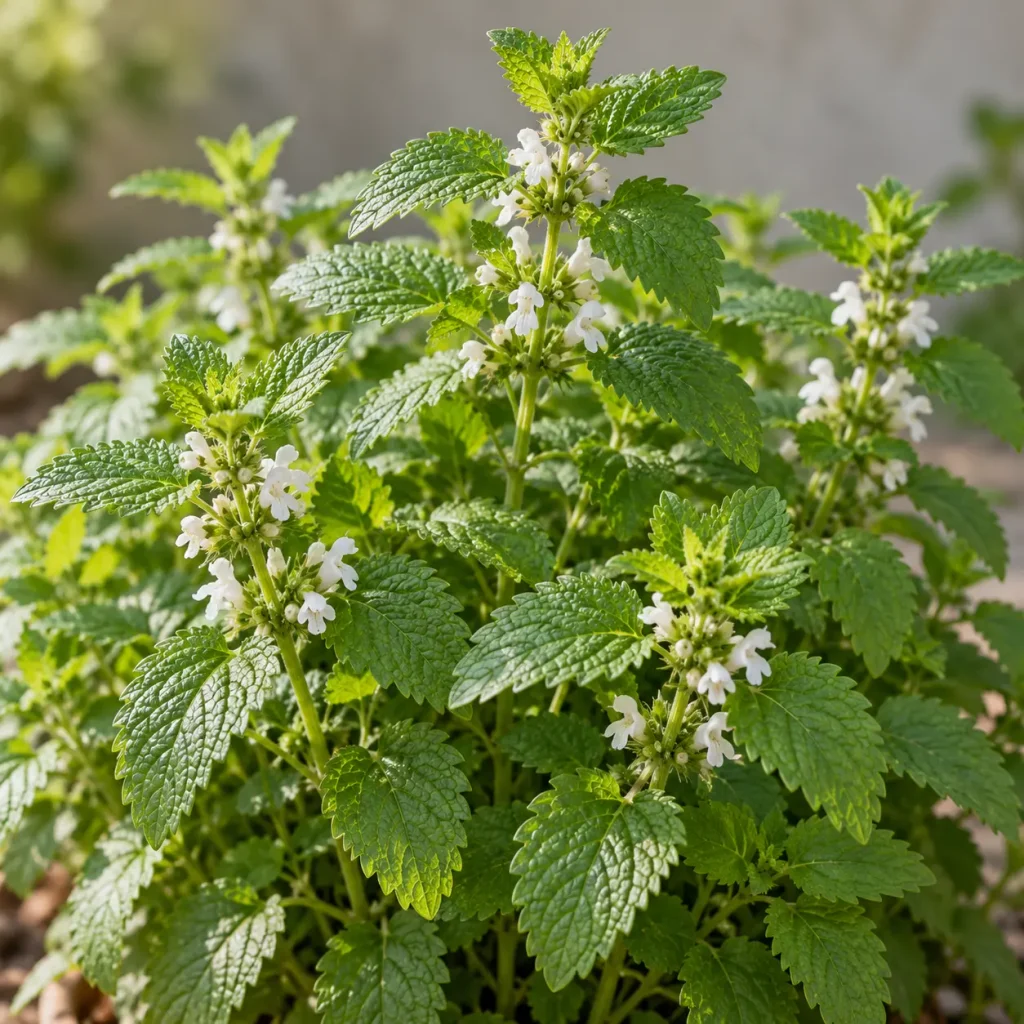
Calming nervine traditionally used for mild mental stress and difficulty settling. Common forms include tea, tincture, and extracts; it is better framed as supportive calming than as a treatment for an anxiety disorder. [11]
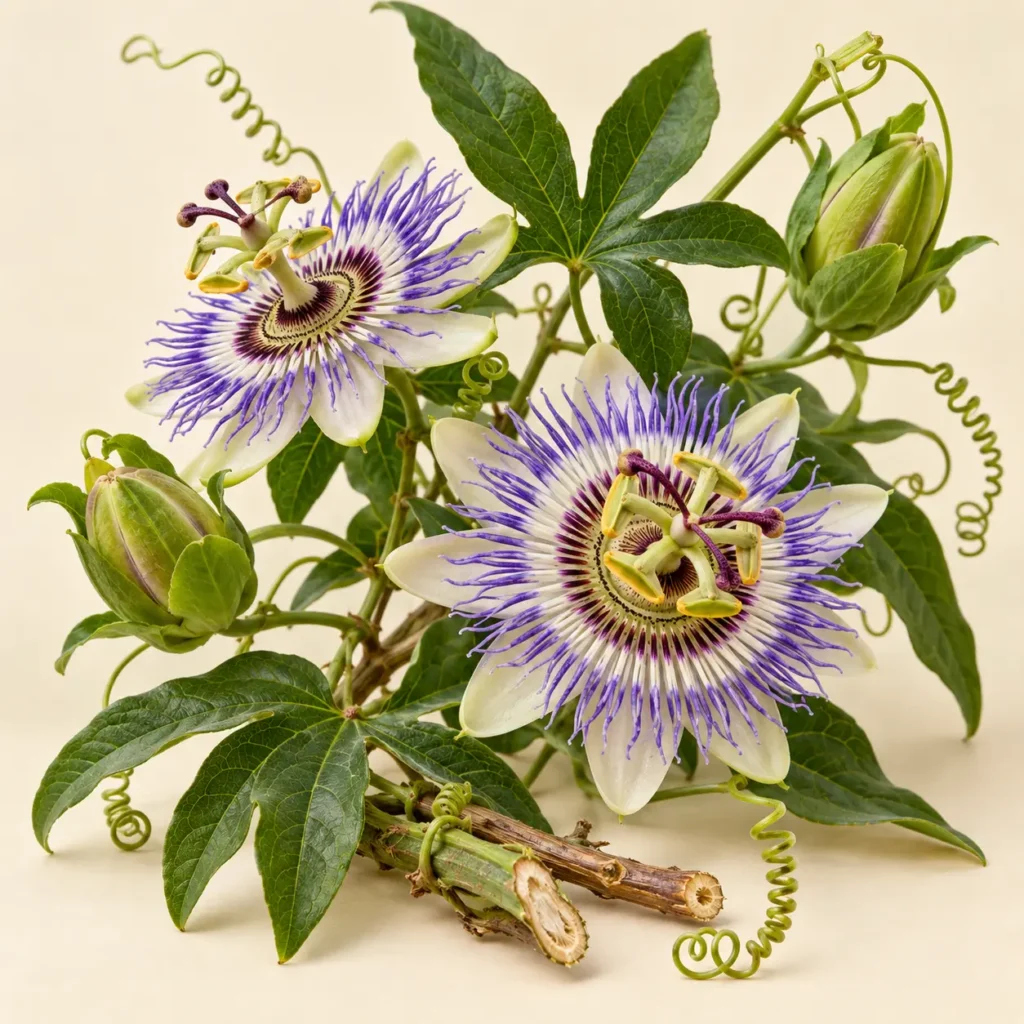
Passionflower
Calming nervine traditionally used for mild mental stress and sleep support. Tea, tincture, and extracts are common forms; preparation and dose matter. [12]
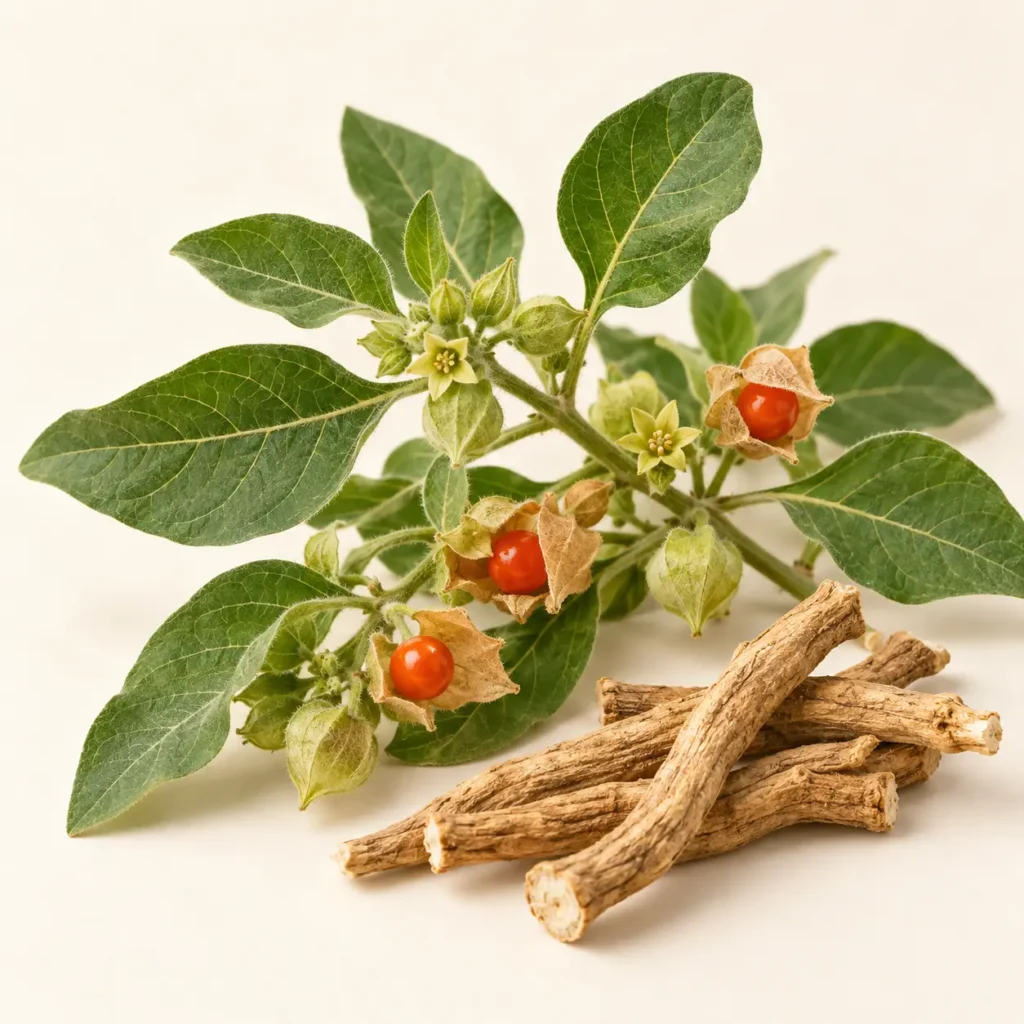
Ashwagandha
Adaptogenic herb that may help some people with stress and sleep, but evidence for anxiety itself remains unclear. Concentrated extracts need more safety screening than an ordinary tea, especially with pregnancy, thyroid or autoimmune conditions, liver concerns, surgery, sedatives, or other medicines. [13]
2. Nutrition
There is no single “anti-anxiety diet.” The useful foundation is regular, adequate nourishment and correcting genuine nutrient gaps rather than assuming a supplement can replace treatment. Nutrient research for anxiety is mixed, so food adequacy comes first.
Magnesium: supports normal nerve and muscle function. Low intake can matter for health, but supplement studies for anxiety are heterogeneous and do not establish magnesium as a universal anxiety treatment. Natural sources include pumpkin seeds, almonds, legumes, whole grains, and spinach. [14]
Omega-3 fatty acids: support normal cell and brain function. Anxiety research is still uncertain, so prioritize food sources such as salmon, sardines, walnuts, chia seeds, or flax rather than assuming high-dose supplements are necessary. [15]
Vitamin B6: supports normal metabolism and brain development/function. Common food sources include poultry, fish, potatoes, chickpeas, and bananas; high-dose supplementation is not a substitute for anxiety care and can cause harm when overused. [17]
3. Physical
Physical practices can help reduce arousal, release muscle tension, improve sleep, and provide a repeatable way to move through anxious energy. Choose a level that feels sustainable rather than turning exercise into another performance demand.
Aerobic exercise: brisk walking, cycling, swimming, or similar rhythmic activity can reduce short-term feelings of anxiety and improve sleep; regular activity also supports broader physical and mental health. [8]
Walking: a low-friction form of movement that can combine exercise, daylight, a change of environment, and a break from repetitive worry.
Strength training: provides structured movement and can support overall health and confidence; use a manageable training load rather than exhausting sessions when anxiety and sleep are already strained.
Yoga: combines movement, breathing, balance, and attention. Evidence suggests it may help anxiety symptoms for some people, but it should be viewed as an adjunct rather than a replacement for proven treatment of anxiety disorders. [6]
Paced breathing: slow, comfortable breathing can help lower physiological arousal. Avoid forcing very deep breaths if that makes dizziness or panic sensations worse. [7]
Progressive muscle relaxation: alternates deliberate muscle tension and release to make chronic tension easier to notice and reduce. [7]
4. Mental
Mental strategies are especially important because anxiety is often maintained by patterns of threat prediction, avoidance, reassurance-seeking, rumination, or fear of physical sensations. The strongest approach depends on the type of anxiety and how much it is affecting daily life.
Cognitive behavioral therapy (CBT): helps identify unhelpful thinking and behavior patterns and test more workable responses. NIMH describes CBT as the gold-standard psychotherapy for generalized anxiety disorder. [2]
Exposure-based therapy: gradually and systematically reduces avoidance by helping a person face feared situations, sensations, or cues in a structured way; it is a central evidence-based strategy for several anxiety disorders. [1] [3]
Acceptance and commitment therapy (ACT): builds willingness to experience difficult thoughts and sensations while moving toward meaningful actions. Evidence is growing, including for generalized anxiety disorder. [2]
Mindfulness skills: train attention to notice thoughts and sensations without automatically treating them as danger signals. They may reduce anxiety symptoms for some people but are better viewed as supportive skills than as a proven stand-alone treatment for every anxiety disorder. [6]
Grounding and attention shifting: can help during spikes of anxiety by bringing attention to immediate sensory information and the present task instead of feeding a spiral of prediction.
Professional therapy: becomes more important when anxiety is persistent, causing avoidance, disrupting daily functioning, or linked with panic, trauma, depression, substance use, or safety concerns.
5. Lifestyle
Lifestyle factors do not explain every case of anxiety, but repeated daily conditions can make symptoms easier or harder to manage. Small changes are most useful when they reduce background activation and improve recovery.
Sleep routine: protect a reasonably consistent sleep window and a real wind-down period. Poor sleep can intensify emotional reactivity and make coping harder.
Caffeine: notice whether coffee, energy drinks, pre-workout products, or late-day caffeine amplify jitteriness, palpitations, or sleep difficulty.
Alcohol and other substances: short-term relief can be misleading if a substance worsens sleep, rebound anxiety, dependence risk, or medication safety. Avoid using alcohol or sedating products as the main way to switch off.
Predictable routines: reduce unnecessary uncertainty by creating simple anchors for meals, sleep, work transitions, medication schedules, and planned breaks without turning routine into rigid avoidance.
Social support: protect contact with people who feel safe and practical. Support is especially useful when anxiety is causing isolation or avoidance.
Digital and information load: reduce unnecessary notifications, doomscrolling, rapid task switching, and repeated symptom searching when they keep attention locked onto threat.
Understanding Anxiety
Anxiety is part of the body’s threat-detection system. In ordinary situations it can sharpen attention and prepare you to respond. An anxiety disorder is different: fear or worry becomes excessive, difficult to control, persistent, and disruptive enough to interfere with daily life. [1]
Symptoms can involve thoughts, emotions, behavior, and the body at the same time. That overlap is one reason anxiety can feel intensely physical even when no immediate danger is present—and also why new or severe physical symptoms should not automatically be blamed on anxiety.
Types and Patterns of Anxiety
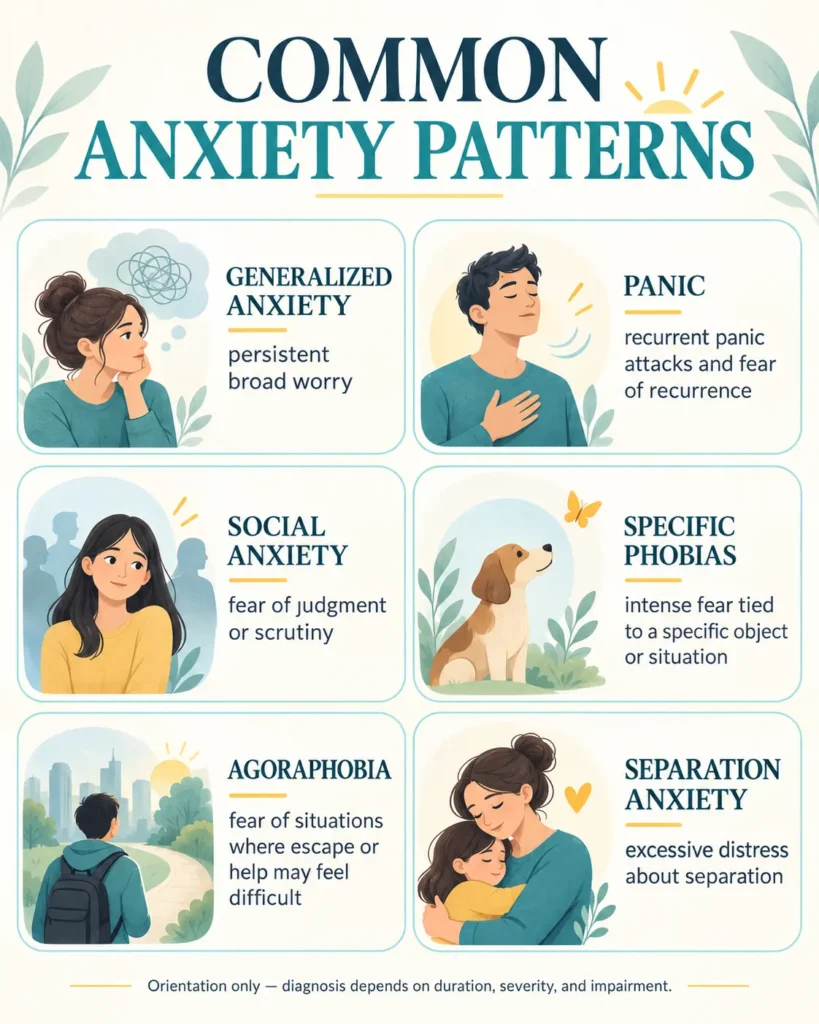
Anxiety is not one single pattern. Common anxiety disorders include:
Generalized anxiety disorder (GAD): persistent and difficult-to-control worry across multiple areas of life, often with tension, restlessness, fatigue, concentration problems, irritability, or sleep difficulty. [2]
Panic disorder: recurrent unexpected panic attacks plus ongoing worry or behavior change related to future attacks. [3]
Social anxiety disorder: intense fear of being judged, embarrassed, rejected, or scrutinized in social or performance situations. [1]
Specific phobias: marked fear linked to a particular object or situation, often leading to strong avoidance. [1]
Agoraphobia: fear and avoidance of situations where escape or help might feel difficult if panic-like symptoms occur. [1]
Separation anxiety disorder: excessive fear or distress about separation from an attachment figure; it can occur in children or adults. [1]
These descriptions are for orientation, not self-diagnosis. A clinician considers duration, severity, impairment, medical causes, medications/substances, and whether another mental-health condition better explains the symptoms.
What Anxiety Can Look Like
- Persistent worry, dread, fear, irritability, or a sense that something bad is about to happen.
- Difficulty concentrating, making decisions, tolerating uncertainty, or disengaging from repetitive “what if” thinking.
- Muscle tension, restlessness, trembling, sweating, nausea, stomach discomfort, dizziness, rapid breathing, or a racing heartbeat.
- Trouble falling asleep, waking frequently, or feeling exhausted from being constantly on guard.
- Avoiding places, situations, conversations, driving, travel, social contact, or other activities because of fear.
- Repeated reassurance-seeking, checking, symptom searching, or safety behaviors that bring short-term relief but may keep anxiety going.
Anxiety Is Not the Explanation for Every Symptom
Anxiety can cause real physical symptoms, but it should not become a catch-all explanation. New, severe, persistent, or unexplained symptoms still deserve appropriate medical evaluation. Severe chest pain, fainting, major breathing difficulty, new neurologic symptoms, or another immediate medical emergency should be treated as a medical issue rather than assumed to be anxiety.
SAFETY FIRST — HERBS & SUPPLEMENTS
1: What exact product or preparation was studied?
2: How strong is the evidence for the specific anxiety problem you are trying to address?
3: What are the side effects, pregnancy considerations, allergies, and organ-specific risks?
4: Could it interact with medicines, alcohol, sedatives, or an existing health condition?
Important examples: chamomile can trigger allergic reactions in people sensitive to related plants and may interact with some medicines; ashwagandha has important pregnancy, thyroid, autoimmune, liver, surgery, and medication cautions; kava has been linked to severe liver injury; and essential oils should not be swallowed unless specifically formulated for oral use. [6] [10] [13]
How the Pieces Fit Together
A useful anxiety plan is usually layered rather than crowded. If avoidance is shrinking your life, behavioral treatment may matter more than adding another supplement. If poor sleep and caffeine are amplifying physical arousal, those are practical targets. If anxiety is mild and situational, movement, paced breathing, routines, and social support may be enough to help you recover. If symptoms are persistent or disabling, professional treatment moves closer to the center of the plan.
The goal is not to use everything. Choose the smallest set of strategies that addresses the main driver, is safe with your health history, and can be repeated consistently.
What to Do Next
If Anxiety Is Occasional and Manageable
- Name the situation or trigger instead of treating every anxious feeling as the same problem.
- Choose one physical regulation tool—walking, paced breathing, or progressive muscle relaxation—and practice it before you are at peak anxiety.
- Check obvious amplifiers such as excess caffeine, sleep loss, alcohol, constant notifications, or repeated symptom searching.
- Notice whether avoidance is expanding. If it is, consider evidence-based guidance rather than building more avoidance around the fear.
If Anxiety Is Persistent or Restricting Your Life
- Track what you fear, what you avoid, what safety behaviors you use, and how anxiety affects work, school, relationships, sleep, or travel.
- Consider a mental-health professional who uses evidence-based treatment such as CBT and, when appropriate, exposure-based methods.
- Ask a clinician to review physical symptoms, medications, substances, sleep, thyroid or other medical factors when the picture is unclear.
- Coordinate herbs and supplements with existing treatment rather than adding them without a medication and safety review.
If You Already Receive Medical or Mental-Health Care
Herbal, Nutrition, Physical, Mental, and Lifestyle approaches can still be useful, but use them as coordinated supports. Do not stop or replace prescribed treatment because a natural option sounds appealing.

When to Seek Professional Help
Consider professional evaluation when anxiety is persistent, difficult to control, causing significant avoidance, disrupting sleep or daily functioning, driving escalating substance use, or occurring with depression, trauma symptoms, recurrent panic, or another mental-health concern. Effective treatments are available. [1] [2]
- Anxiety is interfering with work, school, driving, travel, relationships, eating, or sleep.
- You are changing more and more of your life to avoid fear or panic.
- Panic-like episodes are recurrent or you are increasingly afraid of having another one.
- You are using alcohol, drugs, or sedating products more often to cope.
- Physical symptoms are new, severe, unexplained, or need a medical cause ruled out.
URGENT SUPPORT
Medical emergency: Call emergency services for severe chest pain, major breathing difficulty, fainting, or another immediate medical emergency.
Mental-health crisis: In the United States, call or text 988 or use the 988 Lifeline chat for suicidal thoughts, a mental-health or substance-use crisis, or severe emotional distress. [16]
Practical Takeaway
Anxiety rarely improves because someone finds one perfect remedy. The most useful plan matches the pattern: evidence-based therapy when fear and avoidance are persistent, physical regulation tools for arousal, stable sleep and daily routines, adequate nutrition, and complementary herbal support when it is safe and genuinely useful.
Start with the few pieces that address the biggest problem. If anxiety is narrowing your life or becoming hard to control, professional care is part of a whole-picture approach—not a failure of self-care.
Frequently Asked Questions
Is all anxiety a disorder? No. Occasional anxiety is a normal human response. An anxiety disorder involves anxiety that is excessive or persistent and causes significant distress or impairment. [1]
Can anxiety cause physical symptoms?: Yes. Anxiety can involve a racing heart, sweating, trembling, muscle tension, stomach symptoms, dizziness, and sleep problems. New or severe physical symptoms should still be evaluated rather than automatically attributed to anxiety. [1] [2]
What treatment has the strongest evidence?: For many anxiety disorders, structured psychological treatments are central. CBT is especially well studied, and exposure-based approaches are important for several fear- and panic-related problems. [1] [2] [3]
Can exercise, breathing, or mindfulness help?: They can help some people manage symptoms and arousal, and physical activity has broad health benefits. They are supportive tools, not automatic substitutes for treatment when an anxiety disorder is significantly impairing daily life. [6] [7] [8]
Are herbs proven treatments for anxiety disorders?: Not as a category. Some specific products or herbs have promising evidence, but results are preparation-specific and generally less established than conventional psychotherapy. Safety and interactions still matter. [6]
References
1. World Health Organization — Anxiety disorders — Overview, symptoms, types, treatment, and self-care.
2. National Institute of Mental Health — Generalized Anxiety Disorder: What You Need to Know — GAD symptoms, CBT, ACT, medications, and care.
3. National Institute of Mental Health — Panic Disorder: When Fear Overwhelms — Panic disorder and evidence-based treatment.
4. National Institute of Mental Health — Social Anxiety Disorder: More Than Just Shyness — Social anxiety symptoms and treatment.
5. National Institute of Mental Health — Phobias and Phobia-Related Disorders — Specific phobias and related patterns.
6. NCCIH — Anxiety and Complementary Health Approaches — Evidence and safety for complementary approaches.
7. NCCIH — Relaxation Techniques: What You Need To Know — Breathing, progressive relaxation, and anxiety/stress evidence.
8. CDC — Health Benefits of Physical Activity for Adults — Physical activity, anxiety, sleep, and broader health benefits.
9. NCCIH — Lavender: Usefulness and Safety — Preparation-specific lavender evidence and safety.
10. NCCIH — Chamomile: Usefulness and Safety — Preliminary anxiety evidence, allergy and interaction cautions.
11. European Medicines Agency — Melissae folium — Melissa officinalis traditional-use monograph.
12. European Medicines Agency — Passiflorae herba — Passionflower traditional-use monograph.
13. NCCIH — Ashwagandha: Usefulness and Safety — Stress/sleep evidence and safety cautions.
14. NIH Office of Dietary Supplements — Magnesium Fact Sheet for Consumers — Magnesium roles and food sources.
15. NIH Office of Dietary Supplements — Omega-3 Fatty Acids Fact Sheet for Consumers — Omega-3 sources and supplement basics.
16. 988 Suicide & Crisis Lifeline — Get Help — U.S. call, text, and chat crisis support.
17. NIH Office of Dietary Supplements — Vitamin B6 Fact Sheet for Consumershttps://ods.od.nih.gov/factsheets/VitaminB6-Consumer/