
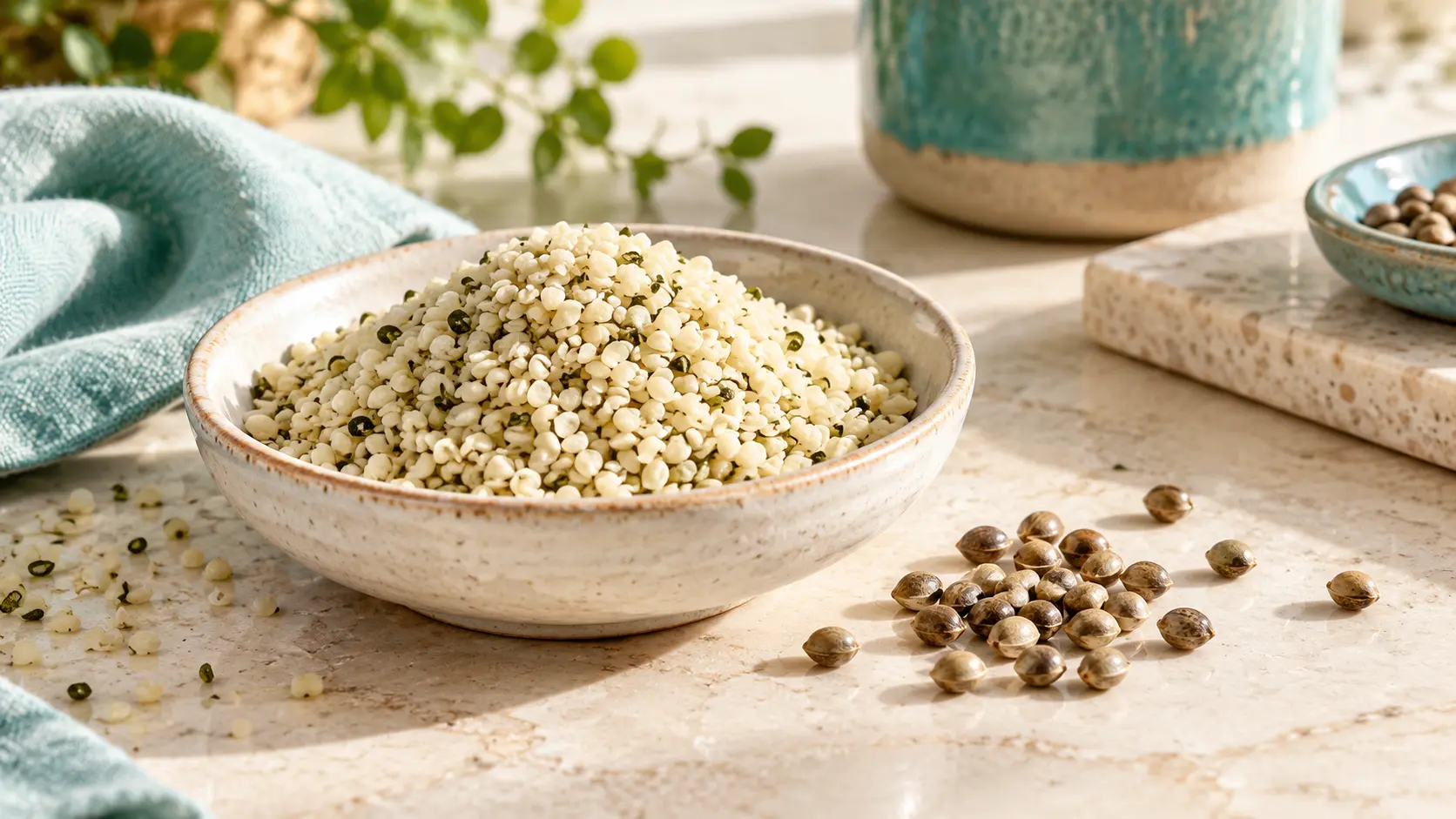
Small seeds, an easy kitchen upgrade: hemp hearts add a mild, nutty flavor to breakfast, salads, and simple meals. Here is what they provide, how the common forms differ, and what they cannot promise.
QUICK INSIGHT
About Hemp Seeds
Hulled hemp seeds (hemp hearts) are a convenient source of plant protein and mostly unsaturated fats, including essential fatty acids. They also supply minerals such as magnesium. You can sprinkle them on food without changing your whole diet. They are nutritious foods, not a treatment for heart disease, inflammation, or other conditions.
What exactly are hemp seeds?
Hemp seeds come from Cannabis sativa. The edible seeds are different from CBD products: the seeds themselves do not naturally contain meaningful THC or CBD. Trace contamination can occur during harvesting or processing. Properly made hemp-seed foods are not intoxicating. “Hemp hearts” means the softer, hulled inner seed; whole seeds keep their outer shell.
Three forms you will see in stores
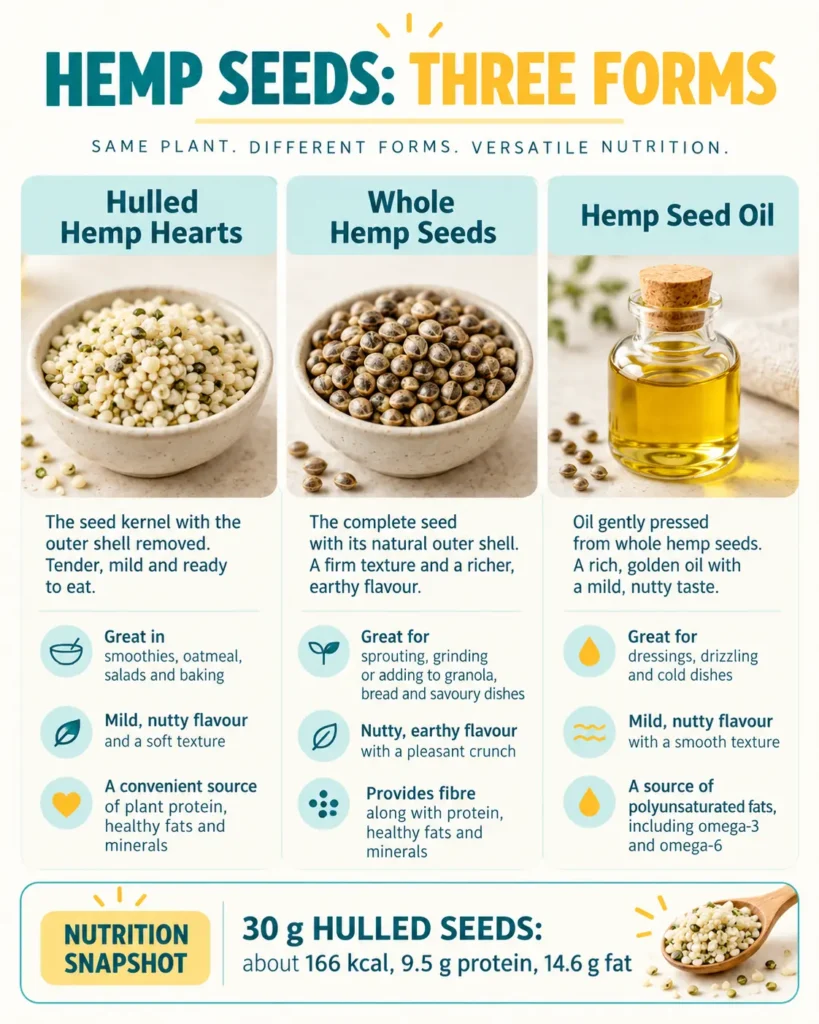
| Product Type | Specification |
|---|---|
| Hemp hearts (hulled seeds) | Soft, mild and easy to stir into yogurt, oatmeal or salads; the form used for the nutrition example below. |
| Whole hemp seeds | Keep the outer hull; chewier and potentially different in fiber content and texture. |
| Hemp seed oil | Hemp seed oil. |
Hemp hearts nutrition: a useful serving snapshot
The table estimates 30 g of hulled hemp seeds (roughly 3 tablespoons for some products), scaled from USDA-linked composition data. Actual spoon weights and packaged products vary: use the product label for your serving.
| Nutrient | Amount per 30 g of hulled hemp seeds |
|---|---|
| Energy | ~ 166 kcal |
| Protein | ~ 9.5 g |
| Total fat | ~ 14.6 g |
| Carbohydrate | ~ 2.6 g |
| Fiber | ~ 1.2 g |
These numbers describe hulled seeds only—not whole seeds, protein powder or hemp seed oil. USDA-linked composition data report approximately 553 kcal, 31.6 g protein and 48.8 g fat per 100 g of hulled seed. See the source in References.
Why might hemp seeds be useful?
Plant protein without a complicated meal plan
A scoop can add protein to food you already enjoy. The key word is “add”: it works best as part of an eating pattern that also includes beans, nuts, vegetables, whole grains and other varied sources of nutrients.
Unsaturated fats, including essential fatty acids
Hemp seeds contain polyunsaturated fats, including omega-6 linoleic acid and plant-based omega-3 alpha-linolenic acid (ALA). ALA is not the same as the long-chain omega-3 fats EPA and DHA found in some seafood or algae products.
Minerals in a small package
Hulled hemp seeds can contribute magnesium and other minerals. Whether that makes a meaningful difference depends on the rest of your diet and the actual amount you eat.
What the research does—and does not—show
Nutrition composition is well established; broad disease-treatment claims are not. Reviews discuss promising mechanisms and possible cardiovascular relevance, but they do not establish that adding hemp seeds alone prevents or treats heart disease. It is reasonable to choose hemp seeds as a nutritious ingredient, not as a substitute for proven treatment.
[Image #2 place here — forms and nutrition infographic]
How to use hemp seeds without overthinking it
Try a spoonful on oatmeal, a bowl of yogurt, blended into a smoothie, or over roasted vegetables. Mix them into a salad dressing or a grain bowl when you want a mild nutty taste. Start with an amount that fits the meal; there is no magic “clinical dose” for general wellness.
Tip: If you have only tried gritty whole seeds, hemp hearts may feel like an entirely different ingredient. Read the package so you know which one you bought.
Choosing and storing them
Look for an intact seal and a clear ingredient name such as “hulled hemp seeds.” Compare the Nutrition Facts panel per serving and check for added sugar or salt in flavored blends. Because the seeds contain unsaturated oils, store them sealed, cool and away from light; follow the package’s refrigeration and use-by directions. Discard products with a rancid odor or off taste.
Safety: what to know
Hemp seeds can cause allergic reactions in some people. Stop eating them and seek medical advice for a suspected reaction; severe breathing problems or throat swelling require emergency care. If you have a known seed allergy, check with your clinician before trying them. If you need a medically restricted diet, ask about suitable portions. Do not assume that hemp-seed foods, CBD oil and cannabis products have the same safety profile.
Practical takeaway
Hemp hearts are a simple, nutrient-dense addition to everyday meals. Choose the form you actually want, read its label, and enjoy it as one part of a varied diet—not as a miracle ingredient.
For practical ways to build balanced everyday meals, explore what a balanced breakfast actually needs.
References
U.S. Food and Drug Administration. Hemp seed-derived ingredients in human food (2018).
USDA-linked FoodData Central nutrient record for hulled hemp seeds, displayed by WhatYouEat. Verify exact branded serving against label.
Source: https://whatyoueat.io/foods/170148-hulled-hemp-seed
Peer-reviewed review: Dietary hempseed and cardiovascular health: nutritional composition, mechanisms and comparison with other seeds.
Source: https://pmc.ncbi.nlm.nih.gov/articles/PMC12540152/
FDA: Regulation of cannabis and cannabis-derived products (hemp seed food ingredients distinguished from CBD/THC).