

You glance at the clock and it is 3 a.m. again. The timing can feel oddly precise—especially when you are tired and want to get back to sleep. But there is no single medical meaning to waking at 3 a.m. A nighttime awakening may have several explanations, and the pattern around it usually matters more than the clock reading.
Occasional waking is common. The bigger questions are whether you can return to sleep, how often it happens, and whether it affects the next day.
QUICK INSIGHT
About Waking Up at 3 AM
Waking at 3 a.m. is not, by itself, a diagnosis or proof of a particular hormone imbalance. Stress, sleep schedules, light or noise, alcohol or caffeine, and health conditions can all contribute. Start by noticing patterns, making a few modest sleep-friendly changes, and speaking with a clinician if the problem persists or disrupts daytime life.
Why might you wake up in the middle of the night?
Sleep is not one uninterrupted stretch of identical depth. We cycle through different sleep stages, and brief awakenings can occur. What matters is whether something makes you fully alert or prevents you from settling back to sleep. There may be more than one factor at work.
Possible explanations worth considering
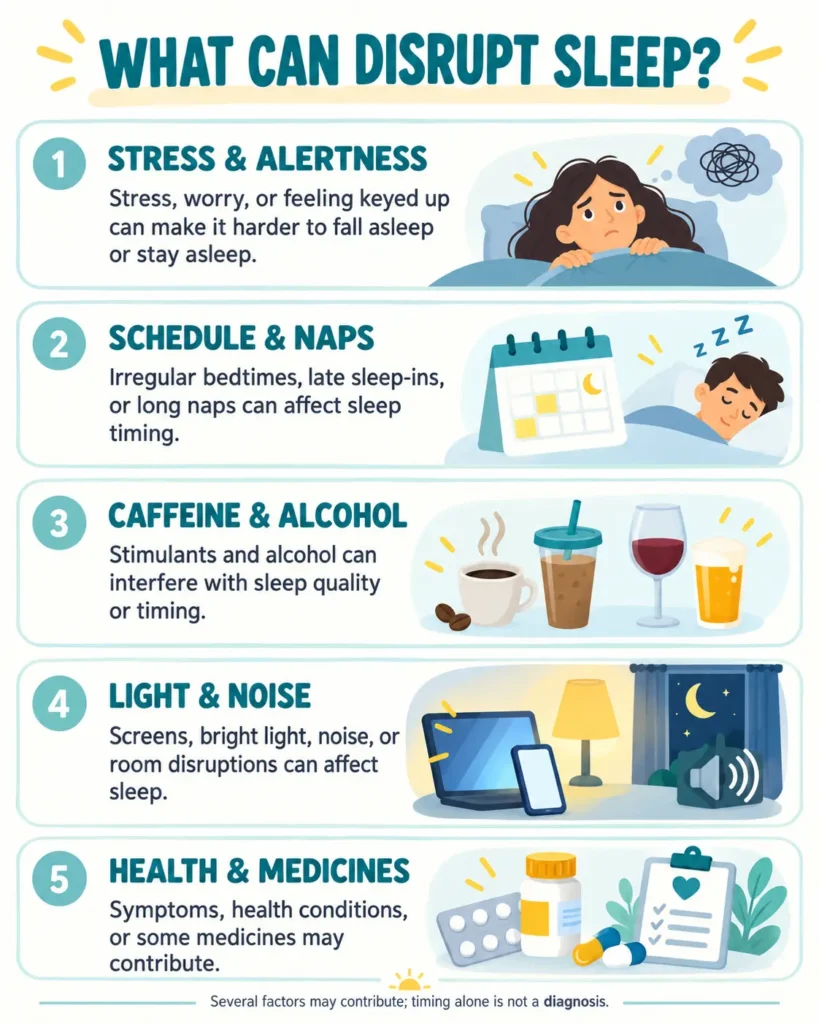
- Stress and nighttime alertness: Worries can make it harder to return to sleep, and watching the clock can add pressure. This does not mean every awakening is caused by anxiety.
- Timing and routine: Variable bedtimes, shift work, jet lag, naps, or spending more time in bed than you need can change when you feel sleepy and awake.
- Alcohol, caffeine, and other substances: Alcohol can fragment sleep later in the night; caffeine and nicotine may interfere with sleep. Sensitivity and timing differ by person.
- Light, noise, temperature, or caregiving: A warm room, a partner’s movements, an infant, nighttime work, or an outside noise can interrupt sleep.
- Physical and health factors: Pain, needing to urinate, reflux symptoms, medication effects, menopause-related symptoms, or mood symptoms can coexist with awakenings. These possibilities deserve individualized evaluation when relevant.
- Breathing-related sleep problems: Loud snoring, witnessed breathing pauses, or gasping may suggest sleep-disordered breathing, especially with marked daytime sleepiness. A clinician can assess this; the clock time does not diagnose it.
These are categories to discuss and observe—not a checklist for diagnosing yourself. NIH describes environmental, behavioral, and health-related influences on difficulty maintaining sleep. See the sources at the end.
Does waking at exactly 3 a.m. mean anything special?
Not generally. A repeated time may reflect a consistent bedtime, usual sleep duration before awakening, daily schedule, or a recurring disturbance. It does not reliably point to a specific organ, cortisol spike, or other single biological cause. Avoid treating an appealing clock-time explanation as a tested diagnosis.
What should you notice before changing anything?
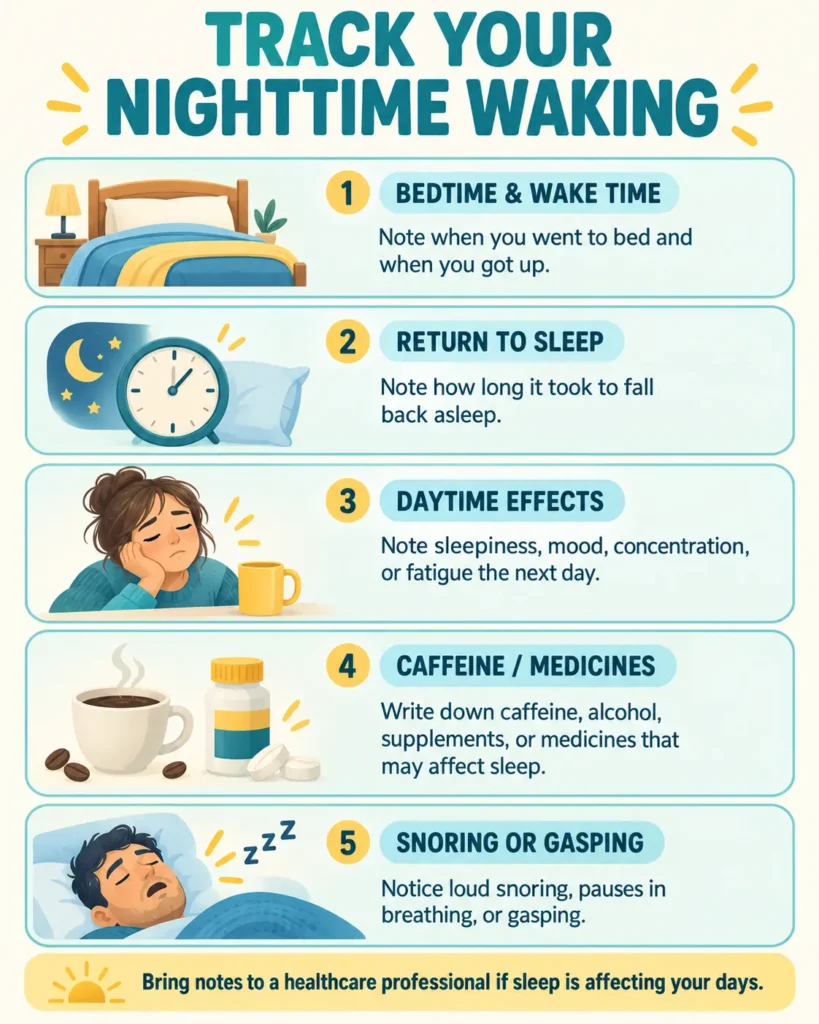
A short sleep diary can make the pattern easier to understand. You do not need to track every minute or achieve a perfect sleep score.
| Notice | Useful detail |
|---|---|
| Timing | Usual bedtime, wake time, and roughly when awakenings occur |
| Return to sleep | Whether you settle again or remain awake |
| Daytime effects | Sleepiness, concentration, mood, and safety concerns |
| Possible context | Caffeine or alcohol timing, late naps, stress, noise, symptoms, medicines |
| Other signs | Snoring, breathing pauses, gasping, pain, or frequent urination |
NIH suggests keeping a sleep diary for one to two weeks before a sleep-related appointment when feasible. A diary is a conversation aid, not a diagnostic test.
Practical things to try tonight—and over the next week
- Keep a reasonably consistent wake-up time when your circumstances allow; adjust schedules gradually rather than chasing a perfect bedtime.
- Make the sleeping area dark, quiet, and comfortably cool when possible. If your environment cannot be controlled, try workable accommodations.
- Notice whether evening alcohol or late caffeine is affecting your sleep. If appropriate, experiment with changing the timing instead of making many changes at once.
- If you wake up, avoid repeatedly checking the clock or pressuring yourself to fall asleep immediately. A calm, low-light activity away from the bed may be preferable to prolonged frustrated wakefulness.
- If a symptom, medication, or breathing concern may be involved, seek individualized advice rather than trying to manage it solely with sleep-hygiene tips.
Good sleep habits are useful foundations, but they are not a complete treatment for chronic insomnia. The American Academy of Sleep Medicine strongly recommends multicomponent cognitive behavioral therapy for insomnia (CBT-I) for adults with chronic insomnia disorder; it does not recommend sleep hygiene alone as a stand-alone treatment.
When should you seek professional help?
| Situation | Reasonable next step |
|---|---|
| Repeated awakenings with fatigue or daily-life impact | Arrange a routine appointment; you do not have to wait months before asking for help. |
| Loud snoring, gasping, witnessed pauses in breathing, or pronounced daytime sleepiness | Seek timely medical evaluation for possible sleep-disordered breathing; avoid driving if you cannot remain alert. |
| Severe breathing difficulty, chest pain, or another immediate medical emergency | Seek emergency services rather than relying on an article or routine sleep advice. |
A clinician may discuss sleep patterns, daily schedules, medications, symptoms, and possible conditions. Testing is not necessary for everyone. If sleep difficulties occur at least three nights per week for three months or longer, they may meet the duration pattern used when evaluating chronic insomnia, but a professional assesses the full criteria.
A simple next step
If your 3 a.m. waking is occasional and you feel rested, you may not need to do anything. If it is recurring, try a brief diary and one or two practical adjustments. If you are concerned, cannot return to sleep regularly, or struggle during the day, bring the pattern to a healthcare professional rather than searching for a universal meaning in the hour.
Nighttime awakenings can have several contributing factors. Learn more about stress and sleep and explore practical approaches in our Sleep & Rest guide.
References
NHLBI — Insomnia: Causes and Risk Factors — https://www.nhlbi.nih.gov/health/insomnia/causes
NHLBI — Insomnia: Diagnosis — https://www.nhlbi.nih.gov/health/insomnia/diagnosis
NHLBI — Insomnia: Symptoms — https://www.nhlbi.nih.gov/health/insomnia/symptoms
NHLBI — Insomnia: Treatment — https://www.nhlbi.nih.gov/health/insomnia/treatment
NHLBI — Sleep Apnea: Symptoms — https://www.nhlbi.nih.gov/health/sleep-apnea/symptoms
NHLBI — How Sleep Works: Sleep/Wake Cycle — https://www.nhlbi.nih.gov/health/sleep/sleep-wake-cycle
AASM — Behavioral and Psychological Treatments for Chronic Insomnia (2021) — https://pmc.ncbi.nlm.nih.gov/articles/PMC7853203/