
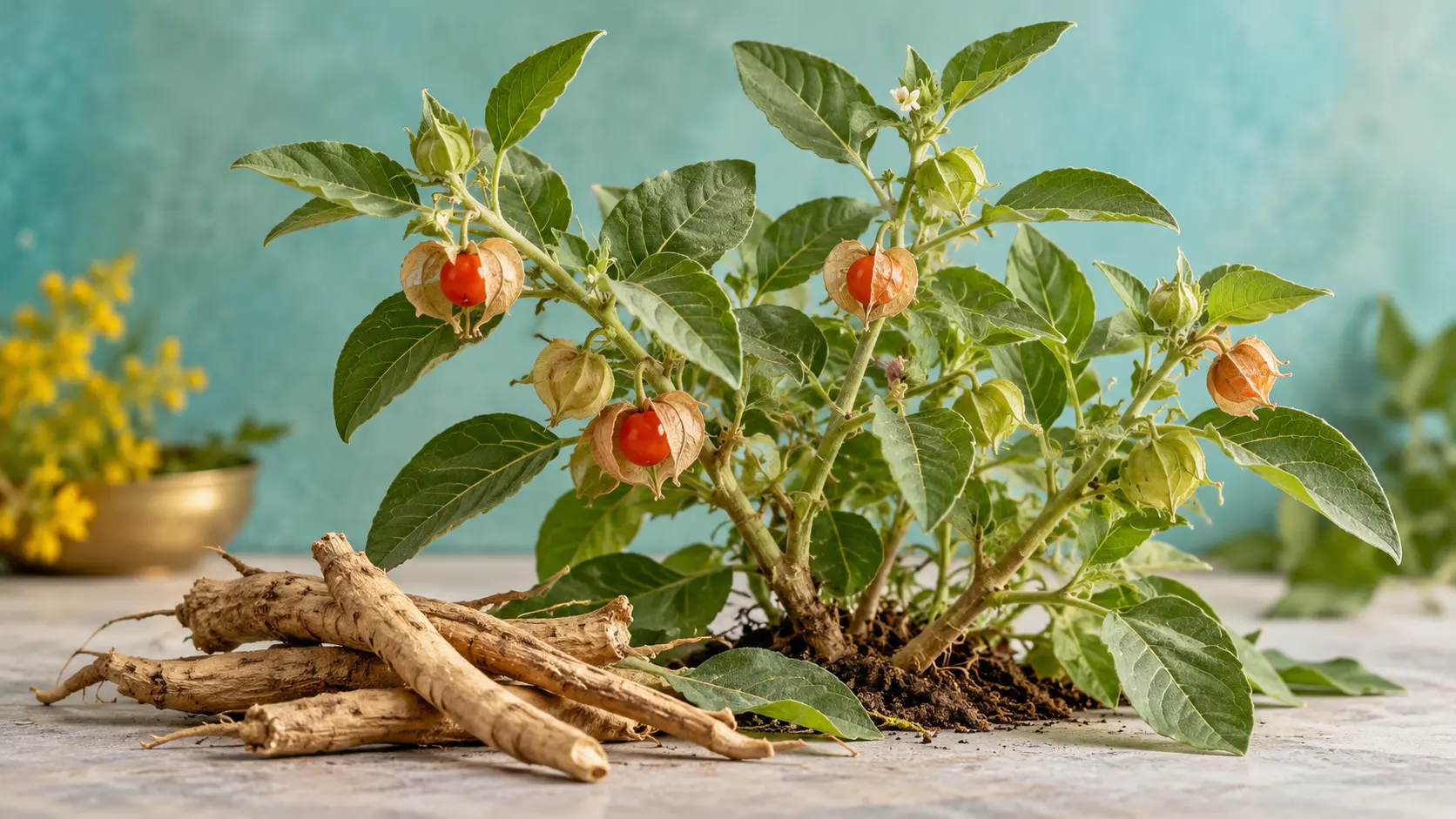
Ashwagandha is sometimes used to help people manage feelings of stress. Several short-term studies of specific oral extracts suggest that some people report less perceived stress than those taking placebo—but the findings do not establish a universal benefit for every product or person. [1–4]
If you are considering it, the best first questions are not “Which brand?” or “How much should I take?” They are whether the evidence matches the product, whether it is appropriate with your medicines and health history, and whether your stress calls for support beyond a supplement.
QUICK INSIGHT
About Ashwagandha for Stress
Bottom line: Certain studied ashwagandha extracts may modestly reduce perceived stress over several weeks; it is not an established treatment for chronic stress or anxiety disorders.
Evidence snapshot: Limited to moderate-confidence signal for short-term stress outcomes; small trials, varied formulations, and uncertainties about generalizability and long-term safety.
Preparation / form that matters: Mostly oral root or root-and-leaf extracts; study results cannot be assumed to apply to tea, raw powder, or an unrelated supplement.
Practical route: Review your health conditions and medicines with a qualified clinician or pharmacist before considering use; start by addressing stressors and established supportive strategies.
Key safety point: Avoid in pregnancy and breastfeeding; important concerns include rare liver injury, thyroid effects, drowsiness, and medication interactions. [1,2]
How Ashwagandha Connects to Stress
Ashwagandha (Withania somnifera) is a shrub whose root, and sometimes root-and-leaf extracts, are used in dietary supplements. It is often described as an “adaptogen,” a term used in herbal practice for substances thought to help the body respond to stress. That label describes a claimed role—not a clinically established mechanism of benefit. [1,2]
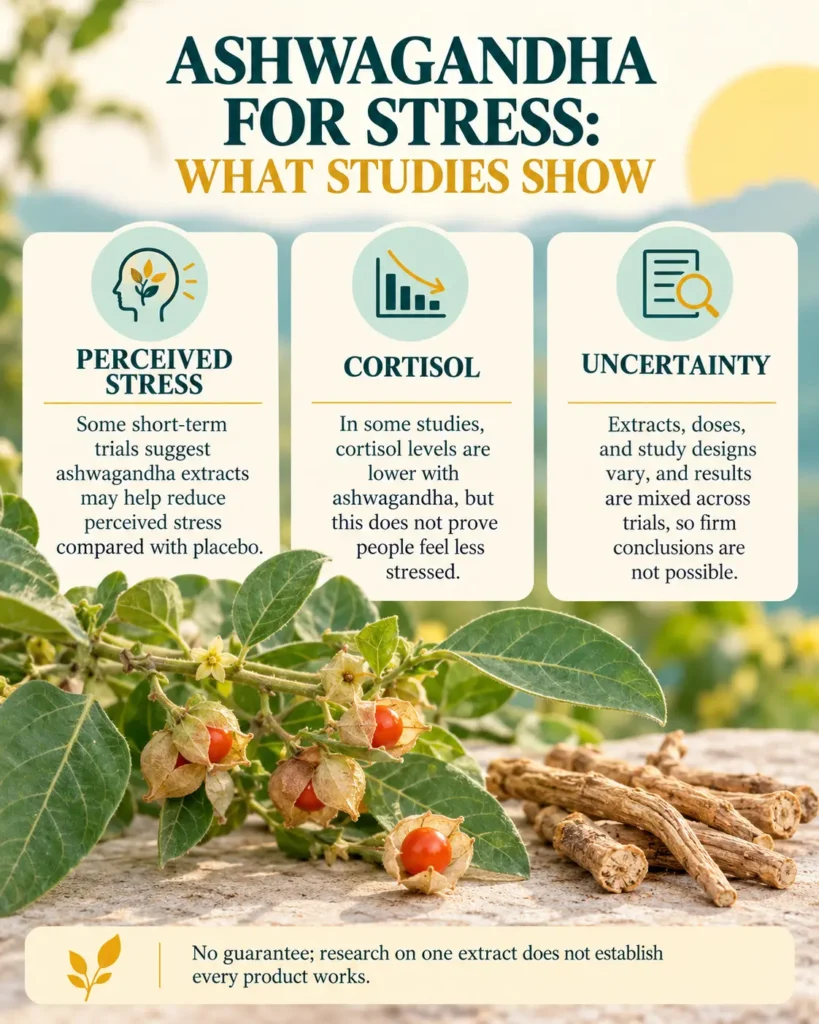
The clinical question is narrower: when people experiencing stress take a defined ashwagandha preparation, do their self-reported stress scores improve more than with placebo? Some studies suggest yes. This is different from proving that the herb fixes demanding work conditions, cures anxiety, or prevents the harms of chronic stress.
What the Evidence Shows
Perceived stress: promising, but preparation-specific
An NIH Office of Dietary Supplements review describes multiple small placebo-controlled studies in adults experiencing stress, often lasting 6–8 weeks. Several reported improvements in perceived stress scales compared with placebo, although participants, extracts, and study quality varied. [2]
A 2024 systematic review of nine randomized trials (558 participants) reported an average advantage on perceived-stress measures. A later review of 15 trials (873 participants) also reported lower stress-scale scores at eight weeks, but no clear improvement in quality of life. Meta-analyses cannot eliminate limitations in the underlying small and heterogeneous studies. [3,4]
Cortisol: a measurement, not a complete answer
Some trials and reviews also find lower measured cortisol in supplement groups. Cortisol naturally varies with time, sleep, and other factors. A lower laboratory measurement does not alone establish that someone feels better or has better long-term health. One newer systematic review found a cortisol difference without a statistically clear difference in perceived stress, underscoring the distinction. [2,5]
What about anxiety or sleep?
Some trials measure anxiety symptoms and sleep alongside stress, but these are separate outcomes. NIH NCCIH considers evidence on anxiety less clear than some stress and sleep findings. This article does not establish treatment for an anxiety disorder or insomnia. [1]
Why the Extract and Route Matter
The strongest directly relevant studies generally used capsules containing specific ashwagandha extracts, rather than ordinary tea. Some extract products are made only from root; others use root and leaf, with different amounts of compounds called withanolides. Study doses and durations vary markedly. [2]
The name “ashwagandha” on a bottle is therefore not enough to prove it matches a studied preparation. Two products may differ in plant part, processing, standardization, and testing. A trial involving a named extract is evidence about that studied material—not a recommendation for a brand.
Who the Evidence Applies to — and Where It Is Less Certain
Many trials recruited adults who reported high everyday stress over relatively short study periods. We know less about benefits and harms in older adults with multiple medical conditions, people taking several medicines, pregnant or breastfeeding people, and people using supplements continuously for months or years. Short-term tolerability in a trial does not establish long-term safety. [1,2]
Forms and Amounts Used in Research
NIH ODS describes studies using a wide range of oral preparations and research amounts, including standardized extracts and whole-root preparations, typically observed for several weeks. These amounts are reported to interpret the research—not as a personal dosing recommendation. No universally effective or safe ashwagandha dose has been established across preparations. [2]
Practical Decision Guide
- First, identify the goal: Are you seeking help with ordinary perceived stress, sleep problems, or persistent anxiety symptoms? Those questions may require different approaches.
- Review the bigger picture: Sleep, workload, caregiving demands, medication effects, and available support may matter more than adding a supplement.
- Check the exact preparation: Look for the full botanical name, plant part, extract description, and clear Supplement Facts label; do not assume all extracts are equivalent.
- Screen for reasons to avoid or review use: Pregnancy, breastfeeding, thyroid or autoimmune illness, liver disease, upcoming surgery, and interacting medicines warrant particular caution.
- Agree on a safe next step with a clinician or pharmacist if use is being considered; avoid using a supplement in place of professional evaluation or established care.
SAFETY FIRST [UGW-COMP-03]
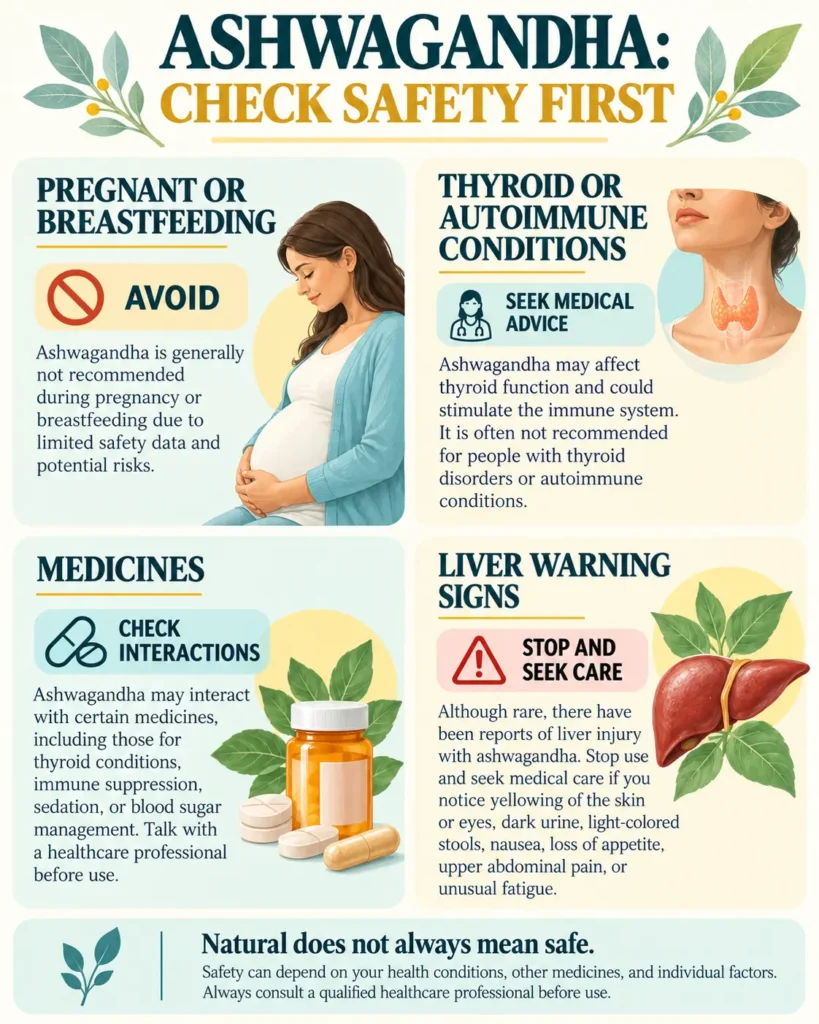
Ashwagandha is not risk-free. NIH NCCIH reports potential drowsiness, stomach upset, diarrhea, and vomiting, and rare reports of liver injury associated with supplements. Stop use and seek prompt medical assessment for warning signs such as jaundice, dark urine, unusual itching, or unexplained severe fatigue. [1]
Do not use during pregnancy or breastfeeding. NCCIH also advises against use in people with thyroid or autoimmune disorders and around surgery; people with hormone-sensitive prostate cancer should avoid it. [1]
Potential interactions include thyroid hormone medicines, sedatives, anticonvulsants, immunosuppressants, diabetes medicines, and blood-pressure medicines. This is not an exhaustive list; a pharmacist can review your complete medication and supplement list. [1,2]
If stress is persistently disrupting sleep, work, relationships, or daily life, seek individual assessment. Seek urgent support for immediate danger, suicidal thoughts, chest pain, or other acute warning signs rather than attributing them automatically to stress.
References
1. NIH National Center for Complementary and Integrative Health. Ashwagandha: Usefulness and Safety.
https://www.nccih.nih.gov/health/ashwagandha
2. NIH Office of Dietary Supplements. Ashwagandha: Health Professional Fact Sheet.
https://ods.od.nih.gov/factsheets/Ashwagandha-HealthProfessional
3. Effects of Ashwagandha (Withania somnifera) on stress and anxiety: A systematic review and meta-analysis. Explore (2024).
https://pubmed.ncbi.nlm.nih.gov/39348746
4. Effects of Ashwagandha Supplements on Cortisol, Stress, and Anxiety Levels in Adults: A Systematic Review and Meta-Analysis (2025).
https://pmc.ncbi.nlm.nih.gov/articles/PMC12242034
5. Dual impact of Ashwagandha: Significant cortisol reduction but no effects on perceived stress. Systematic review.