
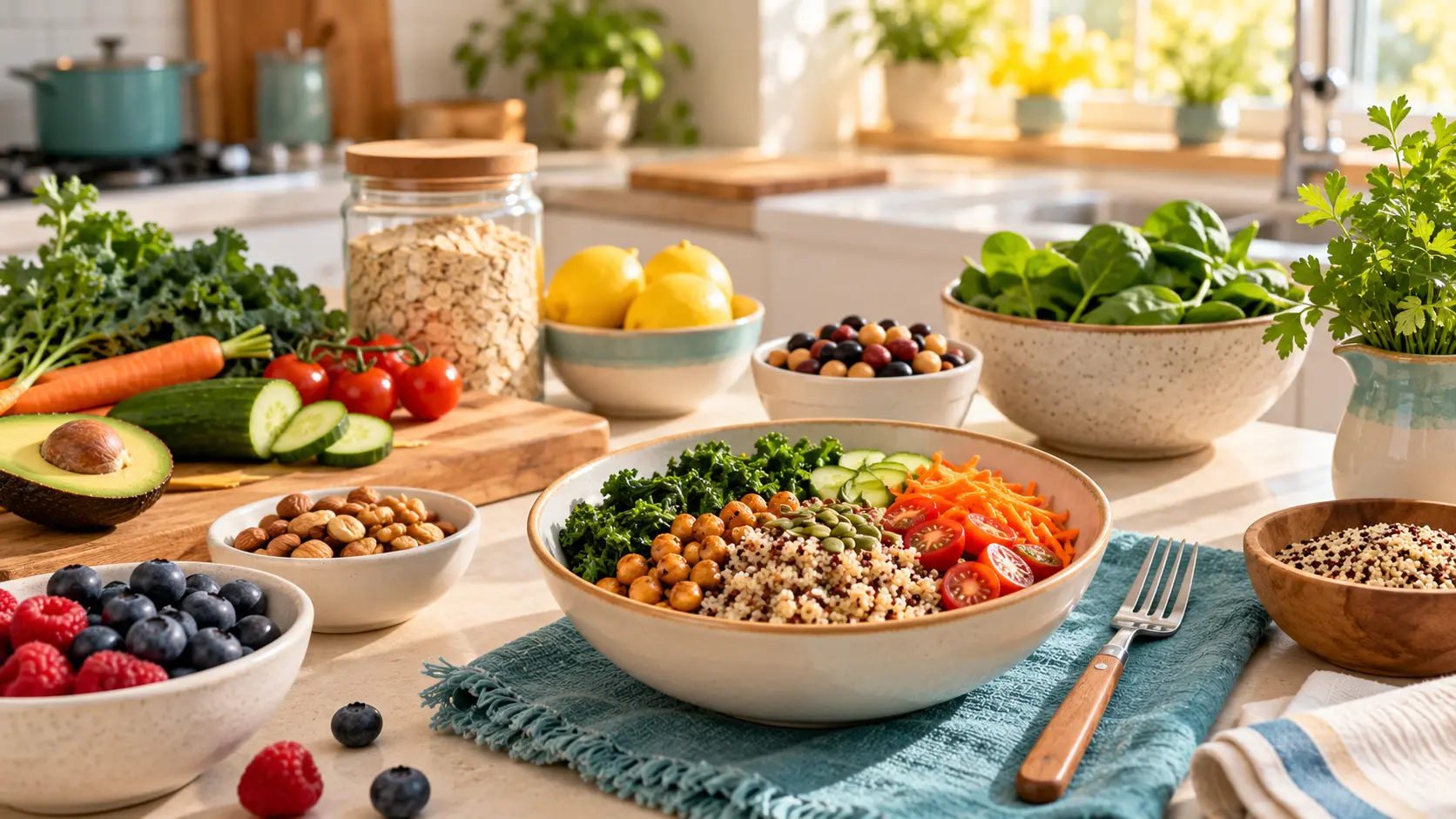
Eating well across a day does not require a perfect menu, a tracking app, or the same meals at the same times. A practical approach is to look at the foods you already enjoy, add some variety across meals, and make the next choice a little easier. This guide shows one flexible way to plan a day of meals and snacks—not a diet prescription.
QUICK INSIGHT
About Balanced Eating
Goal: Put together a realistic day of meals and snacks using protein foods, vegetables and fruit, fiber-rich grains or other starches, and fats you enjoy. Start here: Choose tomorrow’s easiest meal and add one food group it is missing. You need: A few familiar foods and a rough sense of your schedule. Individual needs vary with age, health, activity, culture, and access. [1,2]
Before you start
Think about your actual day: when you can eat, which foods are affordable and accessible, whether you cook, and what is already in your kitchen. You can use fresh, frozen, canned or dried foods. Choose options that fit food allergies, household preferences, religious traditions, or medically advised restrictions. If you have diabetes, kidney disease, an eating disorder, a medically prescribed diet, or significant digestive symptoms, an individualized plan may be more appropriate. [1,2]
How to build a balanced day: six steps
1. Pick a simple structure you can maintain
Look at tomorrow’s commitments and identify likely eating opportunities. This could mean three meals, smaller meals, or a pattern adapted to shift work. There is no universal requirement to eat at fixed times; plan around appetite, access, work, medication instructions, and clinical needs.
2. Include a protein food in your main meals
Choose foods you tolerate and enjoy: eggs, yogurt, beans, tofu, lentils, fish, chicken or other protein foods. Pair them with other foods rather than treating protein as the entire meal. The amount you need varies; avoid assuming that more protein is always better. [1,2]
3. Add vegetables or fruit wherever practical
A piece of fruit at breakfast, frozen vegetables with lunch, or a side of vegetables at dinner all count toward a varied pattern. Color can remind you to vary choices but is not a medical scoring system. [1,2]
4. Choose satisfying grains or other starches
Oats, brown rice, whole-grain bread, potatoes, beans and similar foods can fit different meals. Choose fiber-rich whole grains when practical, and adjust portions to appetite, activity, and health needs. A single food does not determine whether the whole day is balanced. [1,2]
5. Include sources of fat and suitable drinks
Foods such as nuts, seeds, olive oil, avocado or fish can contribute useful fats. Drink water regularly according to thirst and individual needs; other drinks may also fit. Some medical conditions require specific fluid guidance. [1,2]
6. Make a practical backup plan
Choose two or three ingredients you can rely on when the day changes: frozen vegetables, canned beans, eggs, oats, yogurt, fruit or leftovers. A backup meal is more useful than an ambitious plan you cannot carry out.

A flexible example day—not a required menu
| Eating moment | Example | Easy swap |
|---|---|---|
| Breakfast | Plain yogurt or fortified soy yogurt with oats and berries | Toast with egg or tofu plus fruit |
| Lunch | Bean and vegetable bowl with brown rice and a simple dressing | Leftover protein, vegetables and bread |
| Snack if wanted | Fruit with nuts or cheese | Hummus and crackers, or another satisfying option |
| Dinner | Lentils or fish, cooked vegetables and potatoes | Tofu and frozen vegetables with rice |
The example is illustrative, not calibrated to any person’s calorie, nutrient or medical requirements. Some people need more, less, or different foods. Snacks are optional, not an obligation.
Make it fit your schedule and budget
Your situation | Try this adaptation |
|---|---|
| Little preparation time | Use canned lentils or beans, frozen produce and pre-cooked grains. |
| Limited kitchen | Combine ready-to-eat protein foods, fruit and suitable shelf-stable staples. |
| Variable shifts or caregiving | Prepare one portable meal and one backup snack; avoid rigid clocks. |
| Low appetite or digestive discomfort | Use tolerated, manageable portions and seek advice if symptoms persist. |
| Food costs are high | Build around inexpensive staples and seasonal or frozen options. |
Check your result
Look at the day as a whole—not a single “good” or “bad” food. Did you find meaningful protein sources, fruit or vegetables, fiber-rich foods, suitable fats and enough food for your needs? Does the plan fit your real schedule and budget? If it is too difficult, simplify one meal rather than abandoning the day.
Common obstacles and realistic fixes
No time in the morning? Prepare an easy option the night before. A food group is missing at lunch? Include it later if you can. The plan feels restrictive? Remove unnecessary rules and use foods you enjoy. Social meals or celebrations do not need to be “compensated for.” Difficulty accessing enough food is a resource issue, not a personal failure.
What the evidence supports—and what it does not
The current U.S. Dietary Guidelines emphasize a varied dietary pattern built on nutrient-dense foods, including vegetables, fruit, protein foods, dairy or suitable alternatives, fiber-rich whole grains and fats. CDC guidance also encourages practical planning and accessible options. Those recommendations address overall dietary patterns; this particular six-step checklist has not been established as a clinical treatment or a method to reliably “boost energy.” [1,2]
Persistent fatigue may have causes unrelated to diet and deserves assessment when unexplained, worsening, or interfering with daily life. A balanced day of eating is not a diagnostic test for deficiency or an alternative to medical treatment.
What to explore next
For a specific morning meal, see What a Balanced Breakfast Actually Needs. When appetite and energy are disrupted by stress, the Foods for Stressful Days guide offers simpler options. To explore a nutrient-rich food, the Hemp Seeds profile explains uses and cautions. You can also use this worksheet-style article to plan one manageable day before reading more.
What a Balanced Breakfast Actually Needs — https://ugetwell.com/nutrition/what-a-balanced-breakfast-actually-needs
Foods for Stressful Days — https://ugetwell.com/nutrition/foods-stressful-days-eat-appetite-energy-off
Hemp Seeds: Nutrition, Benefits, and How to Use Them — https://ugetwell.com/foods/hemp-seeds
One small next step
Choose one meal you already make. Add one practical food you enjoy—perhaps vegetables, fruit, beans or a protein source—and see whether it makes tomorrow easier. You do not have to rebuild your entire eating routine at once.
References
1. U.S. Departments of Agriculture and Health and Human Services. Dietary Guidelines for Americans, 2025–2030 (January 2026) — https://odphp.health.gov/our-work/nutrition-physical-activity/dietary-guidelines/current-dietary-guidelines
2. CDC. How to Have Healthier Meals and Snacks (April 29, 2026) — https://www.cdc.gov/healthy-weight-growth/healthy-eating/meals-snacks.html