
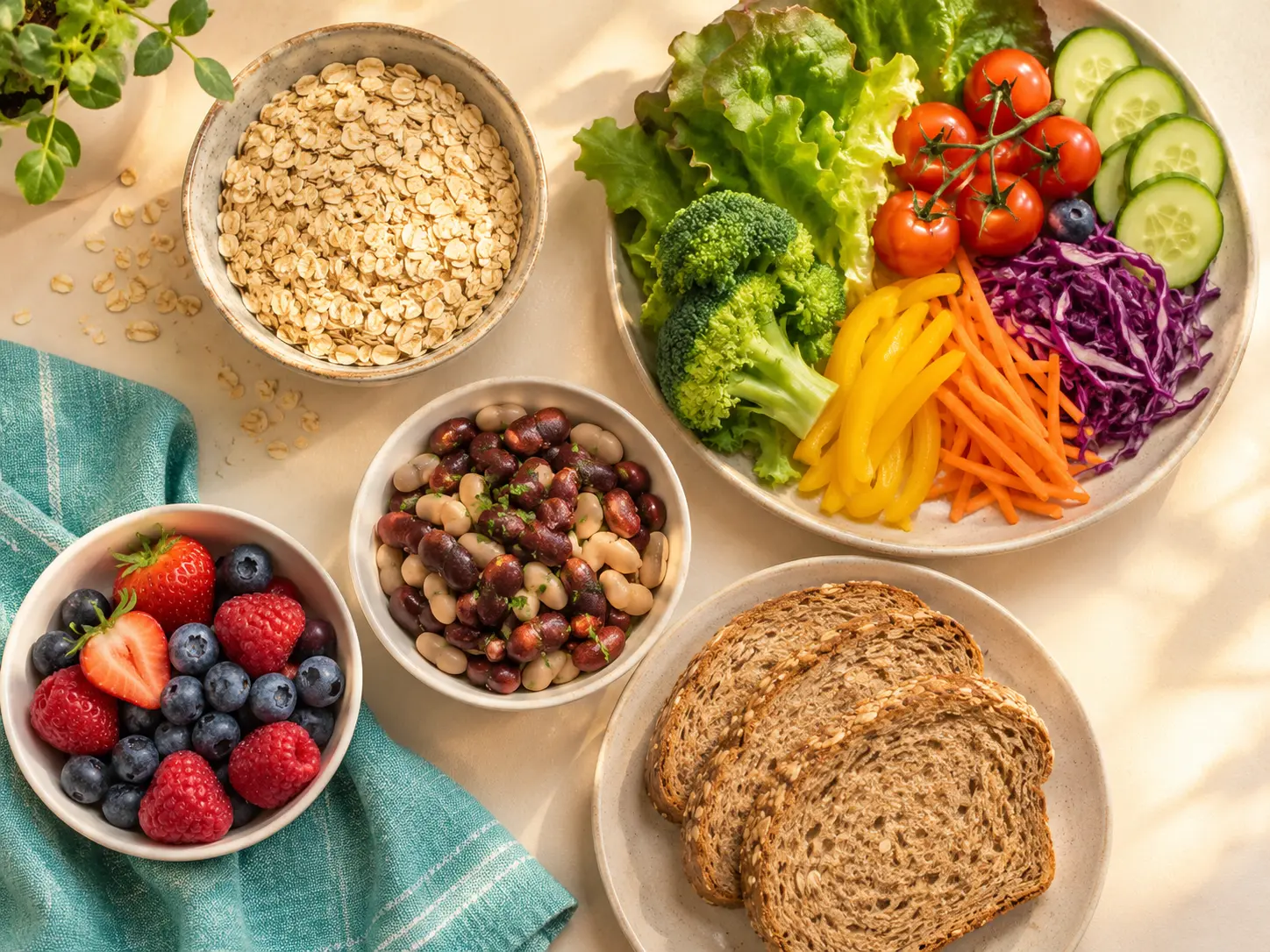
Dietary fiber is found in plant foods such as beans, oats, vegetables, fruit, nuts, and whole grains. Different fibers behave differently: some form gels, others add stool bulk, and some are fermented by gut microbes. Eating a variety of fiber-rich foods can support bowel regularity and cardiometabolic health, but more is not always better for every person. Increase fiber gradually, drink appropriate fluids, and adapt your approach if you have a digestive condition. [1–4]
What Is Dietary Fiber?
Dietary fiber includes carbohydrates and related plant components that resist digestion in the human small intestine. Naturally occurring fiber is part of foods such as lentils, apples, and oats. Some isolated or manufactured fibers also qualify as dietary fiber on US labels when the FDA recognizes beneficial physiological effects. Fiber is not one substance, and products labeled “high fiber” can have very different characteristics. [3]
For everyday eating, it is useful to focus first on a mix of minimally processed fiber-containing foods rather than one “best” type of fiber.
Soluble, Insoluble, and Fermentable Fiber
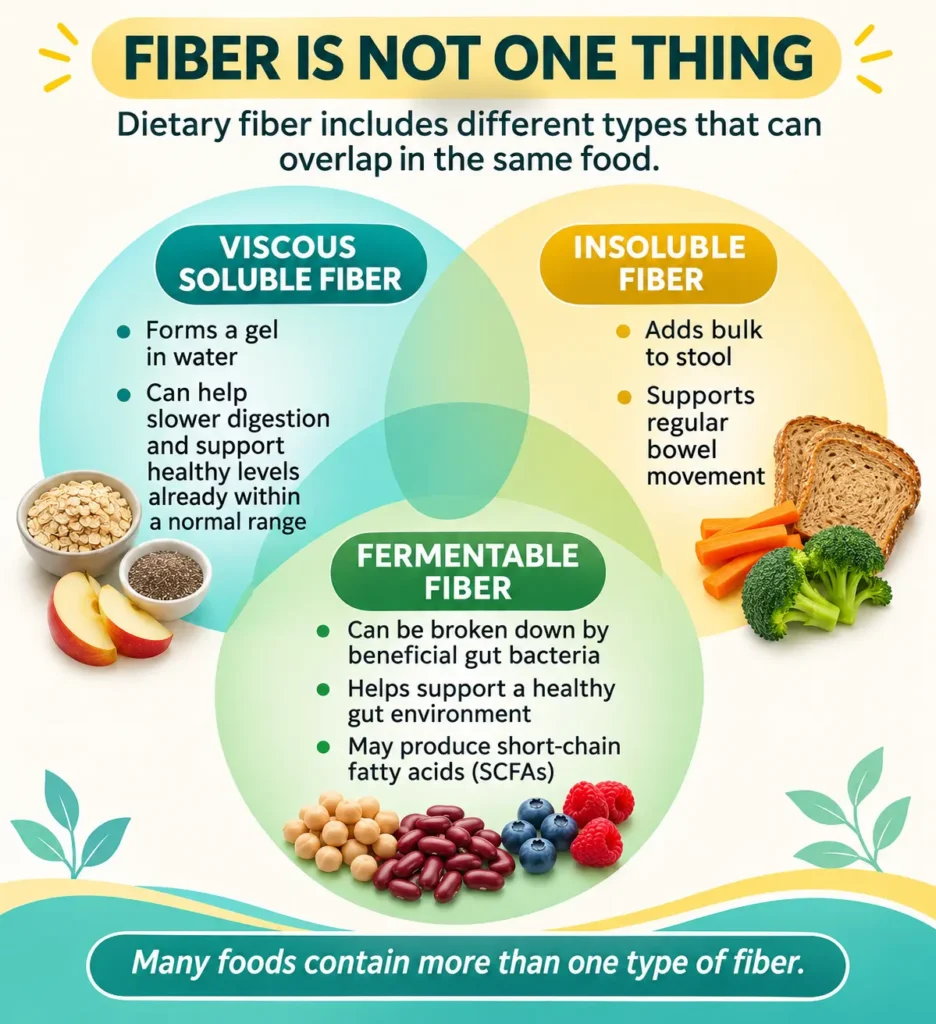
The commonly used soluble/insoluble distinction helps explain fiber, but viscosity (gel-forming ability) and fermentability also matter. A fiber may belong to more than one group.
| Fiber characteristic | Typical examples | Practical relevance |
|---|---|---|
| Soluble; some gel-forming | Oat beta-glucan, psyllium, some pectins | Certain viscous soluble fibers can lower LDL cholesterol and influence post-meal glucose; effects depend on the specific fiber and dose. |
| Predominantly insoluble | Wheat bran, parts of whole grains and vegetables | Often increases stool bulk; tolerance varies. |
| Fermentable | Inulin, some resistant starches, fibers in legumes | Can be used by gut microbes; may also cause gas and bloating. |
| Mixed fiber foods | Beans, vegetables, fruit, whole grains | Provide multiple fiber types plus vitamins, minerals, and other food components. |
Do not assume that all soluble fiber lowers cholesterol or that all insoluble fiber treats constipation. Individual results depend on the fiber preparation, dose, eating pattern, and health condition. [3–5]
What Can Fiber Do for Your Health?
Bowel regularity and constipation
Adequate fiber and fluid intake can help many people with constipation. Some fibers soften stool, some increase bulk, and certain supplements can help in selected cases. A sudden large increase may worsen gas or discomfort. Persistent constipation deserves assessment rather than indefinite self-treatment. [1,2]
Cholesterol and blood glucose
Certain viscous soluble fibers—particularly those studied in foods or supplements such as beta-glucan and psyllium—can modestly improve LDL cholesterol; some can reduce the rise in glucose after meals. These findings cannot be generalized to every fiber supplement. Fiber-rich eating patterns also tend to include foods associated with better long-term cardiometabolic health. [3,6]
Gut microbiome
Some fermentable fibers are converted by gut microbes into short-chain fatty acids. This is biologically important, but microbiome changes are not automatically proof of meaningful improvement in symptoms or disease outcomes. Benefits and tolerance differ by fiber and person. [3,5]
Fullness and weight management
Fiber-rich whole foods can contribute to satisfying meals, but “fiber causes weight loss” is an oversimplification. Overall food choices, energy intake, health status, and habits remain important. [3,4]
How Much Fiber Do You Need?
The US FDA Daily Value is 28 grams per day on a 2,000-calorie reference diet; this is a food-label benchmark, not a personalized prescription. NIDDK describes a broad adult range of approximately 22–34 grams per day, depending on age and sex. Energy needs and medical advice can change an appropriate goal. [1,4]
| Reference | Amount | How to use it |
|---|---|---|
| FDA Nutrition Facts Daily Value | 28 g/day | Compare packaged foods using grams and % Daily Value. |
| NIDDK general adult range | 22–34 g/day | Broad guidance; discuss individualized needs when appropriate. |
| Starting point if currently low | Add a small serving at a time | Focus on tolerability and consistency rather than an abrupt target. |
A food labeled “20% Daily Value” for fiber supplies approximately 5.6 g per serving (20% of 28 g). Look at the stated serving size. [4]
Best Food Sources of Dietary Fiber
Food-first choices provide fiber together with protein, micronutrients, and other useful constituents. Exact fiber quantities vary by portion, variety, and cooking method; check food labels or a reliable nutrient database for precise values.
| Food group | Useful examples | Easy way to include it |
|---|---|---|
| Beans and lentils | Lentils, chickpeas, black beans | Add a modest portion to soup, salad, or a grain bowl. |
| Whole grains | Oats, barley, whole-wheat bread, brown rice | Swap one refined-grain serving for a whole-grain choice. |
| Vegetables | Broccoli, carrots, peas, leafy greens | Add vegetables to lunch and dinner. |
| Fruit | Pears, apples with skin, berries, oranges | Choose whole fruit rather than juice more often. |
| Nuts and seeds | Almonds, chia seeds, flaxseed | Add a small portion to oatmeal or yogurt. |
If beans or certain vegetables cause symptoms, try smaller servings, adjust preparation, or choose other sources. You do not need to force one food that consistently makes you uncomfortable. [1,5]
Fiber Supplements: When Might They Help?
A fiber supplement may help when food intake alone is difficult or when a clinician recommends a specific fiber for a particular goal. Products differ: psyllium, inulin, wheat dextrin, and methylcellulose are not interchangeable in effects or tolerability. Read the exact product label for dose, fluid instructions, and timing around medicines. [2,3]
Supplements cannot replace the full nutritional benefits of beans, fruit, vegetables, and whole grains. For chronic digestive symptoms, ask which specific fiber—if any—has evidence for your condition before purchasing a product.
How to Increase Fiber Comfortably
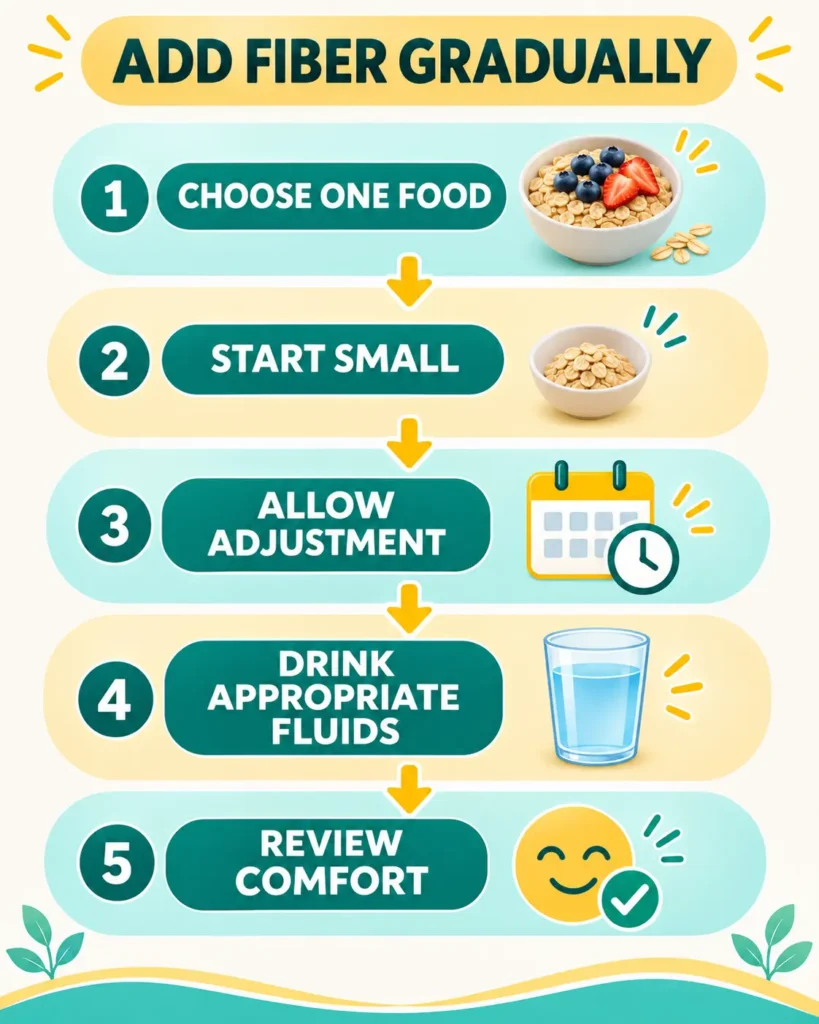
Try a gradual, flexible approach rather than doubling your intake overnight:
Notice what you currently eat for two or three typical days, without needing to count every gram.
Add one practical food swap, such as oats at breakfast or a small lentil portion at lunch.
Keep the change for several days and observe stool patterns, bloating, and comfort.
Drink enough fluid for your needs, especially when adding a bulking fiber; follow medical advice if you have a fluid restriction.
Add another change only when the first is comfortable; adjust or seek advice if symptoms persist.
Safety and Who May Need Individual Guidance
More fiber is not automatically appropriate for everyone. People with inflammatory bowel disease during certain flares, intestinal narrowing or obstruction risk, a recent gastrointestinal procedure, severe motility problems, or a clinician-prescribed low-fiber/low-residue diet should follow individualized instructions. Soluble fiber may be better tolerated for some people with irritable bowel syndrome, but large amounts of fermentable fiber can increase bloating. [5]
Seek prompt medical evaluation for severe or worsening abdominal pain, persistent vomiting, inability to pass stool or gas, blood in stool, or unexplained weight loss. Do not try to manage possible obstruction by increasing fiber. Fiber powders can be a choking risk if taken without the labeled amount of liquid; follow package instructions and ask a clinician or pharmacist about medicine separation. [2]
Five Everyday Ways to Build a Fiber-Rich Pattern
Start breakfast with oats and fruit.
Add beans or lentils in a portion you tolerate.
Choose one whole-grain swap.
Include a vegetable with two meals.
Use nuts or seeds as a small addition, when suitable.
Frequently Asked Questions
Is soluble fiber better than insoluble fiber?
Neither is universally “better.” Solubility, viscosity, and fermentability help predict certain effects, but the best mix depends on diet, goals, and tolerance.
Does fiber always help bloating?
No. Rapid increases, some highly fermentable fibers, and large portions can worsen gas or bloating. Change gradually and consider a dietitian if symptoms continue.
Are fiber supplements the same as eating vegetables?
No. Supplements may provide a specific fiber but generally lack the full range of nutrients and food components found in vegetables, legumes, fruit, and whole grains.
Can I take fiber if I have IBS?
Possibly, but the type and dose matter. NIDDK notes that soluble fiber may be more useful for IBS symptoms than insoluble fiber; individualized guidance helps when symptoms are persistent. [5]
Practical Takeaway
Most people can benefit from a varied, gradually increased intake of fiber-rich plant foods. The most useful strategy is one you can sustain and tolerate. Pay attention to the type of fiber when considering a supplement, and seek tailored guidance for ongoing digestive problems.
Related Reading
Digestive Wellness: A Whole-Picture Guide — https://ugetwell.com/health/digestive-wellness/
References