
Feeling drained, irritable, or unusually distracted halfway through a busy day? There are many possible explanations—poor sleep, a stressful workload, an overlooked meal—and sometimes too little fluid is one of them. Getting enough to drink is a simple support for normal function, not a treatment for stress itself.
QUICK INSIGHT
About Hydration and Stress
Mild dehydration can make fatigue, headache, concentration difficulties, and mood feel worse in some circumstances. A few studies found these effects after experimentally induced water loss, but they do not show that extra water treats chronic stress or anxiety. If you have been drinking very little, a glass of water and a normal break may be sensible first steps.
What dehydration has to do with a stressful day
Stress and dehydration are different things. Stress is how we respond to demands; dehydration occurs when the body loses more water than it takes in. Both can leave you feeling less comfortable or less focused, and their symptoms may overlap.
During a rushed day, drinking can slip down the priority list. Hot conditions, exercise, illness, and fluid losses can increase needs. A missed drink is not automatically dehydration, however, and not every headache or dip in concentration points to fluid intake.
What the research actually found
In a controlled study of 25 healthy young women, exercise-related fluid loss averaging about 1.36% of body mass was associated with worse fatigue, lower vigor, more perceived task difficulty, concentration complaints, and headache. Most objective cognitive test outcomes were unchanged. That is a useful signal, not proof that hydration fixes psychological stress.
A broader review found that hydration status may affect selected mood and cognitive outcomes, but study designs, participants, and results vary. Effects can depend on heat, exercise, baseline hydration, and how outcomes are measured.
How to tell whether a drink might help
There is no single perfect test you need to perform during an ordinary day. Think about the situation: Have you been drinking less than usual? Have you been in the heat or physically active? Are you thirsty? Urine color can offer a rough clue, though supplements, medications, and health conditions can change it.
A low-pressure hydration routine
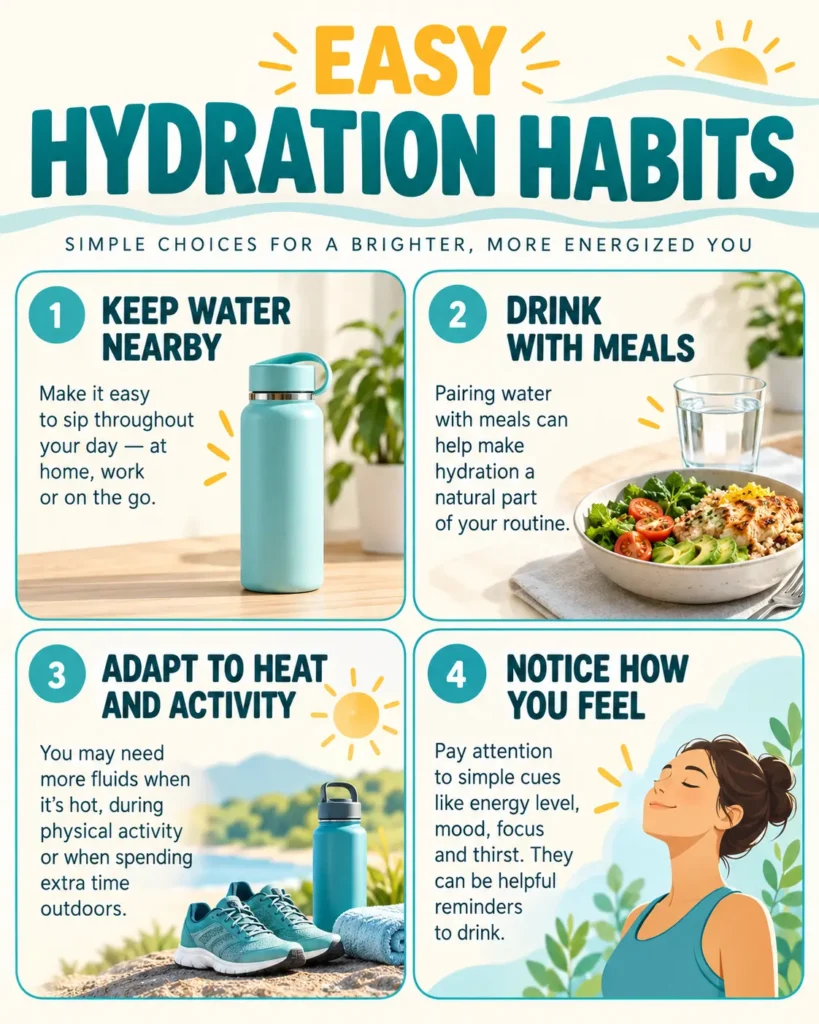
- Keep a glass or refillable bottle within reach at your desk or in your bag.
- Pair drinking with something you already do—breakfast, lunch, or a scheduled break.
- Choose water most often; unsweetened tea, milk, and other beverages can contribute to hydration too.
- Eat water-containing foods such as fruit, vegetables, or soup when they fit your meals.
- If you feel unwell, step away from the task, cool down if hot, and assess what else could be going on.
How much water do you need?
Your needs depend on climate, activity, body size, diet, and health. U.S. National Academies reference values for generally healthy adults are about 2.7 liters total water daily for women and 3.7 liters for men, from both foods and beverages. These are population-level adequate intakes, not personal drinking quotas or a requirement to drink that amount of plain water. Many people do well by responding to thirst and drinking with meals.
Some people need individualized fluid advice, including those with heart or kidney disease, prescribed fluid restrictions, or conditions affecting fluid balance. Do not force large amounts of water to hit a generic target.
When hydration is not the whole answer
Persistent exhaustion, recurring headaches, unusual thirst, frequent urination, or continuing mood changes deserve attention beyond water intake. Seek prompt medical care for confusion, fainting, inability to keep fluids down, signs of severe dehydration, or other severe symptoms. Drinking excessive water rapidly can also be harmful.
The practical takeaway
Don’t make hydration another stressful task. Keep drinks accessible, pay attention to heat and activity, and choose a repeatable routine. If you feel better after drinking, that is useful personal feedback—but it does not establish that dehydration caused your stress.
Related reading
For a broader view of stress, see Stress: A Whole-Picture Guide.
References
CDC — About Water and Healthier Drinks — https://www.cdc.gov/healthy-weight-growth/water-healthy-drinks/
Armstrong et al. (2012) — Mild dehydration affects mood in healthy young women (PubMed) — https://pubmed.ncbi.nlm.nih.gov/22190027/
Masento et al. (2014) — Effects of hydration status on cognitive performance and mood (PubMed) — https://pubmed.ncbi.nlm.nih.gov/24480458/
National Academies — Dietary Reference Intakes for Water — https://www.nationalacademies.org/read/10925/chapter/2
Safety note
This article is for general education, not diagnosis or individualized medical advice. Fluid needs vary. Consult a qualified health professional for persistent symptoms or medical conditions affecting fluid balance.