
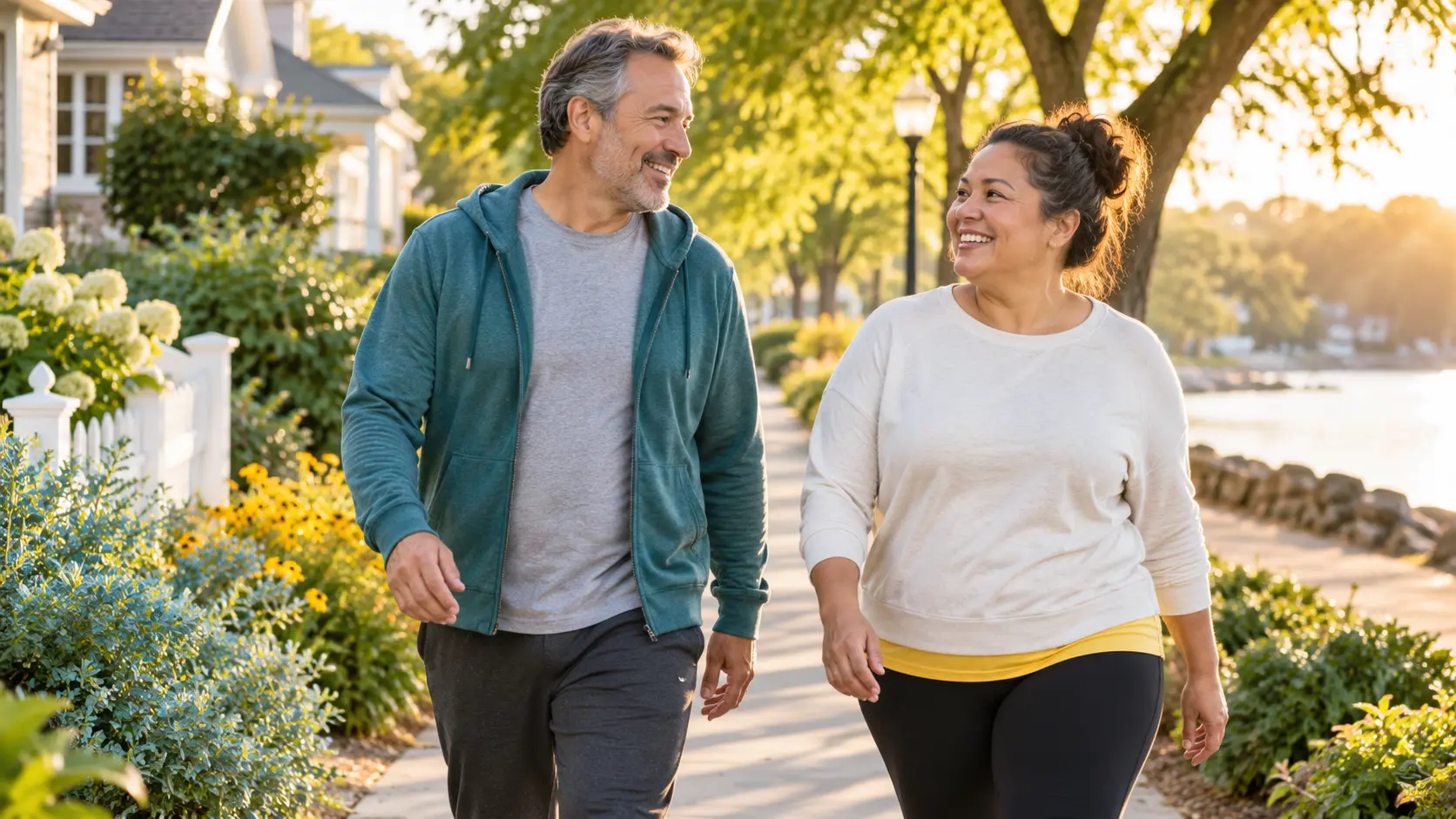
You do not need a perfect routine, a step counter, or even a particularly good mood to take a helpful walk. Sometimes the most realistic stress reset is to step outside, walk to the end of the block, and return. A simple walk can give you a change of scene, gentle movement, and a brief break from the demands in front of you.
The evidence is encouraging—but it does not mean walking cures stress, anxiety, or burnout. The goal is a manageable habit that supports you alongside sleep, practical problem-solving, relationships, and professional care when needed.
QUICK INSIGHT
About Walking for Stress
Walking is a low-barrier way to add movement to your day. Research links physical activity with mental-health benefits, and trials suggest walking can reduce anxiety symptoms compared with inactivity. Try an easy five- to ten-minute walk at a pace that feels comfortable; shorter walks count. If symptoms are persistent or disruptive, walking belongs beside—not instead of—appropriate support.
Why might walking help when you feel stressed?
Stress often keeps attention focused on the next demand. Walking can create an intentional change of pace: you move your body, interrupt prolonged sitting, and perhaps spend time outdoors or with someone you trust. These are plausible everyday reasons many people find it helpful. They are not proof that any one mechanism explains the effect.
The CDC notes that a session of moderate-to-vigorous activity can reduce short-term feelings of anxiety in adults; regular activity is also associated with better sleep and mental health. An easy stroll may feel beneficial too, but research does not establish that every intensity or duration produces the same effect.
What does the evidence actually say?
A 2024 systematic review and meta-analysis pooled randomized trials of walking and depressive or anxiety symptoms. In adults, walking performed better than inactive controls for anxiety symptoms, although results varied substantially among studies. Walking was not clearly superior to other active approaches, and the trials did not establish a single ideal walking dose.
A separate 2023 review of single exercise sessions found mixed results for immediate anxiety relief: some exercise conditions helped, others did not, and the most effective activity, intensity, and duration were unclear. Much of that research studied exercise generally—not walking specifically.
Bottom line: walking is a reasonable, accessible self-care option with supportive evidence, but the size of the benefit varies, and a walk is not a substitute for mental-health treatment or for addressing stressful conditions.
A simple stress-relief walk: start here
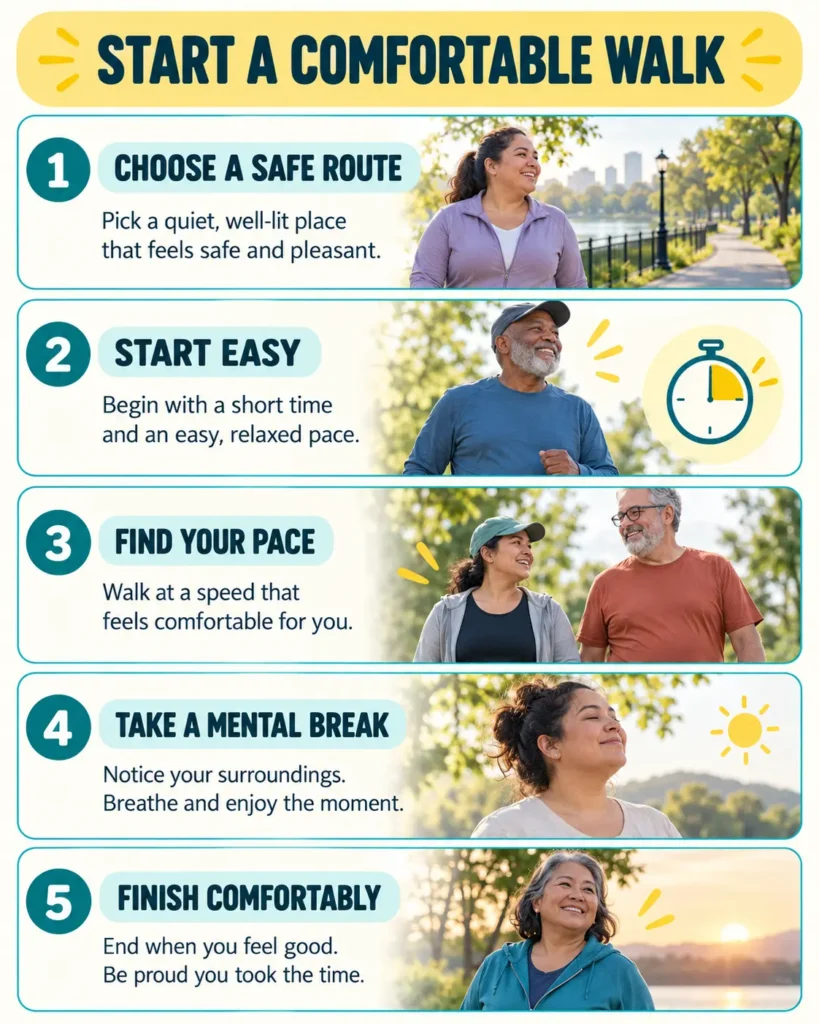
- Choose a comfortable route. Pick a familiar, level sidewalk, indoor corridor, park path, or another place where you feel safe. An indoor walking route counts when weather, air quality, or safety make outdoors impractical.
- Start easy. Walk for about five minutes—or less if that suits you. The first goal is consistency and comfort, not speed.
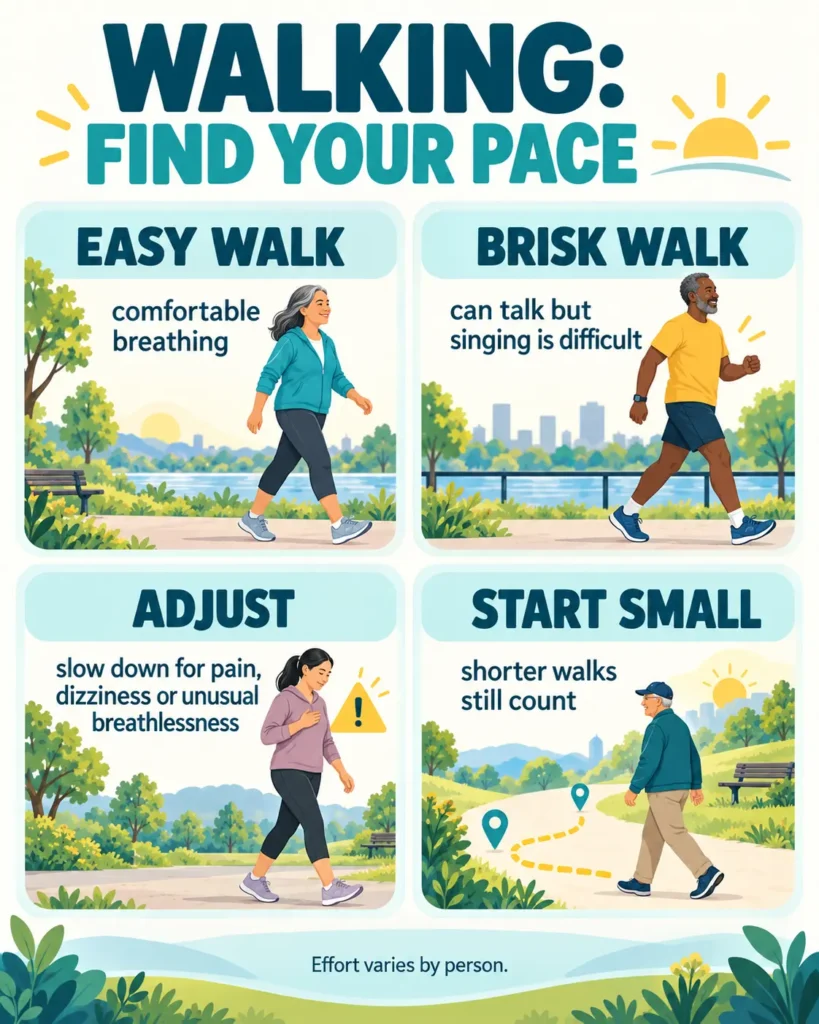
- Find your pace. At a comfortable pace, you can speak normally. If you want to walk briskly, the CDC’s talk test for moderate effort is that you can talk but not sing; your own fitness and health influence what feels moderate.
- Let it be a break. Notice the path, the air, or the rhythm of your steps if you find that useful. You do not need to practice a formal mindfulness exercise or force yourself to think positively.
- Finish comfortably. Slow down toward the end. Notice how you feel, and decide whether a similar short walk would fit another day.
Choose a version that fits your day
| Situation | Try This | Why It Can Work |
|---|---|---|
| Very little time | A two- to five-minute loop near home or work | Less planning and a low barrier to starting |
| Low energy | A slow, shorter walk with a turnaround point | Keeps effort manageable |
| Hard to focus | Walk with a friend or choose a predictable route | Adds structure or social connection |
| Weather or access barrier | Walk indoors, in a safe hallway, or at an accessible facility | Avoids making outdoor conditions a requirement |
| Limited mobility | Use a mobility aid as appropriate, take rests, or choose a suitable alternative movement | Adapts the activity to your abilities |
If walking is painful, unsafe, or inaccessible, a different form of comfortable movement may be a better option. There is no single activity everyone must do.
How often should you walk?
For a first week, try three short walks of about five to ten minutes, adjusted to your current abilities. This is a practical sample routine, not a research-proven stress-treatment dose. Add time gradually only if you remain comfortable.
Broader US activity guidance recommends at least 150 minutes of moderate-intensity aerobic activity weekly for most adults, plus muscle-strengthening activity on two days. That is a general long-term health target—not a requirement for getting started or a prescription for stress relief. Some activity is better than none.
IMAGE #3 PLACE HERE — walk intensity and pace infographic (4:5).
What can make a walking habit easier?
- Link it to a familiar moment, such as after lunch or after closing your laptop.
- Keep comfortable walking shoes handy; do not assume specialized gear is necessary.
- Choose a route you actually like, even if it is short and unremarkable.
- On demanding days, shorten the walk instead of abandoning the idea entirely.
- If tracking steps increases pressure, skip tracking. The walk is not a performance test.
Common mistakes worth avoiding
Starting with a demanding daily target, pushing through pain, choosing an unsafe route, or expecting an immediate mood change can make walking harder to sustain. A walk also cannot resolve every external source of stress—heavy workloads, money pressures, relationship difficulties, or illness may need direct action and support.
When to slow down or seek advice
Stop walking and seek urgent medical attention for chest pain, fainting, or severe/unusual breathlessness. If you develop dizziness, unexpected pain, or concerning symptoms, stop and seek medical advice. People with significant heart or lung conditions, recent injury, mobility limitations, or uncertain activity restrictions may need individualized guidance before increasing activity. Adapt the route to your balance and accessibility needs, and take precautions for heat, traffic, and visibility.
If stress is persistent, interferes with everyday life, or comes with panic symptoms, significant sleep problems, or worsening mood, speak with a qualified healthcare or mental-health professional. If there is immediate danger or thoughts of self-harm, contact emergency services or an appropriate crisis service; in the US, call or text 988.
The whole picture: where walking fits
A walk can sit alongside other stress-supporting habits: regular meals, enough rest, relaxing activities, supportive relationships, boundaries around demands, and professional help when needed. You do not need to do everything at once. Choose one small, repeatable action that fits your circumstances.
Frequently asked questions
Is a five-minute walk too short to matter?
No. Short periods can help you get moving and build a habit. Research has not identified one minimum duration that guarantees stress relief, so use a manageable starting point rather than an all-or-nothing rule.
Do I have to walk outdoors?
No. Indoor walking is an option. Being outside may be pleasant, but safe, accessible movement matters more than a particular setting.
Is brisk walking better than slow walking for stress?
Not necessarily. Some immediate mental-health findings involve moderate-intensity exercise, but the ideal intensity for stress-related benefits is uncertain. Choose a pace that is comfortable and appropriate for your health.
References
CDC — Benefits of Physical Activity — https://www.cdc.gov/physical-activity-basics/benefits/
CDC — Adult Activity: An Overview — https://www.cdc.gov/physical-activity-basics/guidelines/adults.html
Walking and depression/anxiety: 2024 systematic review — https://pubmed.ncbi.nlm.nih.gov/39045858/
Acute exercise and state anxiety: 2023 systematic review — https://pubmed.ncbi.nlm.nih.gov/37624125/
Editorial note: Evidence from walking trials and from broader exercise studies is distinguished above. Associations and study averages are not promises of individual results.