
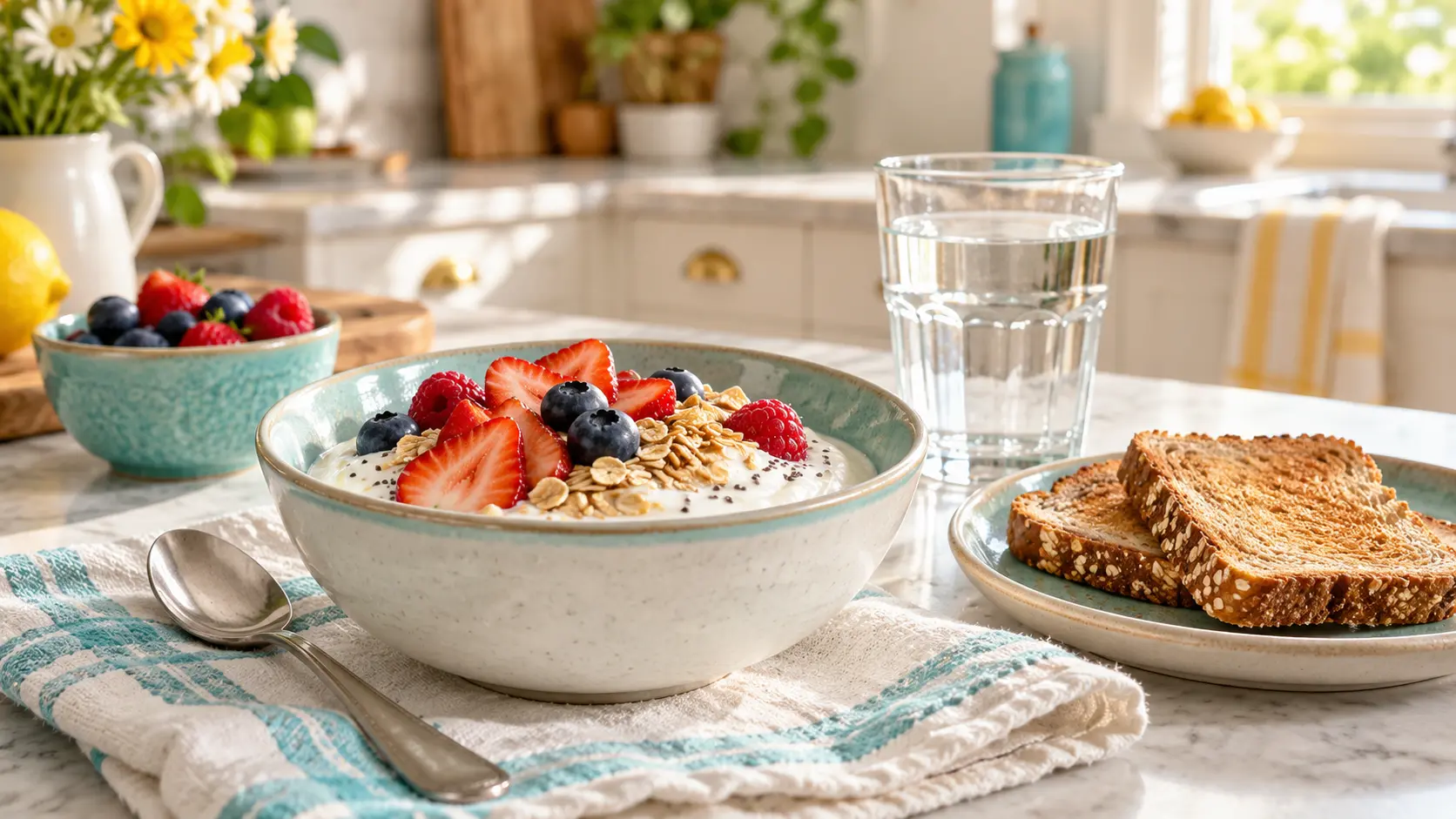
Some days, making lunch feels like one task too many. You may be hungry but not interested in food, or you may reach the afternoon realizing you have eaten almost nothing. On days like these, simple food usually beats a perfect meal plan.
QUICK INSIGHT
About Food for Stress
Stress can change appetite. If eating feels difficult, start with a manageable food you tolerate, and try pairing a carbohydrate with some protein or fat. Yogurt with fruit, toast with peanut butter, eggs with bread, or soup with beans are all useful options. These foods do not treat stress; they make regular nourishment easier when life is demanding.
Why stress can make food harder
Stress may affect appetite and eating routines in different directions. Some people want less food, while others snack more often. Fatigue and time pressure can also make shopping, cooking, or deciding what to eat feel unexpectedly difficult. There is no need to find one magical “anti-stress” ingredient. It is more helpful to have a small set of realistic options ready.
Eight easy foods and food groups to keep in rotation
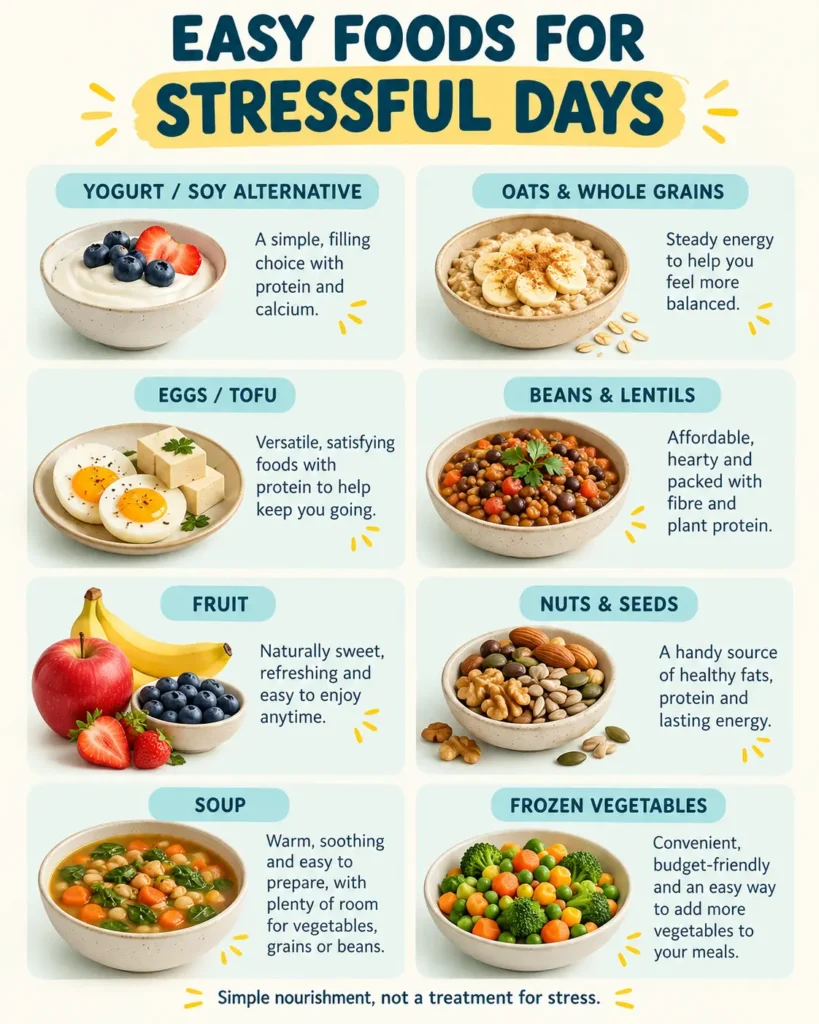
1. Yogurt or a fortified soy alternative: an almost-instant starting point
Open the container, add fruit or oats, and breakfast is done. Dairy yogurt offers protein; the protein and calcium content of plant-based alternatives varies, so check labels. Choose a version that suits your dietary needs and appetite.
2. Oatmeal and other whole grains: a calm, low-decision base
Oats can be made warm or overnight, sweet or savory. Add milk, yogurt, nuts, or fruit to make a more complete meal. Whole-grain toast, brown rice, and whole-wheat pasta work just as well as uncomplicated meal foundations.
3. Eggs or tofu: adaptable protein
A scrambled egg, hard-boiled egg, or quick tofu scramble can turn toast or leftover rice into a meal. The point is convenience, not a claim that protein foods lower stress hormones.
4. Beans and lentils: pantry-friendly comfort
Canned beans can join a soup, microwave rice, or a simple tortilla. Lentils are equally versatile. Rinse canned beans if you want to reduce some sodium, and adjust the amount to your digestive comfort.
5. Bananas, berries, or whatever fruit you actually enjoy
Fruit is a low-preparation option when full meals are unappealing. Fresh, frozen, and unsweetened canned choices can all fit. Pairing fruit with yogurt, nuts, or toast may make a more substantial snack.
6. Nuts, seeds, and nut butter: compact additions
A spoonful of peanut butter on toast or seeds on oatmeal can add fat, protein, and texture without much preparation. Pay attention to allergies and choking risks for young children; portions can be adjusted to appetite.
7. Soup: especially useful when chewing a full meal feels like work
Soup is flexible: broth, vegetables, grains, and beans or another protein can be combined in countless ways. Store-bought versions can be useful shortcuts. Compare labels if sodium intake matters to you.
8. Frozen vegetables: no chopping required
Keep peas, broccoli, or mixed vegetables available to add to rice, pasta, eggs, or soup. Frozen vegetables count, and they make it easier to include variety without preparing everything from scratch.
Which option fits the kind of day you are having?
| Situation | Easy food choice | Make it more complete |
|---|---|---|
| Not hungry in the morning | Yogurt or soy yogurt; banana | Add oats, nuts, or seeds |
| Five-minute lunch | Beans and microwave rice | Add frozen vegetables and olive oil |
| Want something warm | Soup | Add beans, chicken, or tofu and bread |
| Need a portable snack | Fruit or whole-grain crackers | Pair with nut butter or cheese |
| No energy to cook | Whole-grain toast | Top with eggs, hummus, or peanut butter |
Three no-fuss meal ideas
The five-minute bowl: microwave rice, canned beans, frozen vegetables, and a seasoning you enjoy. The small breakfast: yogurt or fortified soy alternative plus fruit and oats. The soup upgrade: prepared vegetable soup with extra lentils or beans and a slice of whole-grain bread.
Use these as flexible combinations, not rules. Food access, allergies, appetite, budget, and personal preferences matter more than a picture-perfect plate.
When appetite is low, make the next step smaller
Try eating a small amount of something familiar rather than forcing a large meal. Keep easy foods where you can see them, use leftovers, and accept pre-cut or frozen ingredients. If your appetite returns later, you can eat more. Water or another suitable drink can accompany meals, but it is not a replacement for food.
A single snack will not solve ongoing stress. Regular meals are one supportive part of a bigger picture that also includes sleep, movement, mental skills, and help when needed.
Safety and when to seek help
If poor appetite persists, you cannot eat or drink enough, have repeated vomiting, feel faint, or lose weight unintentionally, contact a healthcare professional. People managing diabetes, food allergies, kidney disease, eating disorders, or other medical nutrition needs may require individualized advice. This article is general educational information, not a prescribed diet or treatment.
A useful takeaway
Choose two or three foods from this list that you already like. Keep them available for busy days. Having one easy breakfast, one warm meal, and one simple snack in mind is a practical way to make eating less complicated.
For a broader approach that combines nutrition, movement, mental strategies, and daily routines, explore our Stress: A Whole-Picture Guide.
References
NIDDK — Managing stress and appetite-related changes — https://www.niddk.nih.gov/health-information/professionals/diabetes-discoveries-practice/managing-stress-for-diabetes-health-care-professionals
USDA MyPlate — Make a plan — https://www.myplate.gov/eathealthy/budget/budget-weekly-meals
USDA MyPlate — Vegetables — https://www.myplate.gov/web/web/eat-healthy/vegetables
USDA MyPlate — Protein foods — https://www.myplate.gov/web/web/eat-healthy/protein-foods
NHS — Unintentional weight loss — https://www.nhs.uk/symptoms/unintentional-weight-loss/