
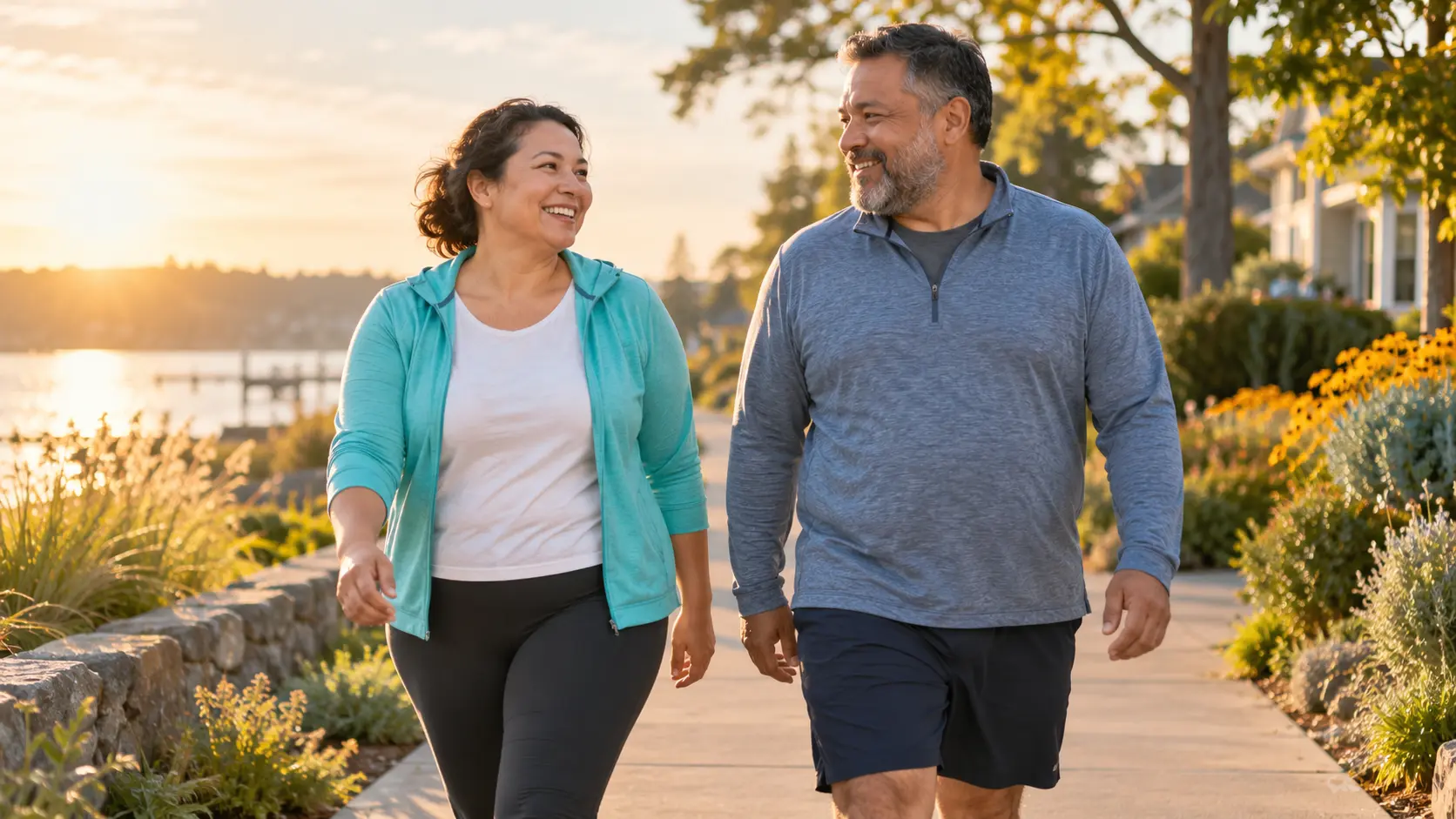
Walking can be the simplest way to add movement to an ordinary day. You do not need a gym, a perfect step count, or special athletic ability. A manageable walk around your block—or along an indoor hallway—can be a worthwhile start.
Walking at a comfortable pace is a way to move more. When it becomes brisk enough to raise your breathing and heart rate, it can also contribute to aerobic activity goals. The right starting point depends on your body and circumstances—not someone else’s mileage.
Try this today: pick a familiar, reasonably safe route and walk for a few comfortable minutes. Finish feeling able to do it again, rather than exhausted.
Quick insight
| Best starting point | What to know |
|---|---|
| Accessible, low-equipment movement | Start at an easy pace; adjust distance and time to comfort |
| A useful intensity check | At moderate effort, you can generally talk but not sing |
| Safety first | Stop for chest pain, fainting or severe unexpected breathlessness; seek urgent help |
What counts as walking?
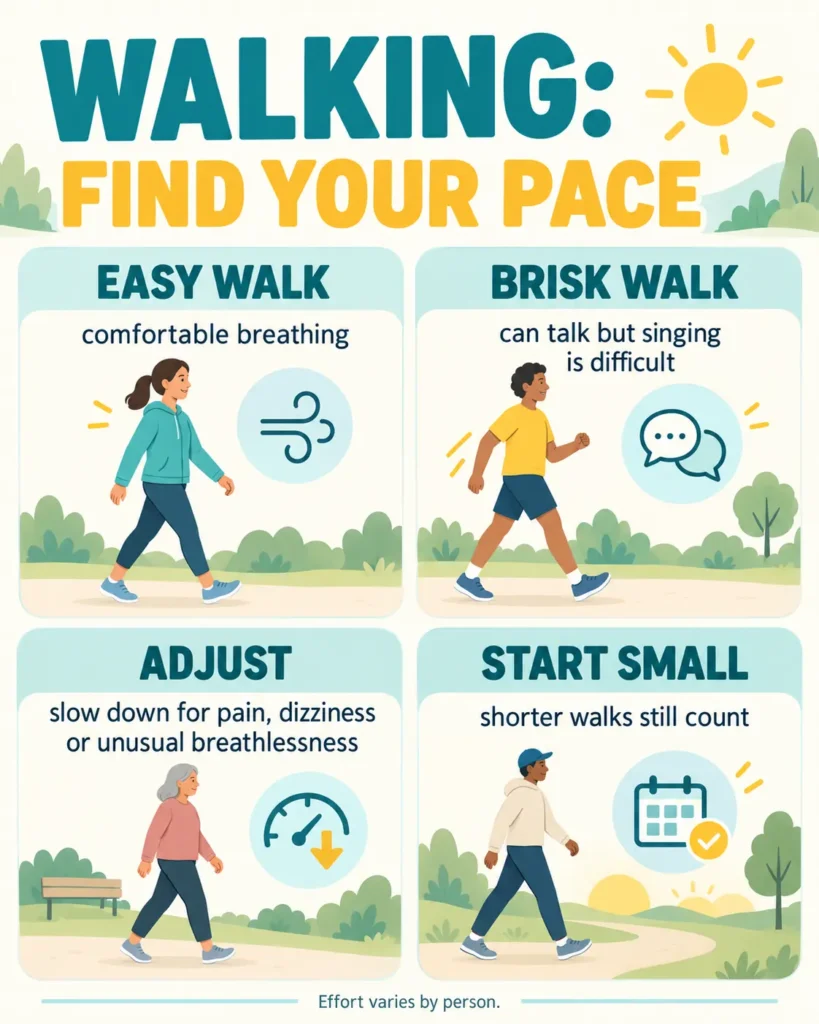
Walking is moving on foot at a pace that fits the person and the setting. A stroll, a brisk walk, an indoor loop, or a walk broken into brief outings may all be ways to add movement. Brisk walking is typically moderate-intensity for many adults, but effort varies with fitness, terrain and health. The “talk test” is more useful than a universal speed: at moderate intensity, you can speak in sentences but singing is difficult.
Why walking is worth doing
Regular physical activity supports cardiovascular health, metabolic health, physical function and mental wellbeing. Walking is one accessible way to accumulate aerobic activity. Research and public-health guidance focus on regular movement over time—not a single miracle walk.
Many people also value a walk as an easy transition between tasks, a chance to get outdoors, or a low-pressure social activity. Those personal benefits are good reasons to walk, but results differ and walking does not replace treatment for a health condition.
For generally healthy adults, CDC guidance recommends at least 150 minutes a week of moderate-intensity aerobic activity plus muscle-strengthening activity on two days. This is a population-level target, not a requirement for your first week. Even smaller amounts of activity can offer benefits.
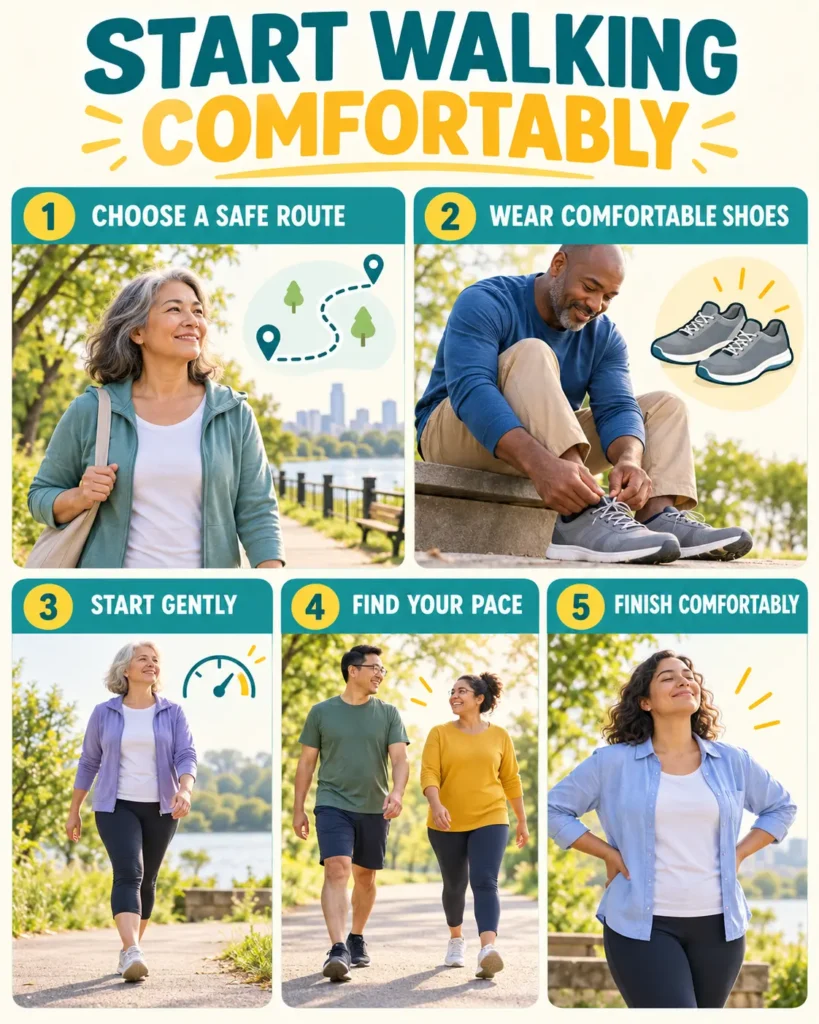
How to get started: a simple first walk
- Choose a route you already know. Consider level ground, lighting, traffic, rest spots and weather. Indoor routes count.
- Dress for comfort. Wear shoes that fit and suit the surface; consider water and sun protection as conditions require.
- Begin gently. Walk slowly enough to settle into your movement and notice how you feel.
- Find a sustainable rhythm. Keep a pace where breathing feels manageable; a brisk pace is optional, not mandatory.
- Finish comfortably. Slow down near the end. Check for unusual pain, dizziness or symptoms rather than pushing through them.
A flexible starter week
This is an example, not an individualized exercise prescription. If you are new to walking, you might try several short, comfortable walks on days that suit you. On other days, rest or choose gentle movement. When walking starts to feel easier, add a little time or another outing before worrying about speed.
| Option | Illustrative approach | Good adjustment |
|---|---|---|
| Small start | A few minutes on a familiar route | Pause or turn back whenever needed |
| Building consistency | Short walks on several days | Split a walk into smaller outings |
| More brisk activity | Gradually spend some time at talk-test pace | Return to easier pace as needed |
There is no universal 10,000-step requirement and no fixed pace everyone should follow. Consistency matters more than chasing a wearable’s number.
Make walking work in everyday life
Attach a walk to something already in your routine: after lunch, before your commute, or while catching up with a friend. If heat, rain, air quality, stairs or poor sidewalks make outdoor walks impractical, choose a safe indoor hall, mall or accessible track. Walking with a companion can help with accountability and safety.
If you have limited mobility or balance concerns, use a familiar accessible route, mobility support as appropriate, and seek advice from a qualified clinician or therapist when necessary. You can also benefit from other suitable physical activities when walking is not a workable option.
Common mistakes—and easy fixes
- Doing too much too soon: start with a repeatable amount; build gradually.
- Treating discomfort as a challenge: pain, pronounced dizziness or alarming symptoms are reasons to stop and assess.
- Comparing pace or steps: terrain, fitness and ability change what counts as effort.
- Ignoring the environment: use visible crossings, appropriate footwear and weather precautions.
- Assuming walking covers all exercise needs: include muscle strengthening and, for older adults, balance work as appropriate.
Safety: when to check first
For most adults, moderate activity such as walking is generally safe. If you have significant heart, lung or joint disease, repeated falls, exercise-related symptoms, or are recovering from illness or injury, ask a healthcare professional how to start or adapt safely. Avoid using this guide as rehabilitation instructions.
Stop walking and seek urgent medical help if you develop chest pain, fainting, or severe or unusual shortness of breath. New weakness or other alarming symptoms also deserve prompt medical assessment. For heat, uneven ground, traffic and poor air quality, modify your route or choose an indoor option.
A small next step
Choose one safe, comfortable walk that fits tomorrow’s schedule. Afterward, ask: Was the route convenient? Did the pace feel sustainable? What small change would make it easier to repeat? That is a stronger foundation than an ambitious plan you dread.
Frequently asked questions
Does a short walk count?
Yes. Some movement is better than none, and shorter bouts can be added across the day. Brisk walking contributes to aerobic activity recommendations when the intensity is moderate for you.
How fast should I walk?
There is no single correct speed. Use comfort and the talk test. A brisk walk may feel moderate to one person and hard to another.
Is walking enough exercise?
Walking can provide aerobic activity, but adult public-health guidance also includes muscle-strengthening activity. Older adults may additionally benefit from balance-focused activity.
Interested in using walking as part of your stress-management routine? Explore our guide to walking for stress relief.
References
CDC — Adult Activity: An Overview — https://www.cdc.gov/physical-activity-basics/guidelines/adults.html
CDC — What Counts as Physical Activity for Adults — https://www.cdc.gov/physical-activity-basics/adding-adults/what-counts.html
CDC — Adding Physical Activity as an Adult — https://www.cdc.gov/physical-activity-basics/adding-adults/index.html
CDC — Tips for Getting More Physically Active Minutes — https://www.cdc.gov/physical-activity/features/getting-more-active-minutes.html