
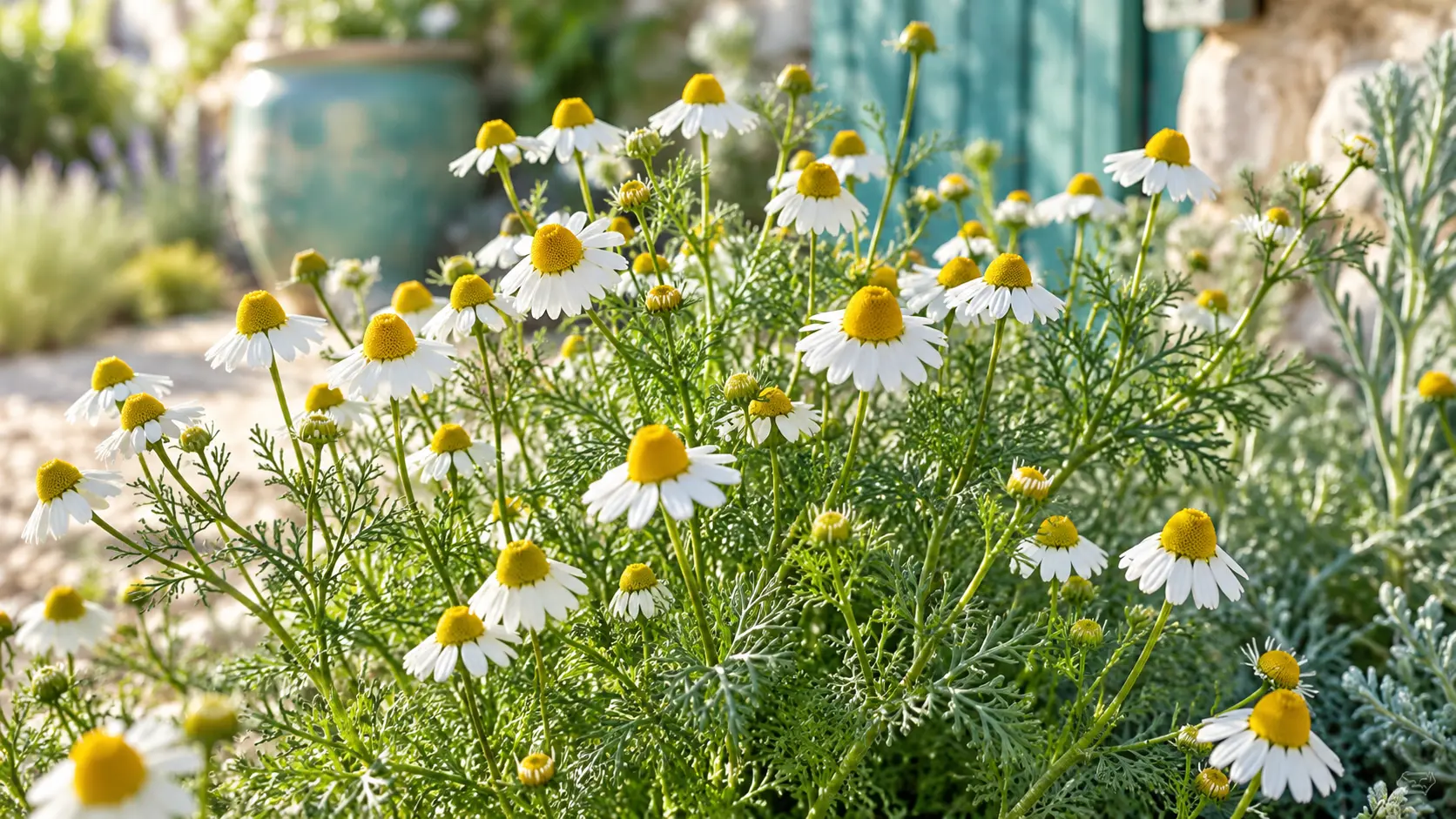
Chamomile is an aromatic flowering herb best known as a mild-tasting tea used as part of a comforting evening or after-meal ritual. It is also sold in capsules, concentrated extracts, creams, and rinses. Those forms are not interchangeable, and some need more caution than an ordinary cup of tea.
The most familiar medicinal chamomile is German chamomile, Matricaria recutita. People often reach for it to unwind or soothe minor digestive discomfort; scientific evidence for treating a specific condition is more limited than its long history of use may suggest. [1,2]
QUICK INSIGHT
About Chamomile
Common name: German chamomile (also called chamomile or matricaria)
Botanical name: Matricaria recutita L. (also called Matricaria chamomilla or Chamomilla recutita)
Part used: Flower heads
Herbal role: Aromatic calming nervine—a traditionally used herb associated with relaxation—and a gentle digestive tea ritual
Common forms: Dried-flower tea, liquid or dry extracts, capsules, skin preparations, and oral rinses
Herbal Role and Functions
Chamomile is best understood as a gentle aromatic herb whose flower heads are used in both everyday drinks and more concentrated medicinal preparations. These are its common functional roles:
Calming nervine: Traditionally used to help people settle into a restful routine. A warm tea can be pleasant, but comfort from the ritual does not prove treatment of anxiety or insomnia.
Digestive comfort: Often used after meals for mild stomach unease. European traditional-use assessments cover some minor digestive complaints, but robust modern clinical proof is limited. [2]
Topical and oral care: Some chamomile preparations are used as skin products or mouth rinses. Their ingredients and intended uses vary, and allergy precautions remain important. [1,2]
Common Forms and How They’re Used
Dried flowers and tea: Dried German chamomile flower heads are steeped as a beverage. Follow food or tea packaging directions; there is no established tea recipe that treats a medical condition.
Capsules and extracts: May contain substantially different amounts and chemical profiles from tea. Findings from a trial of a standardized extract should not be applied automatically to any capsule or homemade infusion. [1,3]
Creams, ointments, and rinses: Products for skin or mouth exposure need appropriate labeling and application guidance. Stop use if irritation develops, and avoid using chamomile near the eyes. [1]
Essential oil: A concentrated product, not the same as chamomile tea or an oral extract. Do not ingest essential oils or substitute them for the preparations studied in clinical trials.

Where Chamomile May Help
Unwinding and stress-related tension: Chamomile tea may be a pleasant cue to slow down. Preliminary human research suggests that some oral chamomile extracts may reduce symptoms in people with generalized anxiety disorder, but findings are not definitive and do not establish a benefit for every chamomile preparation. It is not a substitute for evidence-based anxiety care. [1,3,4]
Sleep and bedtime routines: A caffeine-free chamomile tea can fit into a bedtime wind-down routine. However, direct evidence that chamomile treats insomnia is insufficient; a small insomnia trial did not establish meaningful benefit. If poor sleep persists or affects your days, seek appropriate evaluation. [1,3]
Minor digestive complaints: Chamomile flowers have a history of use in teas and traditional products for mild gastrointestinal discomfort. Seek medical advice for persistent, worsening, or unexplained symptoms rather than relying on tea. [2]
Skin and mouth comfort: Some specific external and rinse preparations have been studied or used traditionally. Product formulation and context matter; do not assume a kitchen tea is interchangeable with a prepared topical medicine. [1,2]
Safety First
Allergy: Chamomile belongs to the daisy family (Asteraceae). People allergic to ragweed, daisies, chrysanthemums, or marigolds may react. Rare severe allergic reactions, including anaphylaxis, have been reported. Stop use for suspected reactions; seek emergency help for breathing difficulty or throat swelling. [1]
Medicines and interactions: Reported concerns include warfarin and some drugs metabolized in the liver; sedative interactions are also possible. Anyone taking prescription medicines, particularly blood thinners, sedatives, or immunosuppressants, should discuss medicinal chamomile use with a clinician or pharmacist. [1,5]
Hormone-related concerns: NCCIH describes preliminary concerns about possible estrogen-like activity and interactions with hormonal contraceptives. The clinical significance is uncertain; ask a clinician before medicinal use if this applies to you. [1]
Pregnancy and breastfeeding: There is insufficient reliable safety information about medicinal chamomile use during pregnancy or lactation. Seek personalized guidance rather than assuming “herbal” means harmless. [1]
Children and infants: Do not use chamomile to treat infant colic or serious symptoms without professional advice. Products combining several herbs do not prove chamomile alone is effective. [1]
Side effects and topical use: Nausea, dizziness, skin irritation, and allergic reactions are possible. Avoid exposure around the eyes and follow the intended product instructions. [1]

Quality and Buying Basics
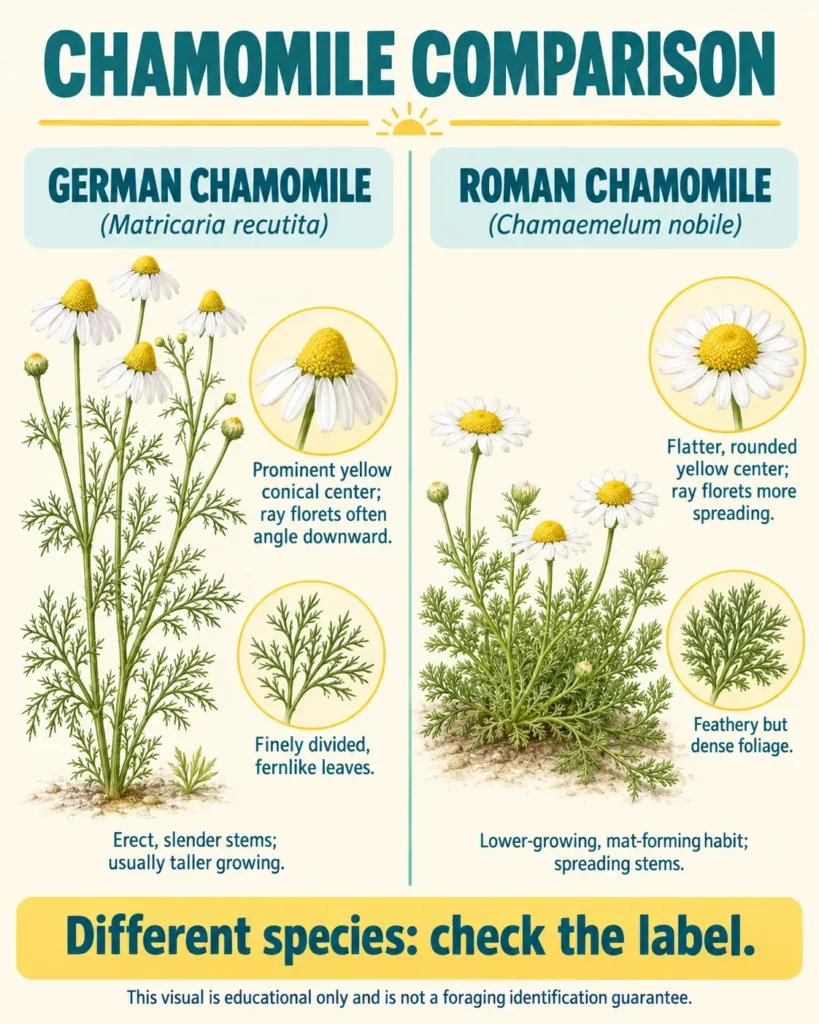
Choose products that identify the species, especially when the label simply says “chamomile.” German chamomile (Matricaria recutita) and Roman chamomile (Chamaemelum nobile) are different plants; studies on one cannot automatically establish the same effects for the other.
For dried flowers, look for clear ingredient labeling and sensible storage instructions. For supplements or extracts, look for the exact plant part, preparation type, manufacturer information, and independent quality testing when available. Avoid claims that a product “cures insomnia” or replaces anxiety treatment.
How It Fits With Other Herbs
Lemon balm: Another aromatic herb commonly associated with a calming tea ritual. Combining the two does not establish superior clinical benefit; review medicines and individual sensitivities. See the published Lemon Balm profile for species and preparation details.
Lavender: Often encountered in aromatic preparations. Lavender oils, oral standardized products, and chamomile teas are different approaches, not interchangeable treatments.
Passionflower: Also discussed in calming-herb contexts; evidence varies by species and extract. Do not layer multiple sedating supplements without reviewing interactions.
A simple approach is to choose one familiar, labeled preparation at a time rather than assuming a multi-herb mixture is stronger or safer.
References
1. NIH NCCIH — Chamomile: Usefulness and Safety (updated 2024)
https://www.nccih.nih.gov/health/chamomile
2. European Medicines Agency — Matricariae flos: Herbal medicinal product
https://www.ema.europa.eu/ga/medicines/herbal/matricariae-flos
3. Hieu et al. (2019) — Systematic review of chamomile, anxiety and sleep; Phytotherapy Research
https://pubmed.ncbi.nlm.nih.gov/31006899
4. Mao et al. (2016) — Long-term chamomile in generalized anxiety disorder; Phytomedicine
https://pubmed.ncbi.nlm.nih.gov/27912875
5. NIH NCCIH — Herb-Drug Interactions: What the Science Says
https://www.nccih.nih.gov/health/providers/digest/herb-drug-interactions-science