
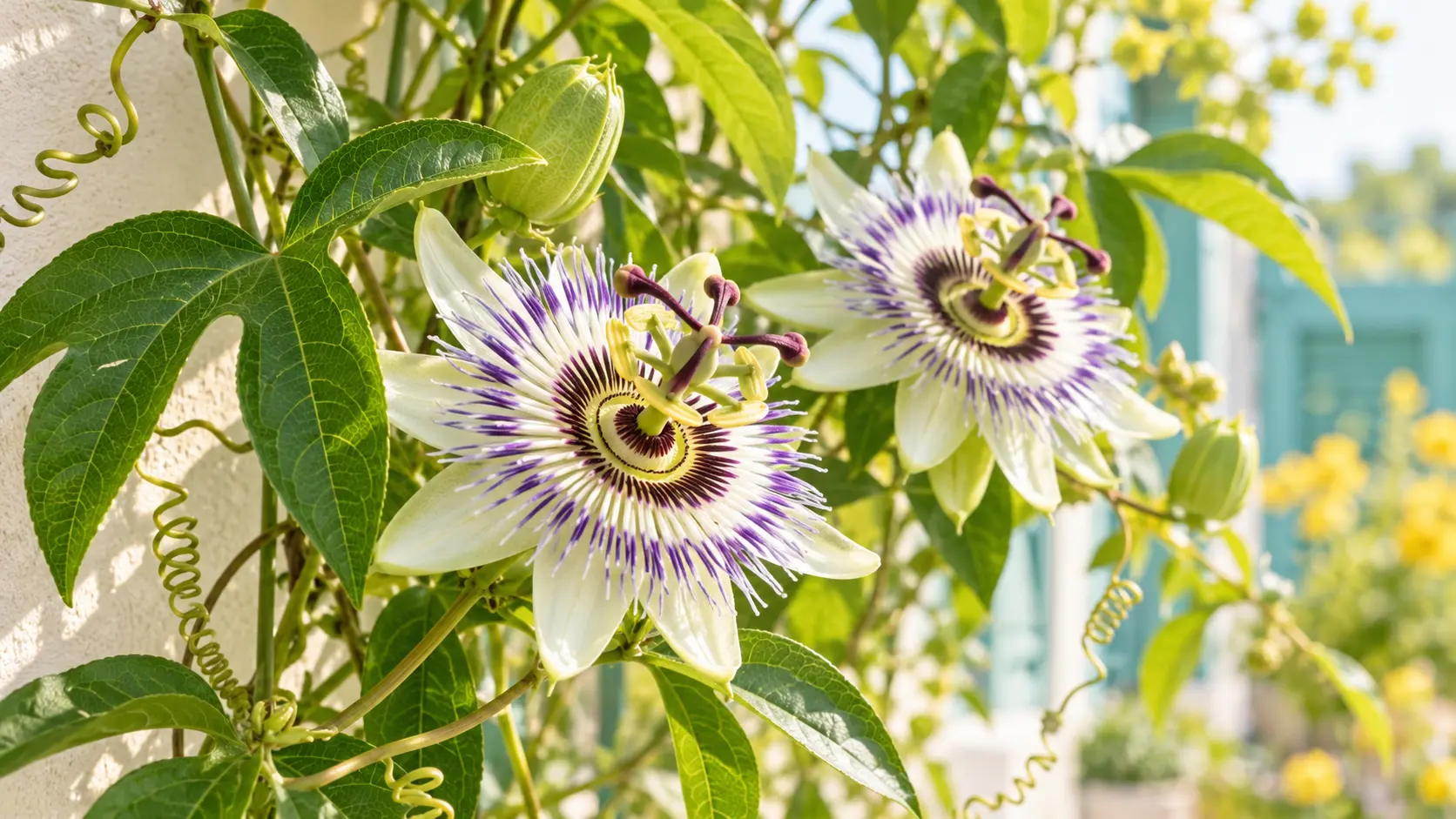
Passionflower is a climbing herb best known for its gentle, calming role in herbal traditions. People commonly use its above-ground parts in teas and extracts when they want to unwind or prepare for sleep. A useful first step is to check the botanical species and preparation on the label: not all “passionflower” products are equivalent.
QUICK INSIGHT
About Passionflower
Common name: Passionflower, maypop (for the species described here
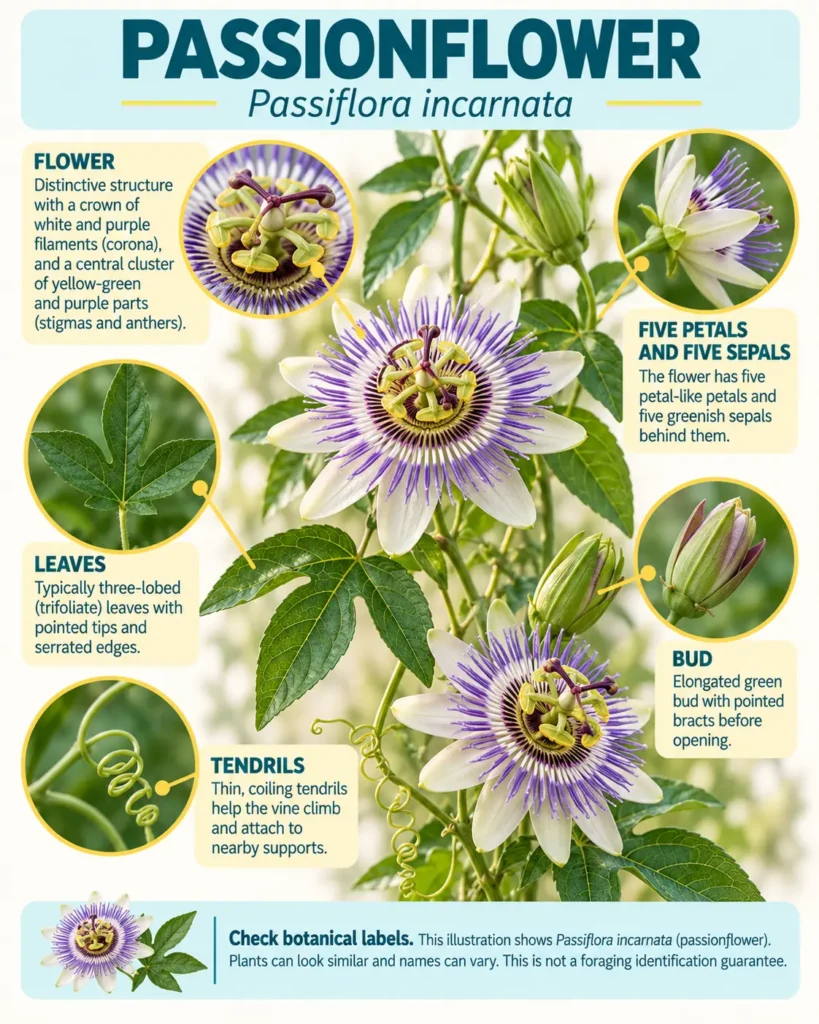
Botanical name: Passiflora incarnata L. (not every ornamental or edible passionfruit species)
Part used: Aerial parts: leaves, stems, and flowers, generally dried
Herbal role: Calming nervine—an herb traditionally used to ease nervous tension and encourage rest
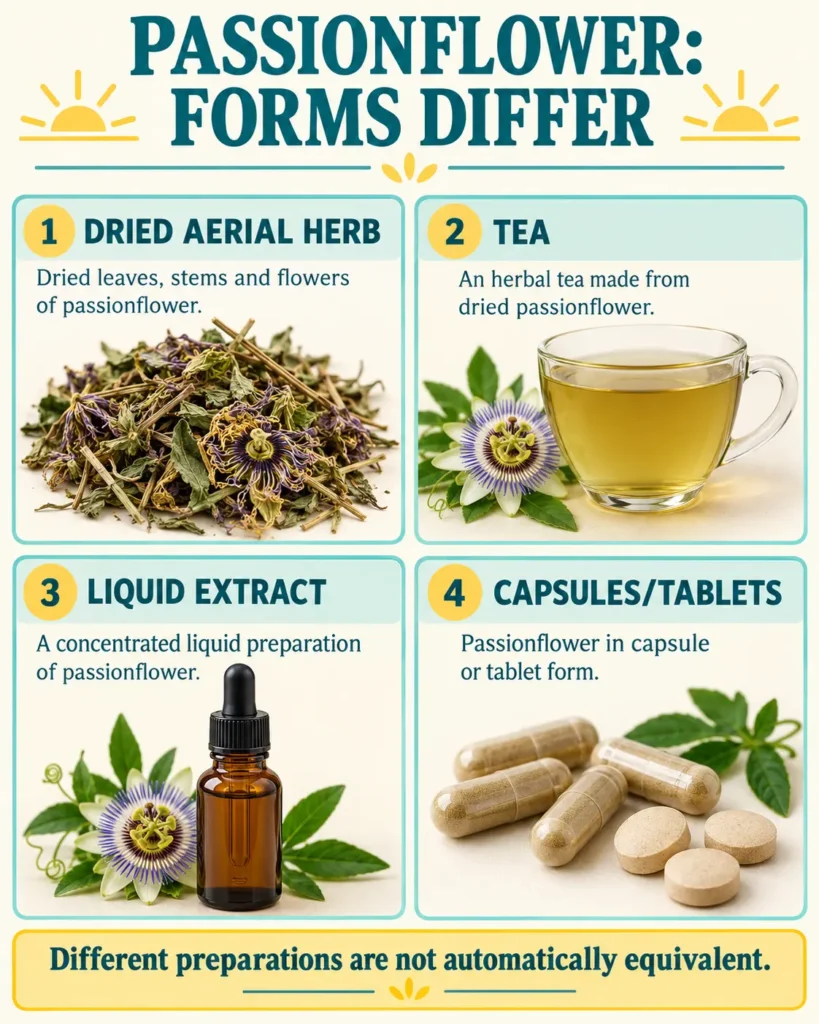
Common forms: Dried herb for tea, liquid extracts or tinctures, capsules, and tablets
Herbal Role and Functions
Passionflower is most often used as a calming herb, rather than as a stimulant or a broad treatment for health conditions.
Calming nervine: A traditional herbal term for plants used to help someone feel less keyed up. This describes how the herb is used, not a guarantee that it treats a diagnosed anxiety disorder.
Rest-supportive herb: Often included in evening tea blends and oral preparations intended for occasional difficulty settling down. Its effectiveness for chronic sleep disorders has not been established.
Mild stress-support ritual: Preparing a warm caffeine-free tea can be a calming routine, although the ritual and the herb’s pharmacological effects should not be confused.
Common Forms and How They’re Used
Dried aerial herb / tea: The dried above-ground plant is used for infusions. Follow a reputable product’s directions; tea is not interchangeable with concentrated extracts.
Liquid extracts / tinctures: Concentrated products vary in solvent, plant ratio, and composition. Alcohol-containing tinctures are not appropriate for everyone.
Capsules / tablets: May contain powdered herb or extracts, sometimes combined with other ingredients. Read the complete label and check the actual species and part used.
Combination products: Passionflower is sometimes paired with other calming herbs. The evidence and safety of one herb do not automatically establish the benefit or safety of a blend.
Where Passionflower May Help
Occasional nervous tension: Passionflower has a long history of use for mild symptoms of mental stress. The European Medicines Agency describes this as a traditional-use indication; it does not mean efficacy has been firmly demonstrated in modern high-quality trials. [1]
Anxiety-related symptoms: Small human studies suggest that certain oral passionflower preparations may reduce some anxiety symptoms, including before procedures. The research is limited, and findings are not definitive or generalizable to every product. [2]
Sleep support: A small amount of evidence suggests some preparations may affect total sleep time, but findings on falling asleep or staying asleep are mixed. Passionflower is not a proven treatment for chronic insomnia. [2]
Because the research uses particular products, doses, and study populations, results from a capsule cannot be assumed to apply to a home-brewed tea. If anxiety or insomnia is persistent or affecting daily life, proper assessment and effective treatments matter.
SAFETY FIRST
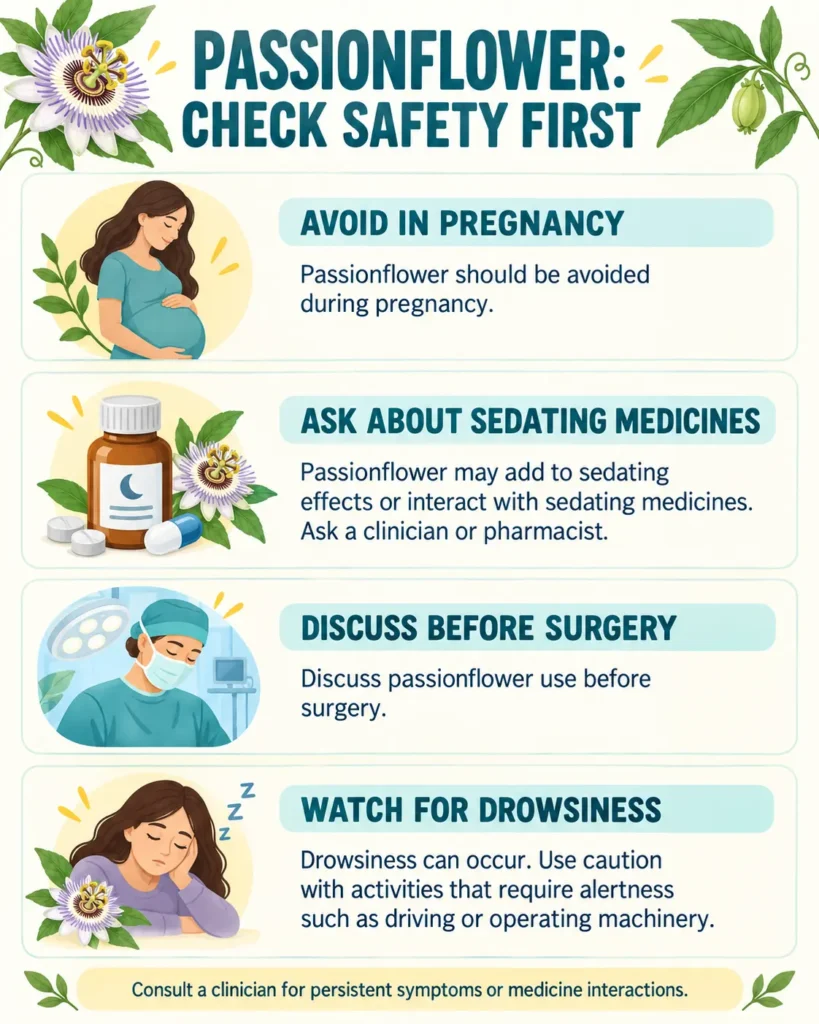
Pregnancy: Do not use passionflower during pregnancy: it may stimulate uterine contractions. [2]
Breastfeeding: Safety data are insufficient; ask a clinician before use. [2]
Sedation and alertness: Passionflower can cause drowsiness, dizziness, or confusion. Do not drive or operate hazardous equipment if affected. [2]
Medicines, anesthesia, and surgery: Talk with a clinician or pharmacist before combining it with sedating medicines or other drugs. NCCIH specifically recommends discussing use within two weeks of a planned surgery because of potential interactions with anesthesia-related medications. [2]
Children and adolescents: Do not assume adult products are safe for children. EMA traditional-use conclusions apply to adults and adolescents older than 12, subject to product-specific directions—not as a blanket pediatric recommendation. [1]
Symptoms that last: Seek professional advice if symptoms worsen or persist. Stress, anxiety, and sleep problems can have other causes and may need individualized care.
Quality and Buying Basics
Check for the full botanical name “Passiflora incarnata,” the plant part, preparation, ingredient list, and product directions. Choose a transparent manufacturer and avoid products that promise to cure anxiety, insomnia, or other diseases. Supplements are not preapproved by the FDA for safety and effectiveness in the same way medicines are. [2]
For identification, look for species labeling rather than relying on a photograph: the passionflower genus includes many different plants. Do not use this article as a wild-foraging identification guide.
How It Fits With Other Herbs
Lemon balm: Another commonly used calming nervine, often discussed as a gentle tea herb. Sharing a traditional purpose does not mean the two have proven additive effects.
Chamomile: Common in bedtime teas; the evidence, allergens, and preparations differ from those of passionflower.
Lavender: Frequently encountered as a scent, tea ingredient, or specially formulated oral oil. These forms have different evidence and safety considerations.
Avoid stacking multiple sedating herbs or medicines without checking with a healthcare professional; “herbal” does not mean free of interactions.
References
1. European Medicines Agency — Passiflorae herba, herbal medicinal product (traditional use and preparations)
https://www.ema.europa.eu/en/medicines/herbal/passiflorae-herba
2. NIH National Center for Complementary and Integrative Health — Passionflower: Usefulness and Safety (updated April 2025)
https://www.nccih.nih.gov/health/passionflower
3. NIH NCCIH — Anxiety and Complementary Health Approaches
https://www.nccih.nih.gov/health/anxiety-and-complementary-health-approaches