
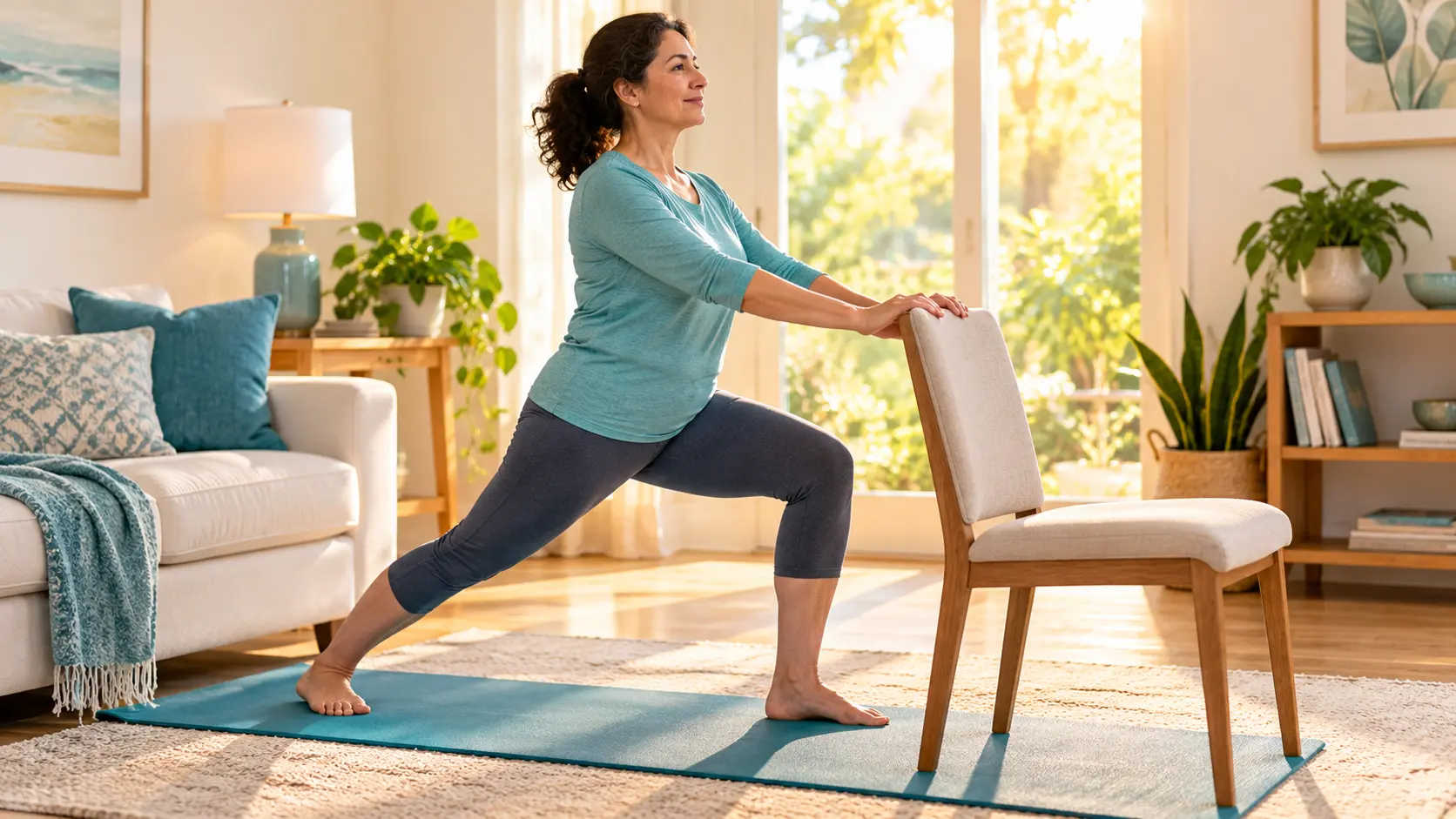
Yoga combines movement, body positions, attention, and sometimes breathing exercises. You can begin with gentle, comfortable movements rather than flexibility tricks or difficult poses. Many people use yoga for movement, balance, relaxation, or a break from a busy day.
To try it, choose a beginner or accessible class, tell the instructor about any limitations, and practice within a comfortable range. Pain, dizziness, and breath-holding are not goals. Evidence suggests yoga may help some measures of wellbeing, but it is not a substitute for medical or mental-health treatment. [1]
QUICK INSIGHT
About Yoga
Who it suits: adults interested in an adaptable combination of gentle movement and attention. Start: choose a beginner class or a short supported session. Key caution: injuries can occur, especially with extreme poses or forceful breathing. Expectation: benefits and comfort vary; adjust rather than pushing through pain. [1]
What Is Yoga?
Yoga is an umbrella term for a range of practices. Many classes include physical postures, steady breathing, and focused attention. Some styles are gentle and slower-paced, while others are athletic, heated, or more demanding. A class name alone is not a reliable measure of how strenuous it will feel; ask what to expect.
Common styles you may encounter
| Style | Typical emphasis | Beginner consideration |
|---|---|---|
| Hatha or general beginner | Basic poses at a variable pace | Ask for slow instruction and modifications. |
| Restorative | Supported, low-effort positions | Props and comfort are central; still avoid painful positions. |
| Chair yoga | Seated and supported standing movements | May be more accessible for some mobility needs. |
| Vinyasa / flow | Linked movements and transitions | Pace can be brisk; request beginner adaptations. |
| Hot or power yoga | Heat or greater effort | Not a necessary starting point; heat and exertion add safety considerations. |
Why Do People Practice Yoga?
Movement and comfort: yoga can involve mobility, muscle engagement, and balance practice. The demands vary widely across classes, so it should not automatically be counted as an equivalent replacement for all aerobic or strength training. [1,2]
Mind-body wellbeing: some research suggests yoga may improve perceived stress and aspects of sleep or wellbeing for certain groups, but results differ by outcome, study quality, and the style studied. Yoga does not cure anxiety or insomnia and should not delay appropriate care. [1]
Participation and routine: choosing an enjoyable activity can help make movement more sustainable. General adult physical activity recommendations include aerobic activity and muscle strengthening; yoga may contribute to some aspects of movement but does not necessarily meet all these goals on its own. [2]
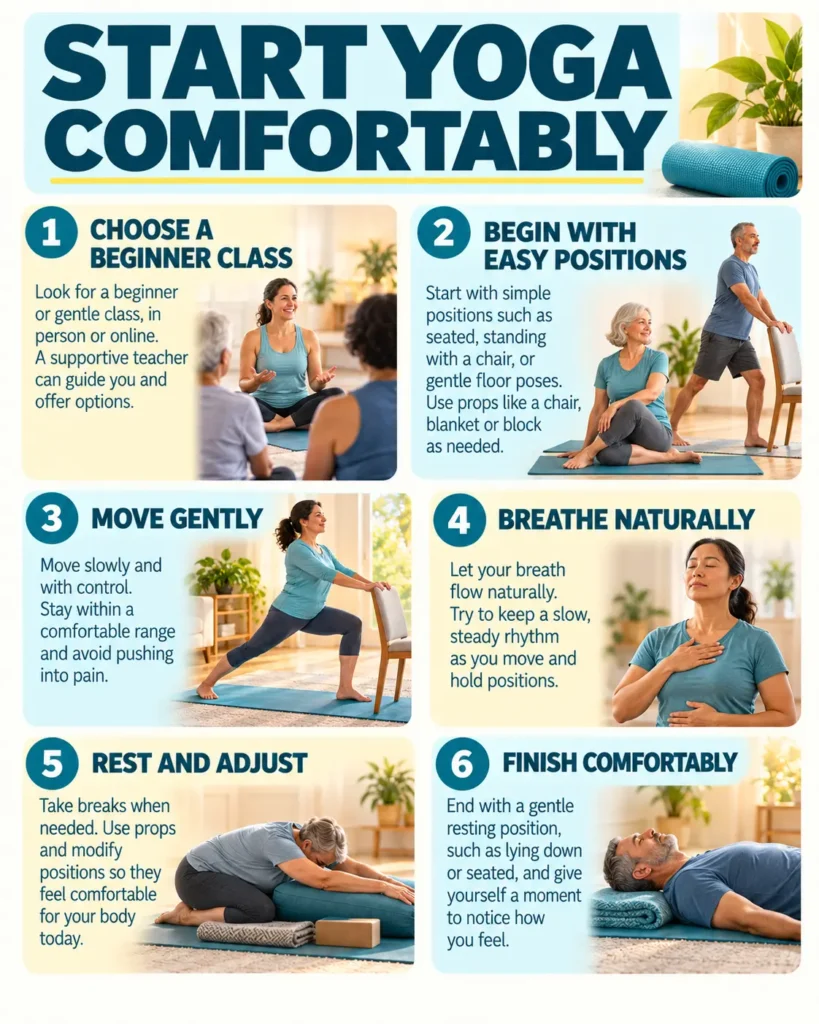
How to Start Yoga Comfortably
1. Choose a suitable setting
Look for a beginner, gentle, chair, or accessible session led by a qualified instructor who welcomes questions. Tell the instructor about injuries, pain, balance concerns, or movement limitations. An uncluttered floor area and a stable chair are often sufficient; expensive equipment is not required.
2. Begin with easy positions
Try a comfortable seated position or stable standing stance. Notice whether you can breathe normally and remain steady. A chair, wall, cushion, or yoga blocks may help; stop if a position causes pain or numbness.
3. Add a small, controlled movement
With an instructor’s guidance, experiment with gentle shoulder movements, a comfortable seated side reach, or an easy standing weight shift. Stay within your pain-free range; there is no need to touch your toes or hold a pose for a fixed duration.
4. Breathe naturally
Let breathing remain comfortable. Beginners should avoid forceful breathing, prolonged breath holds, or techniques that produce dizziness. You can simply notice the breath without trying to control it. [1]
5. Rest and adjust
Take breaks between movements. Use an easier variation or stop if you feel unstable, lightheaded, breathless beyond normal exertion, or uncomfortable. A calmer session is still a valid session.
6. Finish with a realistic next step
Notice how your body feels afterward. If the format suits you, schedule another brief session or class. Increase difficulty only when the movements feel familiar and safe, not because a calendar says you should progress.
A Simple Example Session
This is an adjustable example, not an exercise prescription: settle into a stable seated or standing position; practice a few comfortable upper-body movements; try a supported stretch or balance shift with instructor guidance; rest; and end by checking comfort. A short session can be enough for your first experience.
Make It Fit Your Life
- Little time: choose a brief beginner session instead of skipping movement entirely.
- Limited mobility or balance concerns: explore chair yoga, wall support, or adaptive instruction tailored to your needs.
- No privacy or studio access: use a quiet corner and a free, reputable beginner resource, keeping enough space to move safely.
- Sensory or heat sensitivity: choose a calm, unheated setting rather than a hot or crowded class.
- Unpredictable schedules: use a flexible opportunity-based routine instead of a rigid daily target.
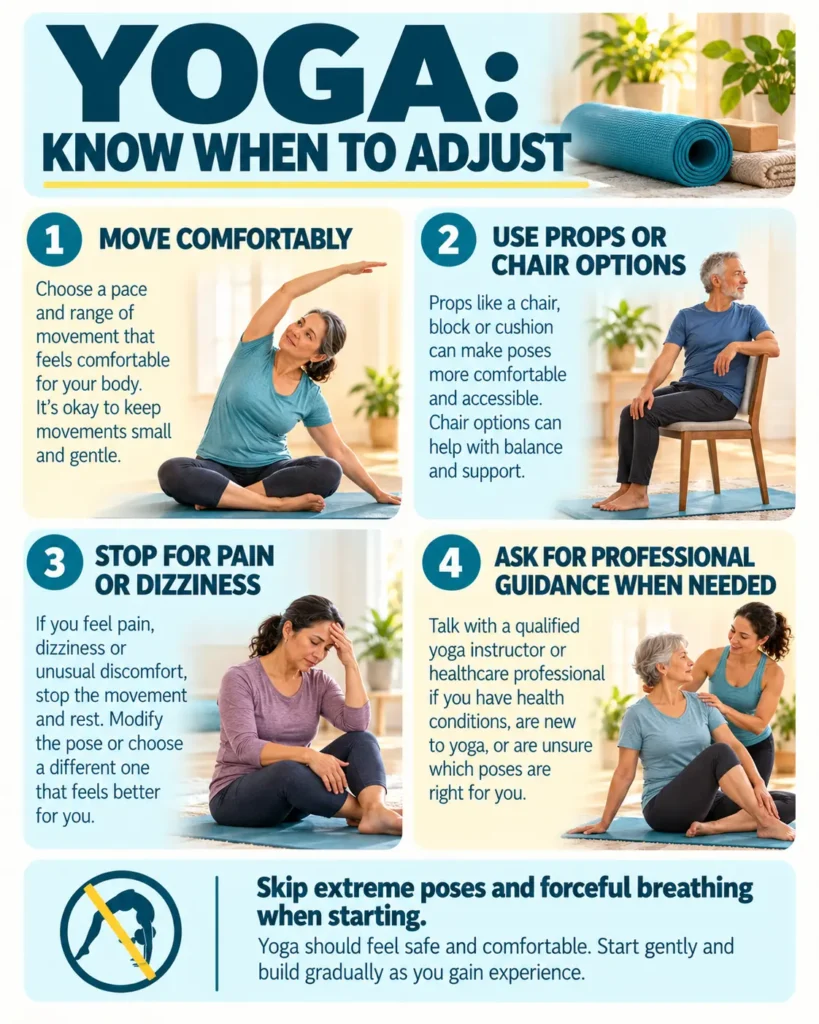
Common Mistakes and When to Adjust
- Trying to imitate a picture: position and range differ across bodies; prioritize control, comfort, and appropriate instruction.
- Ignoring sharp pain or tingling: stop the movement and seek advice if symptoms persist.
- Starting with headstands or extreme positions: NCCIH recommends that beginners avoid headstands, shoulder stands, lotus positions, and forceful breathing. [1]
- Treating yoga as a cure: it may be a supportive activity, not a substitute for evaluating persistent symptoms.
Who Should Check With a Professional First?
Consult an appropriate clinician and a qualified instructor about adaptations if you are pregnant, recovering from surgery, living with significant joint or spine conditions, have balance or fall concerns, or have cardiovascular or other medical limitations. Older adults may need additional precautions because injury rates differ by age. [1]
Stop and seek urgent medical assessment for chest pain, fainting, severe difficulty breathing, or other alarming new symptoms during activity. Persistent injury pain, weakness, or neurological symptoms merit clinical assessment; do not try to work through them.
Your Next Step
Choose one instructor-led beginner or accessible session. Ask about modifications before it starts, practice at an easy intensity, and judge success by comfort and usefulness—not flexibility or pose difficulty.
References
1. National Center for Complementary and Integrative Health (NIH). Yoga: Effectiveness and Safety.
https://www.nccih.nih.gov/health/yoga-effectiveness-and-safety
2. Centers for Disease Control and Prevention. Adding Physical Activity as an Adult (updated December 2025).