
Digestive wellbeing involves more than choosing the “right” food. Eating patterns, bowel habits, movement, stress, sleep, medicines, and medical conditions can all matter. We explore five connected approaches—Herbal, Nutrition, Physical, Mental, and Lifestyle—so you can choose useful first steps without treating every symptom as a reason to buy a supplement.
QUICK INSIGHT
About Digestive Wellness
What it is: Supporting comfortable digestion and regular bowel function while recognizing meaningful changes or symptoms. What matters most: Patterns and causes vary; no single diet, herb, or supplement works for everyone. Start here: Review the five approaches below, choose one modest adjustment, and seek care for persistent or alarming symptoms.
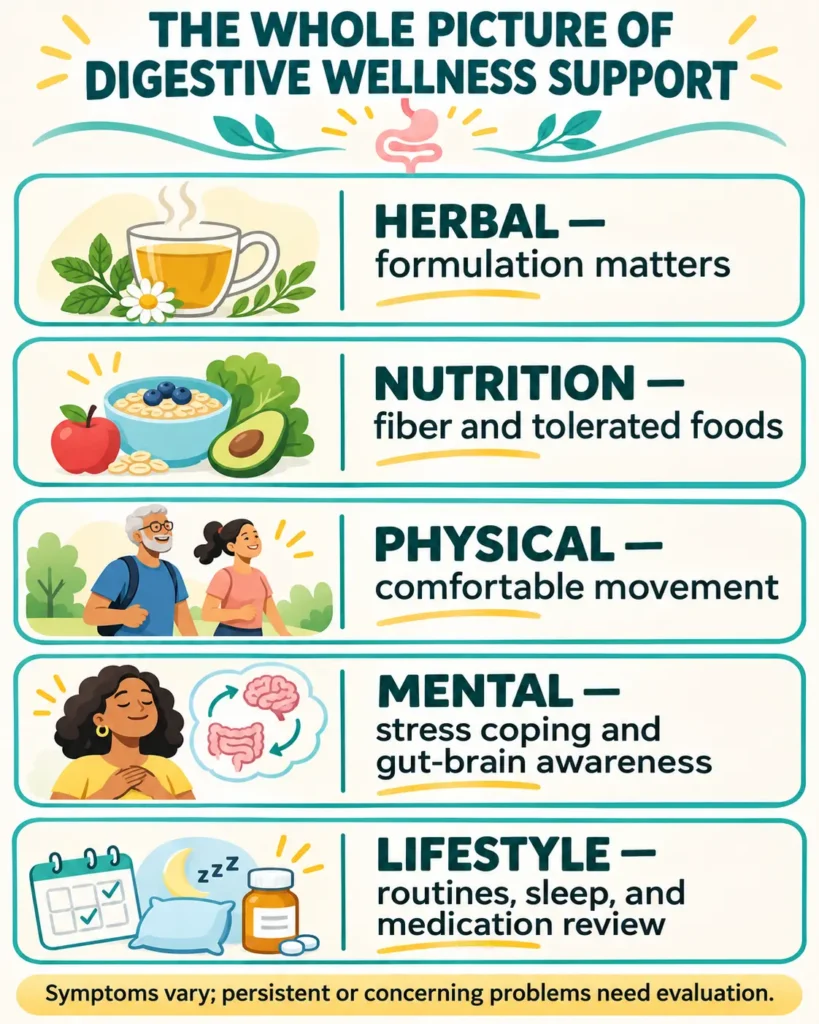
The whole picture of digestive wellness
Five approaches can overlap. The most relevant choice depends on whether the concern is irregular stool, bloating, discomfort, reflux, or a symptom that needs medical evaluation. None is a substitute for diagnosis or treatment when those are needed.
Herbal
For digestive concerns, the herbal starting point is to match a particular preparation to a defined symptom, examine the evidence, and check its safety—not to assume an herbal “gut cleanse” is beneficial. Most herbal digestive claims have limited reliable human evidence. [3,4]
- Peppermint: A particular enteric-coated peppermint oil formulation has some short-term evidence for IBS symptoms, but can cause reflux or indigestion. Peppermint tea is not equivalent to studied capsules. [3]
- Ginger: Commonly used in food or tea for flavor; certain preparations have evidence for some nausea settings, but outcomes differ. Oral products can cause heartburn and interact with medicines. [4]
- Chamomile: Sometimes consumed as a tea as part of a soothing routine; clinical evidence for treating digestive disease is insufficient. Check allergy risks and medication considerations.
Do not swallow diffuser essential oils or substitute concentrated extracts for ordinary culinary herbs. Review herbal products with a clinician or pharmacist when pregnant, taking medicines, or managing a gastrointestinal condition.
Nutrition
Rather than removing whole food groups immediately, begin with varied foods you tolerate, adequate fluids when appropriate, and gradual changes to fiber. Dietary adjustments for IBS, constipation, diarrhea, and reflux can differ substantially. [1,2]
- Soluble fiber: Helps support stool consistency for some people; examples include oats, beans, and fruit. Increase fiber gradually because rapid increases can worsen gas or bloating. [1,2]
- Insoluble fiber: Found in many whole grains and vegetables; contributes to overall fiber intake, but not every person with IBS tolerates it equally. [1]
- Food pattern: Regular, practical meals can be easier to assess than restrictive elimination diets. If symptoms suggest IBS, celiac disease, or a food intolerance, professional guidance may help identify a suitable plan.
Learn more:
Oats: Nutrition, Benefits, and Everyday Uses — https://ugetwell.com/foods/oats/
Physical
Comfortable activity can support general wellbeing and routine. Walking is a low-cost starting option if appropriate for your abilities; it should not be represented as a cure for constipation, IBS, or another disorder. [5]
- Everyday walking: Consider a comfortable walk or other enjoyable movement that fits your capacity and surroundings.
- Movement breaks: Break up long periods of sitting when feasible; adapt to mobility needs and stop if symptoms worsen.
Learn more:
Walking: Health Benefits, How to Start, and Safety — https://ugetwell.com/physical/walking/
Mental
The gut and brain communicate in both directions; stress may change how digestive sensations feel, but symptoms are not “just psychological.” Some people with diagnosed IBS benefit from clinician-supported gut-directed psychological therapies. Ordinary mindfulness exercises are not interchangeable with those programs. [3]
- Notice patterns without blame: Record when symptoms occur and what else was happening, without assuming every episode has an emotional cause.
- Gentle coping skills: A brief pause or a comfortable attention practice may help some people respond to distress, but stop or modify methods that feel worse.
Learn more:
Mindfulness: What It Is, How to Practice, and What the Evidence Says — https://ugetwell.com/mental/mindfulness/
Lifestyle
Practical conditions around eating, sleep, work, and access to toilets can shape daily comfort. Changes should fit the problem and the person; irregular work shifts, disability, and caregiving may limit flexibility.
- Routine: Notice whether regular meal opportunities, unhurried bathroom access, or a predictable daily schedule helps you.
- Rest and sleep: Protect realistic sleep opportunities; persistent sleep or bowel problems may warrant medical assessment.
- Medication review: Some prescriptions, over-the-counter products, and supplements change bowel habits. Ask a pharmacist or clinician about suspected effects rather than stopping prescribed treatment.
Learn more:
Sleep Routine: How Consistency and Wind-Down Habits Support Better Sleep — https://ugetwell.com/lifestyle/sleep-routine/
Understanding common digestive patterns
- Occasional bloating or gas: Can occur with food changes or normal fermentation; persistent or worsening symptoms may need evaluation.
- Constipation: Can involve hard stools, difficulty passing stools, or infrequent bowel movements; causes differ and fiber is not the right sole response to every situation. [2]
- Diarrhea: Loose or watery stools may be caused by infection, medicines, intolerance, or other conditions; dehydration can be serious. [6]
- Reflux or upper-abdominal discomfort: May have different causes than lower-bowel symptoms; persistent symptoms should not be treated by guesswork with herbal products.
- IBS-type symptoms: Recurrent abdominal pain with bowel changes may warrant an assessment; not every episode of bloating indicates IBS. [1,3]
Find a practical starting point
| What you notice | Low-friction first step | When more help matters |
|---|---|---|
| Fiber intake seems low | Add a tolerated fiber food gradually; consider fluids as appropriate | Pain, severe constipation, or worsening bloating |
| Symptoms after certain meals | Keep a brief, nonjudgmental food/symptom record | Persistent symptoms or concern about food restriction |
| Irregular daily routine | Choose one repeatable meal or bathroom opportunity | Work, caregiving, or accessibility barriers |
| Stress seems to worsen discomfort | Try a gentle coping strategy; avoid blaming yourself | Frequent pain, significant distress, or functional impact |
| New or changing bowel symptoms | Review onset, medicines and patterns | Blood, unintended weight loss, fever, or significant pain |
When to seek medical care
Seek prompt medical evaluation for blood in stool or rectal bleeding, persistent or severe abdominal pain, repeated vomiting, inability to pass gas with pain or distension, fever with concerning symptoms, unexplained weight loss, or dehydration. Sudden severe pain or other immediate danger warrants emergency care. New, recurrent, or worsening digestive symptoms that disrupt life deserve routine clinical assessment even without an emergency sign. [2,6]
SAFETY FIRST: Before trying a digestive herb or supplement
- What exact symptom and outcome am I trying to address?
- Is the evidence for this exact form and dose—or only for a different product?
- Could it affect reflux, allergies, pregnancy, medications, or an existing condition?
- Would diagnosis, a dietitian, a pharmacist, or another professional be more useful than buying a product?
The takeaway
Begin with the pattern that matters most, make one realistic adjustment, and assess whether it genuinely helps. A useful digestive wellness plan can include foods, movement, coping skills, and routine—but it also leaves room for medical evaluation. There is no requirement to try all five approaches or purchase anything.
References
1. NIDDK — Eating, Diet, & Nutrition for Irritable Bowel Syndrome — https://www.niddk.nih.gov/health-information/digestive-diseases/irritable-bowel-syndrome/eating-diet-nutrition
2. NIDDK — Symptoms & Causes of Constipation — https://www.niddk.nih.gov/health-information/digestive-diseases/constipation/symptoms-causes
3. NCCIH — Irritable Bowel Syndrome: What You Need To Know — https://www.nccih.nih.gov/health/irritable-bowel-syndrome-what-you-need-to-know
4. NCCIH — Ginger: Usefulness and Safety — https://www.nccih.nih.gov/health/ginger
5. MedlinePlus — Irritable Bowel Syndrome — https://medlineplus.gov/ency/article/000246.htm
6. NIDDK — Diarrhea — https://www.niddk.nih.gov/health-information/digestive-diseases/diarrhea
7. NCCIH — Peppermint Oil — https://www.nccih.nih.gov/health/peppermint-oil