
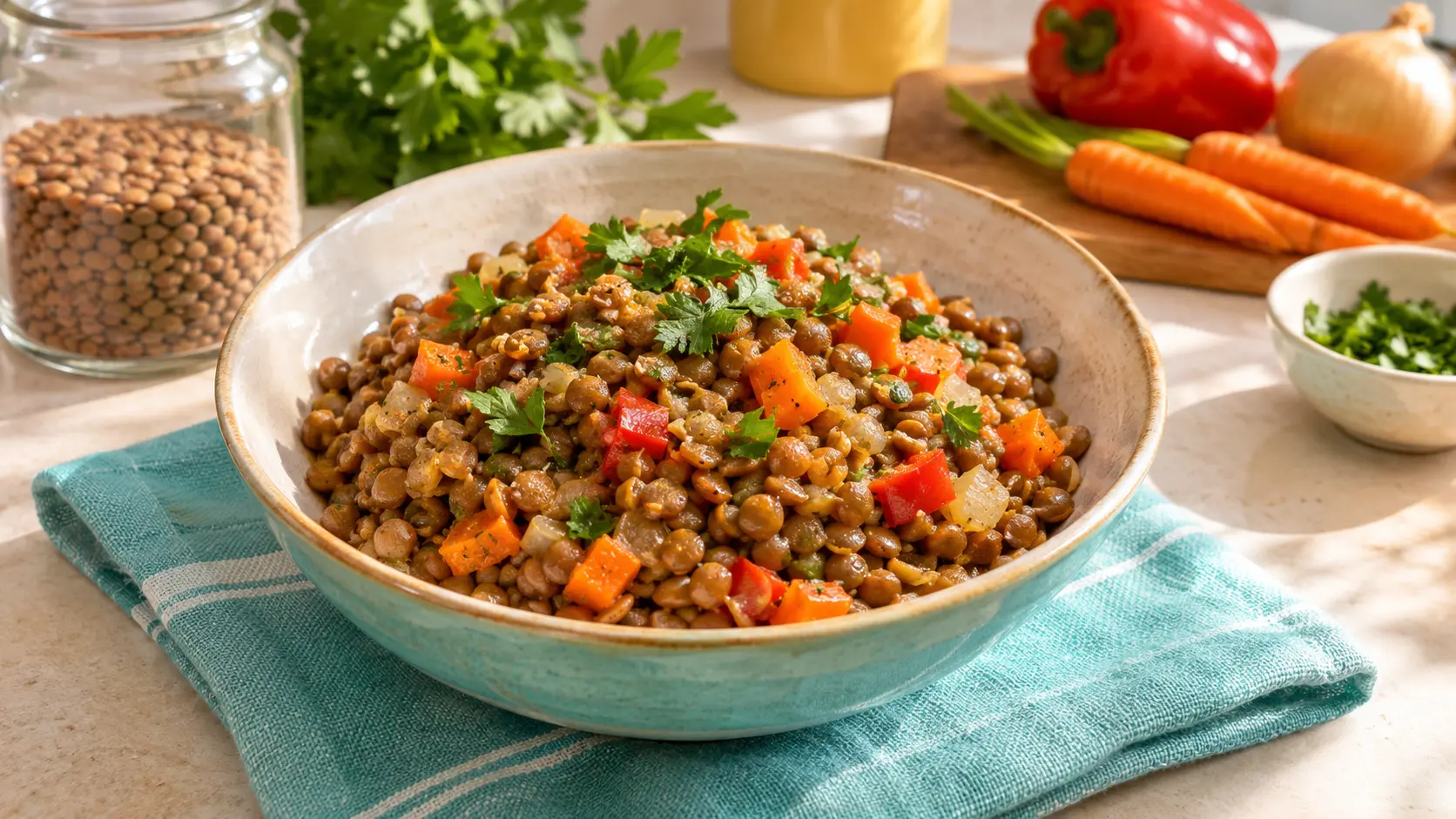
Lentils are small, affordable legumes that bring plant protein, fiber and useful minerals to everyday meals. They work in soups, salads, grain bowls and sauces, and many varieties cook without soaking. Their biggest advantage is versatility—not a promise that one ingredient will prevent or treat disease.
Quick Food Profile
| At a glance | What to know |
|---|---|
| Food | Lentils (Lens culinaris), edible dried seeds of a legume |
| Common forms | Dry whole brown/green/black lentils; split red/yellow lentils; pre-cooked canned or pouch lentils |
| Nutritional highlights | Plant protein, dietary fiber, folate, iron and potassium |
| Easy first use | Stir a small spoonful of cooked lentils into a familiar soup, salad or grain bowl |
| Practical caution | Increase gradually if legumes tend to cause gas; cook dry lentils thoroughly |
What do lentils provide?
Lentils supply both protein and carbohydrate, including fiber, with very little naturally occurring fat. They also contain folate, iron and potassium. The figures below describe one specific food form: mature lentil seeds, cooked by boiling without salt. Dry lentils are much more concentrated by weight, so the two forms should not be compared gram for gram.
| Nutrient | Per 100 g cooked | Why readers may care |
|---|---|---|
| Energy | 116 kcal | Helps put the portion in context |
| Protein | 9.0 g | Contributes to daily protein intake |
| Total carbohydrate | 20.1 g | Includes starch and fiber |
| Dietary fiber | 7.9 g | Supports overall fiber intake |
| Fat | 0.4 g | Naturally low in fat |
| Folate | 181 µg | Needed for normal cell growth and function |
| Iron | 3.3 mg | Helps the body transport oxygen |
| Potassium | 369 mg | Contributes to mineral intake |
Source: USDA FoodData Central, SR Legacy entry 172421 (“Lentils, mature seeds, cooked, boiled, without salt”), values rounded. Real servings vary by variety, added ingredients and cooking water. Detailed source links appear in References.
A generous scoop or a bowl of lentil soup is not the same as 100 g of plain cooked lentils: oils, broth, vegetables and other ingredients change the total. If you need precise intake information for a medical reason, check the prepared product or recipe.
What benefits does the evidence support?
A practical source of protein and fiber
Lentils make it easier to build meals around plant foods. Their protein and fiber can help a meal feel substantial, but no single portion guarantees fullness or a particular weight outcome. Pairing lentils with vegetables and grains is a practical approach to a satisfying meal.
Part of a heart-supportive eating pattern
The American Heart Association recommends legumes, including lentils, as part of heart-healthy dietary patterns. Replacing some processed or higher-saturated-fat meat dishes with lentil-based meals may improve the overall nutritional pattern. That is a dietary-pattern recommendation, not evidence that lentils alone lower anyone’s cholesterol by a predictable amount.
A useful option for everyday metabolic health
Lentils contain fiber, starch and protein together. Their effect on blood glucose depends on the amount eaten, how they are prepared, other foods in the meal and the individual. People tracking carbohydrate intake should still count lentils as a carbohydrate-containing food. They are not a treatment for diabetes.
Digestive benefits and trade-offs
The fiber in lentils can contribute to regular dietary fiber intake. Legumes also contain fermentable carbohydrates that some gut microbes use; these can produce gas and bloating, particularly when intake rises quickly. Smaller portions and gradual changes may be more comfortable than suddenly replacing several meals with lentils. People with irritable bowel syndrome may need individualized guidance.
Evidence perspective: The nutrient composition of lentils is well established. Recommendations to include legumes reflect a substantial broader evidence base for healthy eating patterns. Direct clinical outcomes from one specific lentil preparation are less certain and should not be inferred from nutrient content alone.
Which type of lentil should you use?
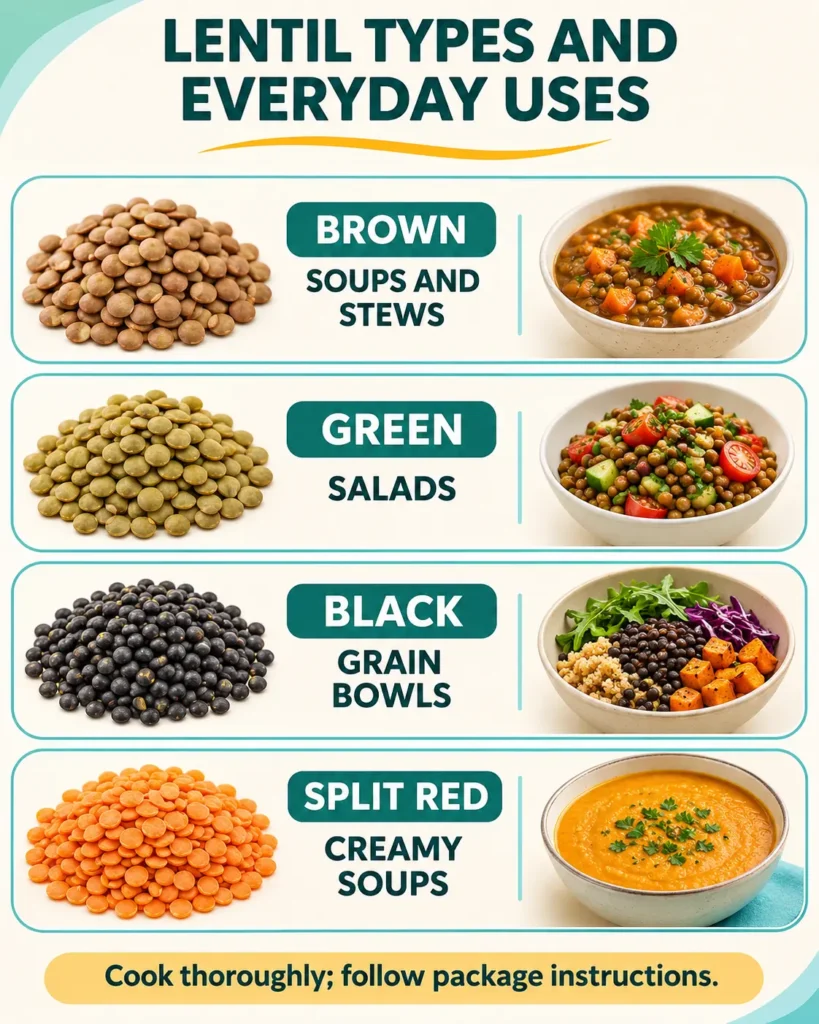
| Type | Texture after cooking | Easy uses |
|---|---|---|
| Brown | Usually soft but holds some shape | Soups, stews, lentil bowls |
| Green / French-style | Often firmer and more separate | Warm or cold salads |
| Black (beluga) | Small and relatively firm | Grain bowls and side dishes |
| Split red / yellow | Quickly becomes soft or creamy | Thick soups, dals, purées |
| Canned / pouch | Already cooked; convenience varies | Quick salads, tacos, ready meals |
Names, cooking time and texture differ among products. Follow the package directions, and taste for doneness rather than treating a single time as universal. Canned lentils may include salt; compare labels and drain or rinse when useful.
How to cook lentils and use them more often
A simple starting method
- Sort dry lentils and remove any visible debris or small stones. Rinse them under running water.
- Add lentils to a pot with enough water or unsalted broth to cover them generously. Bring to a boil, then reduce to a simmer.
- Cook until fully tender, checking the product instructions and adding liquid as needed. Whole types often need longer than split red or yellow varieties.
- Drain if appropriate. Season with herbs, vegetables, olive oil or lemon according to the dish; refrigerate leftovers promptly.
Pre-soaking is generally unnecessary for lentils, although methods differ by variety and preference. For detailed cooking guidance, see the Harvard Nutrition Source in References.
Five easy meal ideas
- Add cooked brown lentils to vegetable soup for more substance.
- Fold firm green lentils into a salad with chopped vegetables and a citrus dressing.
- Use split red lentils to thicken a tomato-based stew or curry.
- Combine cooked lentils with brown rice, roasted vegetables and a flavorful sauce.
- Replace part of the ground meat in a familiar pasta sauce with cooked lentils.
A small, realistic starter plan
| Situation | Try this | Simpler alternative |
|---|---|---|
| You have 5 minutes | Add drained canned lentils to a pre-made salad | Start with a few spoonfuls |
| You are batch cooking | Prepare a pot for two different meals | Freeze small portions |
| You prefer smoother textures | Use split red lentils in soup | Blend a fully cooked small portion |
| Legumes cause discomfort | Begin with less and review tolerance | Discuss persistent symptoms with a dietitian |
Storage, safety and who should check first
Store dry lentils in a cool, dry place in a sealed container, following any package date or storage guidance. Cool cooked lentils promptly, refrigerate in shallow containers and use standard safe-leftover practices. Do not eat dry or undercooked lentils as a shortcut. Raw sprouts carry additional foodborne-illness considerations and are not equivalent to fully cooked lentils.
Lentils are a legume, and food allergy is possible. Anyone with a known lentil or related legume allergy should follow individualized medical advice. Lentils can contain meaningful potassium and phosphorus; people on medically prescribed kidney-disease diets should use their clinician or renal dietitian’s specific guidance rather than assume lentils are always unrestricted.
If you develop persistent abdominal discomfort, severe symptoms, or changes in bowel habits, seek appropriate healthcare assessment rather than attributing everything to fiber. For new foods, small flexible adjustments are usually more useful than rigid rules.
Frequently asked questions
Are canned lentils as useful as dried?
Both can be nutritious. Canned lentils save preparation time but may contain added salt. Compare ingredient lists and sodium values; drained and rinsed canned lentils work well in many meals.
Do lentils contain complete protein?
Lentils provide protein, but their amino acid pattern differs from animal foods and some other plant proteins. You do not need to combine complementary proteins in the same mouthful; variety across meals helps meet overall nutritional needs.
Are lentils low carbohydrate?
No. Cooked lentils contain both carbohydrate and fiber, as well as protein. Portion size matters for anyone planning meals around carbohydrate intake.
Practical takeaway
Keep one easy lentil option on hand: a bag of split red lentils for quick soups or a can of ready-to-use lentils for salads. Try it in a meal you already enjoy, see how it fits your preferences and digestion, and build variety from there.
Related Reading
Dietary Fiber: Types, Food Sources, Benefits, and Safety
Oats: Nutrition, Benefits, and Everyday Uses
How to Build a Balanced Day of Eating
Digestive Wellness: A Whole-Picture Guide
References
USDA FoodData Central — FoodData Central, nutrient database (entry 172421, cooked lentils) — https://fdc.nal.usda.gov/
USDA SR Legacy lentil entry 172421, reproduced with 100 g source labeling — https://nutrientgraph.com/foods/lentils-mature-seeds-cooked-boiled-without-salt-fdc-172421/
Harvard T.H. Chan School of Public Health — Lentils (preparation, types and storage) — https://nutritionsource.hsph.harvard.edu/food-features/lentils/
American Heart Association — The Benefits of Beans and Legumes — https://www.heart.org/en/healthy-living/healthy-eating/eat-smart/nutrition-basics/the-benefits-of-beans-and-legumes
American Heart Association — 2026 Dietary Guidance to Improve Cardiovascular Health — https://professional.heart.org/en/science-news/2026-dietary-guidance-to-improve-cardiovascular-health/top-things-to-know
NIDDK — Eating, Diet & Nutrition for Gas in the Digestive Tract — https://www.niddk.nih.gov/health-information/digestive-diseases/gas-digestive-tract/eating-diet-nutrition
NIDDK — Eating, Diet & Nutrition for Irritable Bowel Syndrome — https://www.niddk.nih.gov/health-information/digestive-diseases/irritable-bowel-syndrome/eating-diet-nutrition