
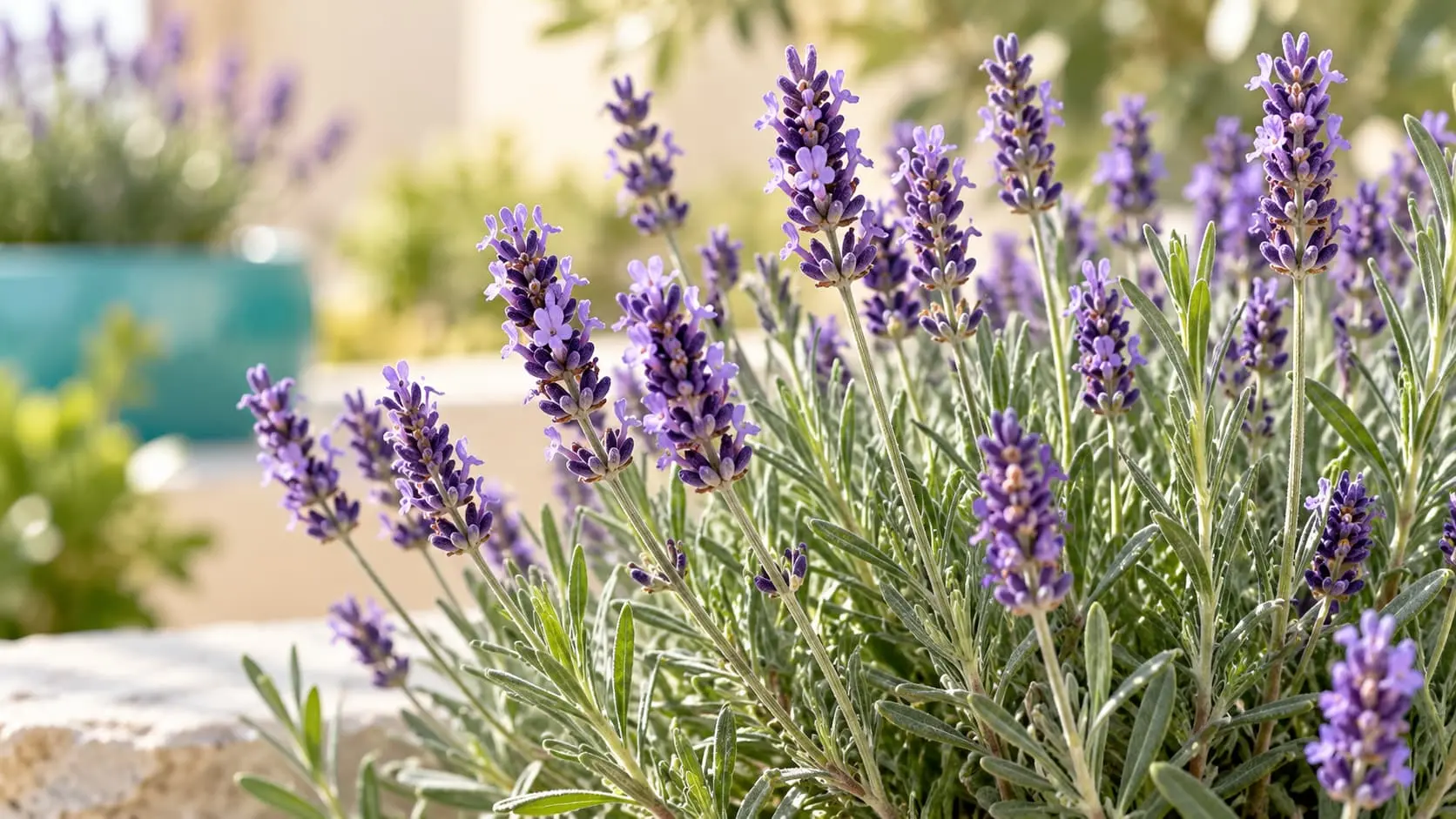
Lavender is an aromatic flowering herb often used to make spaces feel restful or to create a simple wind-down ritual. People encounter it as dried flowers, tea, scented products, topical preparations, and oral supplements. Those forms are different—and a result from one cannot automatically be applied to another. [1,2]
If you are considering lavender, start by deciding what you want to use it for and checking the exact plant species and product type. The safest practical approach is not to assume that “lavender oil,” “lavender tea,” and a standardized capsule are interchangeable.
Quick Herb Profile
| Field | At a glance |
|---|---|
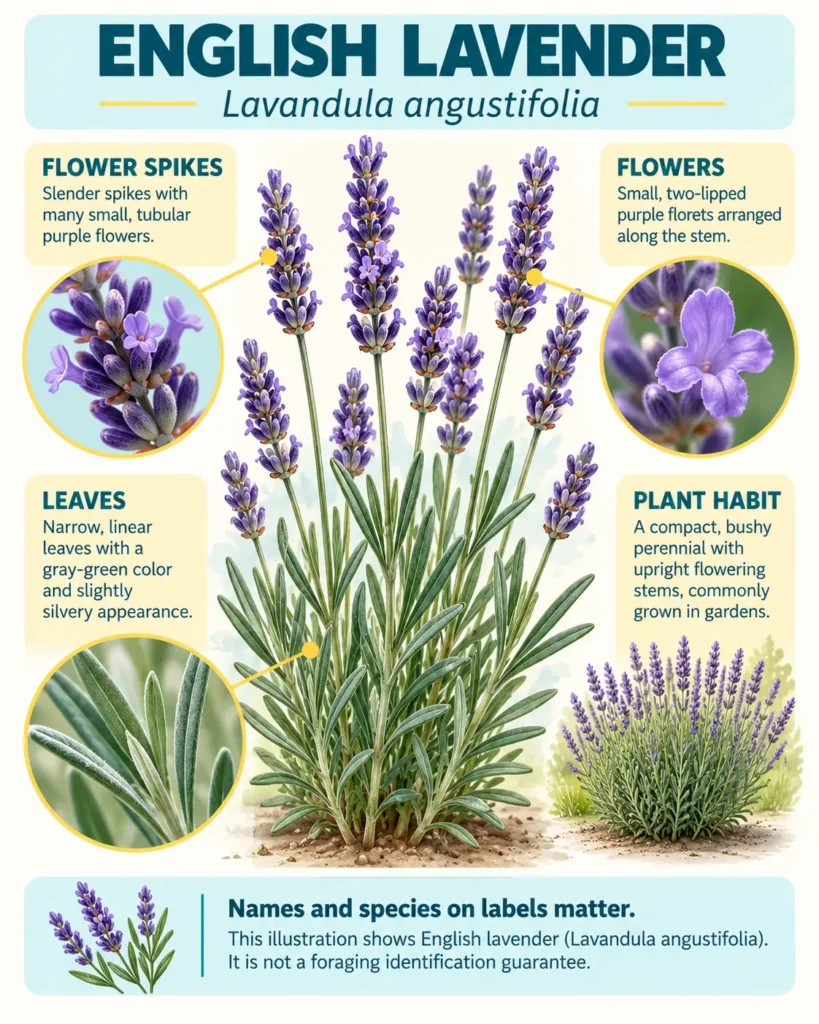
| Common name | Lavender; English or true lavender |
| Botanical name | Lavandula angustifolia Mill. |
| Part used | Primarily flowering tops / flowers; essential oil distilled from the plant |
| Herbal role | Aromatic calming herb: traditionally used as part of relaxation and bedtime routines |
| Common forms | Dried flowers, tea, essential oil for scent, diluted topical products, and specialized oral lavender-oil capsules |
Herbal Role and Functions
Lavender’s defining feature is its fragrance. The flowers contain aromatic compounds, and the herb is best understood as an aromatic plant used in everyday relaxation rituals—not a general-purpose treatment for anxiety or insomnia.
Aromatic relaxing herb: Its familiar scent can serve as a cue to slow down and create a pleasant environment. Whether inhaled lavender oil independently improves anxiety or sleep is uncertain. [1]
Traditional bedtime herb: Lavender flowers have a history of use for mild stress and sleep support. European regulatory monographs recognize traditional use of specific flower preparations, based on longstanding use rather than strong clinical proof. [2]
Preparation-specific research: Some clinical trials have studied certain standardized oral lavender-oil products for anxiety symptoms, but limitations prevent a firm conclusion for all users. Those findings do not establish equivalent benefits for tea, diffusers, massage oils, or other products. [1,3]
Common Forms and How They’re Used
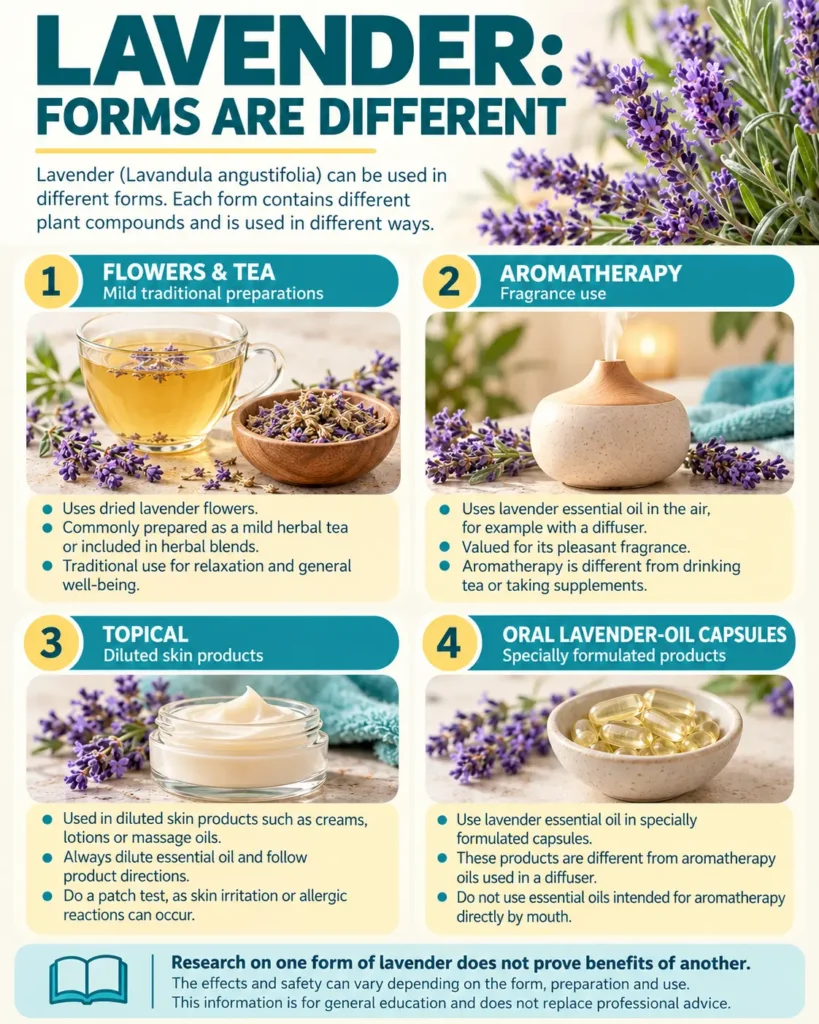
Dried lavender flowers and tea: The flowers may be steeped as an herbal infusion or used in a calming evening routine. Flower tea is not the same as concentrated essential oil, and there is not strong evidence that ordinary tea treats clinical insomnia. [1,2]
Aromatherapy and diffusers: Lavender scent is used in diffusers or scented household products. Pleasant personal experience is possible, but studies have not clearly established consistent health effects. Use good ventilation and stop if a scent triggers headache or coughing. [1]
Topical products: Diluted lavender oil appears in creams, lotions, and massage products. Products can irritate skin or cause allergic reactions. Never assume that an undiluted essential oil is safe to apply directly. [1]
Specialized oral lavender-oil capsules: Certain commercial preparations have been specifically studied for anxiety symptoms. These are formulated oral products and should not be substituted with a drop from a diffuser or a bottle labeled simply “essential oil.” [1,3]
Where Lavender May Help
Everyday unwinding: Using a pleasant aroma or flower tea as part of a screen-free wind-down ritual may be a reasonable personal preference. The ritual itself may be helpful even when lavender-specific effects are uncertain.
Anxiety symptoms: Clinical research suggests possible benefit for some standardized oral lavender-oil preparations, but studies have important methodological limits. Lavender should not replace assessment or evidence-based care for persistent anxiety. [1,3]
Sleep: People often associate lavender with bedtime. Evidence is not clear that aromatherapy, tea, or other lavender products reliably treat insomnia. Persistent insomnia deserves a more targeted evaluation. [1]
Comfort from scent: Aromatherapy can be a sensory preference. If strong scents cause headaches, nausea, or breathing discomfort, skip it; a calming routine does not require fragrance.
SAFETY FIRST
Oral essential oil is not a home remedy: Do not swallow household diffuser oil or use arbitrary essential-oil drops as substitutes for studied oral products. Discuss any oral lavender supplement with a pharmacist or clinician, especially if you take medicines. [1]
Sedatives and surgery: Lavender may add to drowsiness from sedating medicines or herbs. Tell your healthcare team about supplements before a procedure. [1]
Skin and scent sensitivity: Topical lavender can cause allergic skin reactions. Aromatherapy may provoke headache or coughing. Stop use if you experience symptoms. [1]
Pregnancy and breastfeeding: Reliable safety data are limited. Seek individualized medical advice rather than assuming lavender supplements or concentrated oils are safe. [1]
Children: Keep concentrated essential oils away from children. Topical exposure has been discussed in reports of breast tissue changes in some children, although causation is unclear; consult a clinician about unexplained symptoms. [1]
Persistent symptoms: Seek professional help if anxiety, sleep problems, or mood symptoms persist, worsen, or interfere with daily life. A scented product is not a substitute for care.

Quality and Buying Basics
- Look for the botanical identity, ideally Lavandula angustifolia, and the plant part used.
- Choose by intended form: dried flowers, aromatherapy, topical, or a specifically labeled oral supplement. Do not switch between forms based on a claim for another preparation.
- For oral supplements, review ingredients, concentration, directions, warnings, and third-party quality information when available; ask about interactions.
- Avoid products promising to cure anxiety, insomnia, or other medical conditions.
How It Fits With Other Herbs
Lavender can appear alongside other relaxing herbs, but combinations are not automatically safer or more effective.
Chamomile: Both are common in evening tea and aromatic routines, yet each has its own allergy and preparation considerations. Combining them does not establish a proven sleep treatment.
Lemon balm: The two may appear together in herbal teas marketed for calmness. Their evidence and potential effects differ by preparation; be attentive to drowsiness if using concentrated products.
Passionflower: Products sometimes combine these herbs for nighttime use. Evidence for the combination is not necessarily available, and combining sedating products could increase unwanted effects.
References
1. National Center for Complementary and Integrative Health — Lavender: Usefulness and Safety
https://www.nccih.nih.gov/health/lavender
2. European Medicines Agency — Lavandulae flos: Herbal medicinal product / traditional use monograph
https://www.ema.europa.eu/en/medicines/herbal/lavandulae-flos
3. National Center for Complementary and Integrative Health — Anxiety and Complementary Health Approaches: What the Science Says