

Coffee, tea, and other caffeine-containing products can make it easier to feel alert. But caffeine does not affect everyone the same way, and a drink that helps you focus in the morning may make sleep harder later in the day.
You do not have to give up caffeine to make a useful change. Start by noticing what you use, when you use it, and whether you experience restless sleep, jitters, or a difficult afternoon energy dip. Then adjust one thing at a time.
QUICK INSIGHT
About Cafeine
Caffeine is a stimulant found in coffee, tea, some sodas and energy drinks, chocolate, and certain medicines. Its effects depend on the dose, timing, your habits, and your sensitivity. An easy first step: check the caffeine amount on one drink you have regularly and note what time you have it. [1,2]
What is caffeine—and what is it not?
Caffeine acts on the nervous system and temporarily reduces feelings of sleepiness. It may improve alertness for a time, but it does not replace sleep or resolve the reason you feel exhausted. Some people notice a pleasant lift; others experience shakiness, faster heartbeat, stomach discomfort, or anxiety-like sensations. [1,2]
Caffeine can be naturally present in coffee, black or green tea, and cocoa. It can also be added to soft drinks, energy drinks, supplements, and certain over-the-counter medicines. Even “decaf” products can contain small amounts. Check labels rather than assuming a familiar serving always has the same amount. [1,2]
Why timing and sensitivity matter
Caffeine can remain active for hours. A person who drinks coffee late in the day may have trouble falling asleep or sleeping soundly, even if they do not feel particularly energized at bedtime. CDC sleep guidance recommends avoiding caffeine in the afternoon or evening. Treat that as a useful starting point, not a precise cutoff that works for every schedule. [2,3]
Sensitivity differs. Pregnancy, medications, health conditions, sleep patterns, and individual metabolism may change what feels comfortable. A daily milligram total cannot tell you by itself whether caffeine is disrupting your sleep. [1,2]
How much is too much?
For most healthy adults, the FDA cites 400 mg per day as an amount not generally associated with dangerous negative effects. This is not a recommended daily target, a guarantee of safety, or an appropriate threshold for everybody. Some people experience unwanted effects well below it. [1]
During pregnancy, ACOG advises limiting caffeine to less than 200 mg per day and discussing individual circumstances with a prenatal clinician. Children and teens, and adults with certain health conditions or medication interactions, need different considerations. [4,2]
Avoid pure or highly concentrated caffeine powders and liquids. Accidental excessive dosing can be dangerous. [1]
Common signs your caffeine routine may need adjusting
- You have trouble falling asleep or wake feeling unrested after late-day caffeine.
- You notice shakiness, palpitations, an upset stomach, or unusual restlessness after drinks.
- Your intake has gradually increased because the usual amount seems less noticeable.
- You rely on caffeine to push through persistent insufficient sleep.
- When you skip a usual drink, you develop a headache, irritability, or trouble concentrating. [1,2]
What does the evidence actually say?
There is good evidence that caffeine can temporarily improve alertness and can interfere with sleep, especially when used later in the day. Public-health guidance supports paying attention to total intake and timing. But no single bedtime cutoff, beverage choice, or reduction plan has been proved to fix sleep problems for everyone. [1–3]
Observing your own pattern can help you make a practical choice. It cannot diagnose insomnia, anxiety, a heart rhythm problem, or another condition.
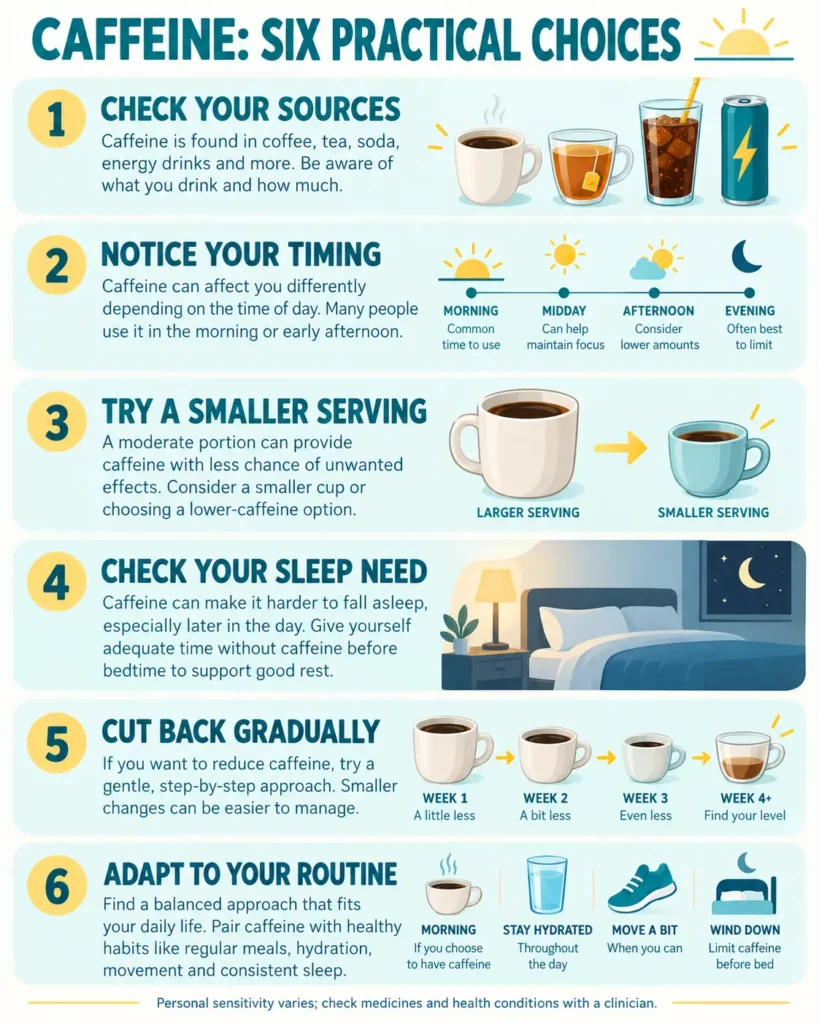
Six practical ways to use caffeine more intentionally
1. Count your usual sources
For one typical day, list coffee, tea, soda, energy drinks, supplements, and medicines that might contain caffeine. Read the package if available. Serving size and preparation can change the amount, so avoid guessing from cup size alone. [1,2]
2. Look at when you use it
Notice whether caffeinated drinks cluster late in the afternoon or evening. If sleep is a concern, try moving your last caffeinated drink earlier and compare how you feel over several days. Shift workers can adapt this to their main sleep period rather than following a standard clock. [3]
3. Test a smaller serving
If your usual drink feels too strong, try a smaller portion, a lower-caffeine version, or part-decaf. A small change you can maintain is more useful than a dramatic restriction you immediately abandon.
4. Separate tiredness from a caffeine deficit
Before another cup, check whether you have missed sleep, food, water, a rest break, or treatment for a health concern. Caffeine may temporarily mask fatigue, but it does not remove safety risks from severe sleepiness. Do not rely on caffeine to make drowsy driving safe.
5. Reduce gradually when cutting back
People who use caffeine regularly can experience withdrawal after suddenly stopping, including headaches, sleepiness, irritability, nausea, and difficulty concentrating. A gradual reduction—such as replacing one usual serving with a smaller or lower-caffeine choice—may be more manageable. [2]
6. Keep the change flexible
Review sleep and side effects rather than chasing a perfect number. If the new plan makes no meaningful difference, other sleep, work, medical, or stress factors may need attention.
A simple starting plan
| Today | Next few days | Then decide |
|---|---|---|
| Write down caffeinated drinks and times. | Move one late drink earlier or reduce one serving. | Review sleep, comfort, and withdrawal symptoms; keep, adjust, or seek advice. |
Common obstacles—and workable alternatives
- “I work nights.” Anchor caffeine choices to your planned sleep time, not to someone else’s morning or evening.
- “I love the ritual.” Keep the familiar mug, café break, or tea ritual with decaf or a non-caffeinated option.
- “Stopping gives me headaches.” Reduce gradually rather than insisting on an abrupt stop; speak with a clinician if symptoms are severe.
- “I need caffeine to function.” Review sleep opportunity and other causes of daytime sleepiness, especially if you are sleepy while driving or working with hazards.
Risks, limits, and when to seek help
Discuss caffeine use with a healthcare professional if you are pregnant or breastfeeding, take interacting medicines, have palpitations, blood-pressure or heart concerns, or experience persistent anxiety-like symptoms or sleep disruption. Seek prompt medical attention for concerning severe symptoms such as chest pain, fainting, or a marked or irregular heartbeat. [1,2,4]
If you repeatedly cannot sleep, have loud snoring or breathing pauses, or experience substantial daytime sleepiness, a caffeine adjustment alone is not an adequate evaluation. See our linked sleep resources below for additional context.
Helpful next step
Choose one drink you have most days. Check its caffeine content and the time you have it. If you want to make a change, start with its timing or portion rather than changing everything at once.
References
1. U.S. Food and Drug Administration — Spilling the Beans: How Much Caffeine Is Too Much?
https://www.fda.gov/consumers/consumer-updates/spilling-beans-how-much-caffeine-too-much
2. MedlinePlus — Caffeine
https://medlineplus.gov/caffeine.html
3. Centers for Disease Control and Prevention — About Sleep
https://www.cdc.gov/sleep/about/index.html
4. American College of Obstetricians and Gynecologists — How Much Coffee Can I Drink While Pregnant?