

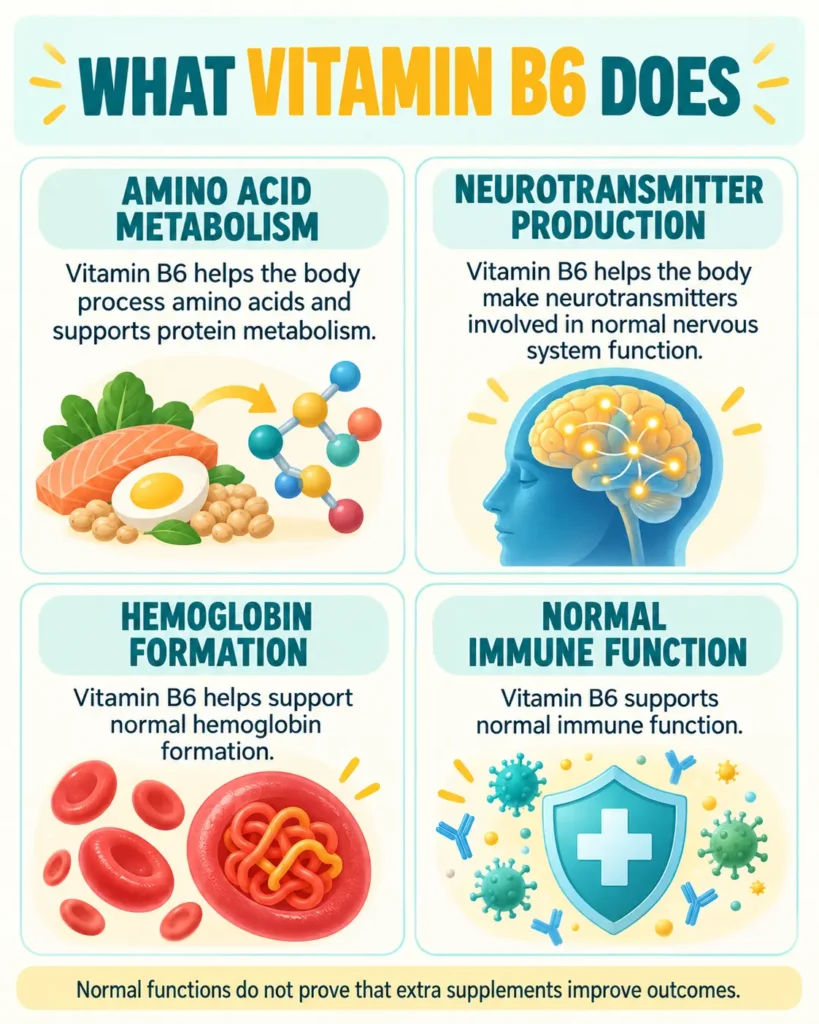
Vitamin B6 helps your body use protein, make neurotransmitters, form hemoglobin, and support normal immune function. Most people can obtain it from ordinary foods such as fish, poultry, potatoes, chickpeas, and bananas. More is not automatically better: high doses from supplements can injure nerves. [1,2]
Start with your food pattern and the Supplement Facts labels on anything you already take. A B-complex, multivitamin, and separate “nerve support” product may all contain vitamin B6.
Quick Nutrient Profile
| Field | At a glance |
|---|---|
| Nutrient | Vitamin B6, a family of related compounds including pyridoxine; pyridoxal-5′-phosphate (PLP) is an active form. |
| Main roles | Helps amino acid metabolism, neurotransmitter synthesis, hemoglobin formation, and normal immune function. |
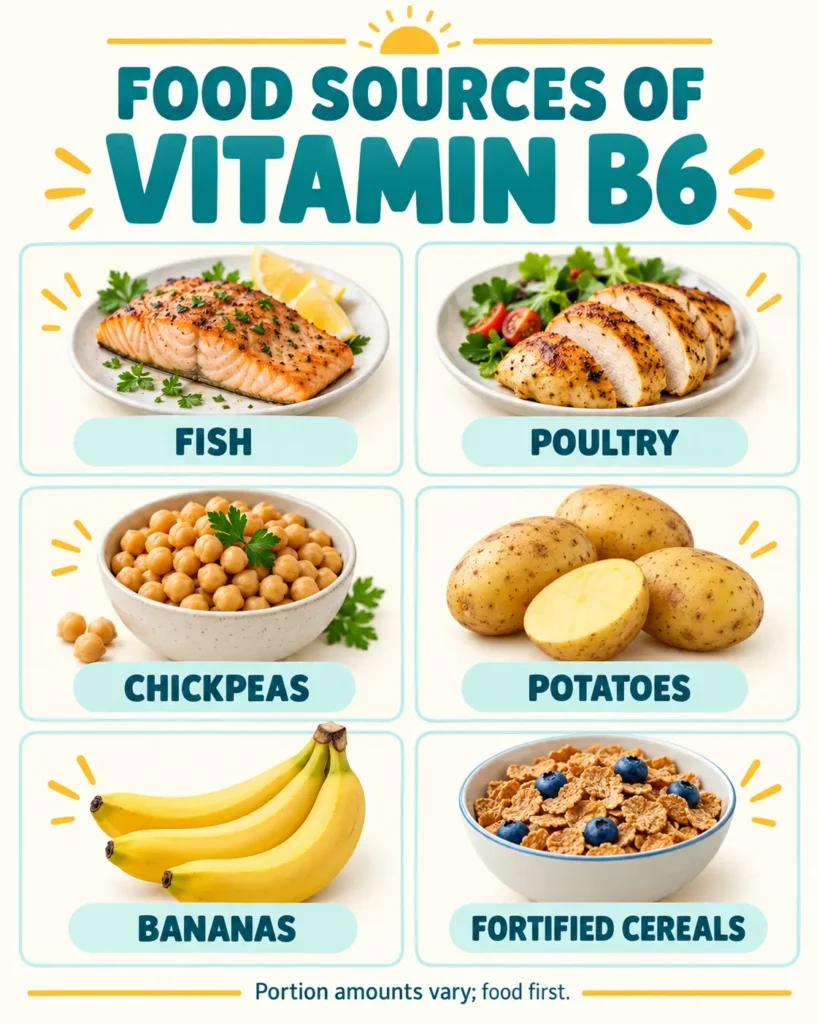
| Best food sources | Fish, poultry, chickpeas, potatoes, bananas, and fortified cereals. |
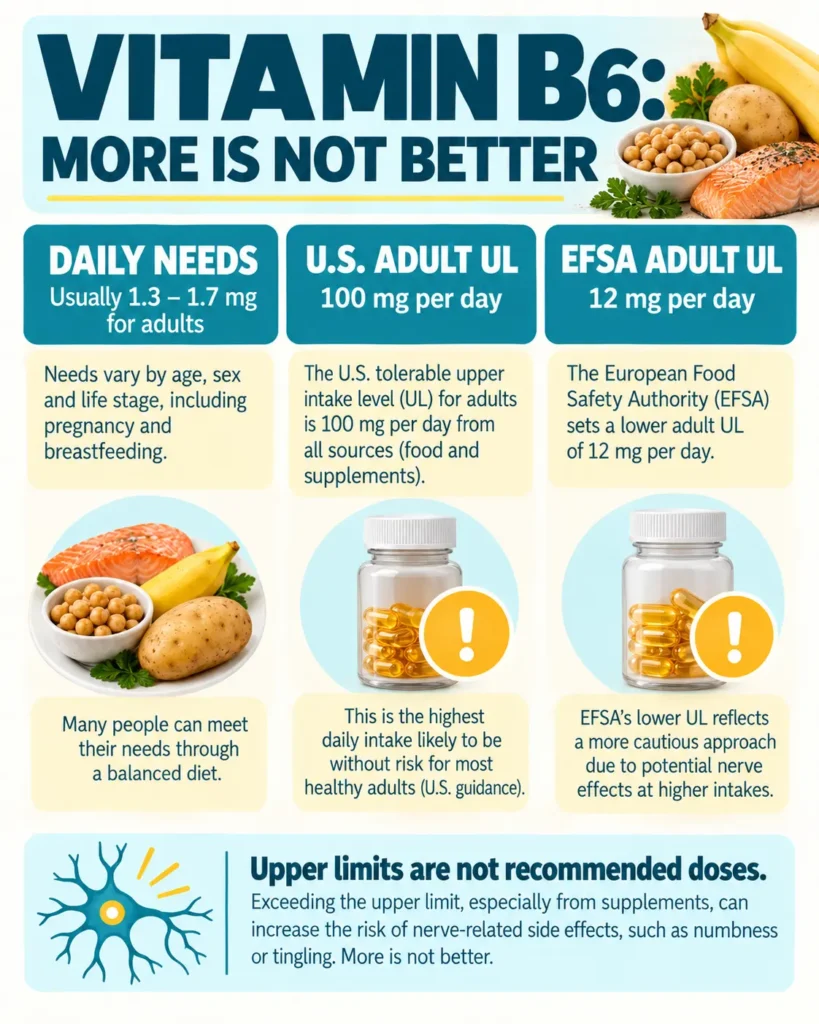
| Adult daily target | RDA: 1.3 mg/day at ages 19–50; at 51+, 1.7 mg for men and 1.5 mg for women. Pregnancy: 1.9 mg; lactation: 2.0 mg. [1] |
| Common supplement forms | Pyridoxine hydrochloride and pyridoxal-5′-phosphate (PLP/P-5-P); no form is established as universally safer at high doses. |
| Key safety point | Long-term excess supplemental vitamin B6 can cause peripheral neuropathy. U.S. and European upper limits differ considerably. [1,3] |
What Vitamin B6 Does in the Body
Vitamin B6 is water-soluble and functions as a coenzyme in many reactions. Its active form PLP helps process amino acids and supports production of several neurotransmitters. It also contributes to hemoglobin formation and immune function. These normal roles do not mean taking extra B6 reliably improves mood, focus, or sleep if intake is already adequate. [1]
Food Sources: Start with Familiar Meals
- Fish and poultry: salmon, tuna, chicken, and turkey can contribute vitamin B6 along with protein.
- Legumes and starches: chickpeas and potatoes are useful everyday options.
- Fruit: bananas offer a convenient source.
- Fortified cereals: check nutrition labels to see what is added.
A mixed eating pattern usually provides vitamin B6 without a special “superfood.” Amounts vary by portion and preparation; use food labels or USDA FoodData Central for exact entries rather than relying on an invented ranking. [1,4]
How Much Vitamin B6 Do Adults Need?
The Recommended Dietary Allowance (RDA) is a daily intake intended to meet the needs of nearly all healthy people in its life-stage group. It is not a supplement dose or a treatment target. [1]
| Adult life stage | U.S. RDA |
|---|---|
| Men and women, 19–50 years | 1.3 mg/day |
| Men, 51 years and older | 1.7 mg/day |
| Women, 51 years and older | 1.5 mg/day |
| Pregnancy (all ages) | 1.9 mg/day |
| Lactation (all ages) | 2.0 mg/day |
The U.S. Daily Value (DV) shown on Nutrition Facts and Supplement Facts labels is 1.7 mg for adults and children age 4 or older; it is a labeling reference, not an individualized recommendation. [1]
Low Intake and Deficiency
Vitamin B6 deficiency is uncommon in isolation but may occur with poor nutritional intake, malabsorption, certain kidney conditions, alcohol dependence, or some medicines. Possible manifestations can include dermatitis, mouth changes, anemia, irritability, or neurological symptoms; none of these symptoms proves a B6 deficiency on its own. A clinician may review diet, medicines, and laboratory testing when deficiency is suspected. [1]
Supplement Forms and How They Differ
Most standalone and multivitamin supplements use pyridoxine hydrochloride; some use PLP (often called P-5-P). A label may list the chemical form in parentheses, but the vitamin B6 amount in milligrams is the amount to compare across products. Claims that an “activated” form makes high-dose use risk-free are not established. [1,3]
Before adding a supplement, add up vitamin B6 across all tablets, powders, energy products, and fortified foods you use. Watch for duplicate ingredients in B-complex and multivitamin products.
When Might a Supplement Make Sense?
A clinician might recommend vitamin B6 for a documented deficiency or certain specific medical situations. Some prescribed regimens for nausea and vomiting of pregnancy include vitamin B6 under clinical guidance; this should not be interpreted as a reason to self-prescribe high doses. [1,2]
Research on vitamin B6 supplementation for mood and cognitive outcomes is mixed or insufficient to recommend routine high-dose use. Meeting nutritional needs is different from treating a disease. [1]
SAFETY FIRST: Too Much Can Damage Nerves
The most important avoidable risk is sensory peripheral neuropathy: tingling, burning, numbness, pain, balance difficulties, or other nerve symptoms that may develop with excessive supplemental intake. Symptoms warrant prompt medication-and-supplement review; do not assume they are caused by a deficiency or take additional B6 to treat them. [1,3]
| Authority | Adult tolerable upper intake level | Important interpretation |
|---|---|---|
| U.S. Food and Nutrition Board / NIH ODS | 100 mg/day | Applies to combined food and supplement sources; not a dose to aim for. |
| European Food Safety Authority (2023) | 12 mg/day | Also includes food and supplements; set based on neuropathy concerns. |
These differing upper limits reflect different assessments of the evidence—not proof that intake below either number is harmless for every individual. Do not use the U.S. 100 mg limit as a supplement target. Clinical treatment exceptions should be supervised. [1,3]
Vitamin B6 can interact with certain medicines, including some antiseizure medicines and medications used for tuberculosis. Review all medicines and supplements with a pharmacist or clinician, particularly in pregnancy, breastfeeding, neurological illness, or suspected deficiency. [1]
Quality and Buying Basics
- Check the amount per serving in mg, not only the % Daily Value.
- Check the serving size and whether the same B6 appears in other supplements.
- Look for all added ingredients, especially in blends promoted for energy, nerves, or stress.
- Independent quality verification can help with manufacturing quality; it does not establish efficacy or safety of large doses.
A Practical Next Step
Look at your next B-vitamin label. If it lists vitamin B6, compare the milligram amount with your life-stage needs, note any other products that also contain it, and speak with a clinician before long-term high-dose use.
References
1. NIH Office of Dietary Supplements. Vitamin B6 — Fact Sheet for Health Professionals.
https://ods.od.nih.gov/factsheets/VitaminB6-HealthProfessional
2. NIH Office of Dietary Supplements. Vitamin B6 — Fact Sheet for Consumers.
https://ods.od.nih.gov/factsheets/VitaminB6-Consumer
3. EFSA NDA Panel (2023). Scientific opinion on the tolerable upper intake level for vitamin B6. EFSA Journal, 21(5), e08006.
https://doi.org/10.2903/j.efsa.2023.8006
4. USDA. FoodData Central.