

Sometimes the meal is ordinary, but how you eat it makes the difference: you rush through lunch, eat until uncomfortably full, or go straight to bed after a late dinner. Small changes to pacing, portion size, and timing may help certain digestive symptoms. The right adjustment depends on whether the issue is gas, reflux, constipation, or something else.
QUICK INSIGHT
About Meal Habits
Start with one low-effort change: sit down when possible, slow your pace, or test a smaller meal if large meals trigger discomfort.
Evidence is more direct for some conditions than others. Eating slowly may reduce swallowed air and belching; leaving time before lying down may help nighttime reflux.
Do not automatically eliminate whole food groups. Persistent symptoms, unintended weight loss, blood, vomiting, or trouble swallowing deserve medical assessment.
Which meal habits might matter?
Digestive comfort is not one single outcome. Belching can involve swallowed air; bloating can have many causes, including gas, constipation, and food intolerance; burning or regurgitation may involve reflux. A useful experiment starts by naming the symptom and its timing—not by following a universal “gut-healing” routine. [1–4]
| Habit | When it may be worth trying | Important limit |
|---|---|---|
| Eat more slowly | Frequent belching, hurried meals, swallowing air | Not a proven fix for every type of bloating |
| Choose a smaller meal | Uncomfortable fullness or gas after large meals | Sufficient overall intake still matters |
| Keep time before lying down | Nighttime reflux or regurgitation | Especially relevant to reflux; not all indigestion |
| Notice fizzy drinks and straws | Belching or excess swallowed air | Only change if they are a personal trigger |
| Adjust fiber gradually | Gas after a sudden jump in high-fiber foods | Fiber remains valuable; tailor to your symptoms |
1. Slow the meal down enough to notice your pace
Fast eating and frequent talking while chewing can increase the amount of air swallowed. If belching is bothersome, try sitting for at least part of the meal, putting the utensil down occasionally, and taking manageable bites. This is a practical experiment, not an instruction to count every chew or eat at an exact speed. NIDDK lists slower eating and reducing certain air-swallowing habits among options for gas symptoms. [1, 2]
2. Test a more comfortable meal size
A very large meal may leave some people feeling overly full. Smaller, more frequent meals are among the strategies clinicians may suggest for gas symptoms, and smaller meals can also be useful in reflux management. This does not mean everyone should graze all day. Keep total nourishment adequate, and choose a pattern that fits hunger, medication schedules, work, and cultural food habits. [1, 5]
Example: if a rushed, oversized lunch often causes discomfort, try preparing a moderate lunch with a planned snack available later, rather than skipping food and becoming excessively hungry by evening.
3. Match meal timing to the symptom
Meal timing is especially relevant for people with reflux when they lie down. NIDDK notes that, for nighttime GERD symptoms, having meals at least three hours before lying down may help. This is not a universal bedtime rule and is not evidence that all late eating harms digestion. Shift workers, caregivers, and people with medical nutrition needs may need different arrangements. [3]
If dinner is late, a smaller, familiar meal may be more realistic than going hungry. Someone with recurring nighttime heartburn should discuss patterns and treatment options with a clinician.
4. Notice drinks and meal-time habits without blaming every food
For troublesome belching or gas, carbonated drinks, frequent gum chewing, hard candy, and drinking through a straw can contribute to swallowed air in some people. Trying one substitution—such as still water instead of fizzy water with lunch—can be more informative than changing six habits at once. [1, 2]
For reflux, foods such as coffee, chocolate, mint, spicy foods, and high-fat meals may worsen symptoms in some people, but individual triggers differ. Avoid broad restrictions unless you have a meaningful pattern or professional advice. [3]
5. Change fiber gradually rather than avoiding it altogether
Beans, lentils, whole grains, vegetables, and fruit can contribute fiber to an overall balanced diet. A sudden increase can also lead to more gas for some people. For people with IBS, NIDDK advises increasing fiber gradually and notes that soluble fiber may be more helpful for constipation symptoms. Specific restrictive diets, such as low-FODMAP plans, should be considered with professional guidance when indicated—not as a blanket wellness recommendation. [4]
Related reading: Dietary Fiber: Types, Food Sources, Benefits, and Safety
A simple one-week experiment
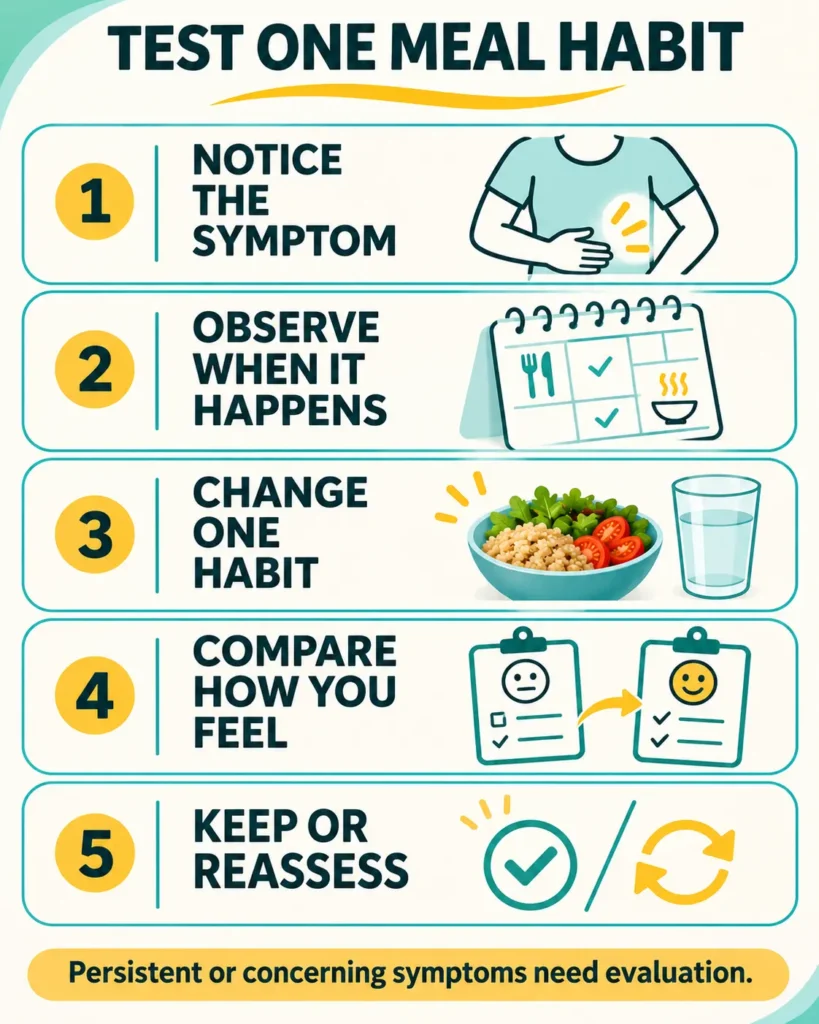
Choose only one symptom and one change. A brief record can help you decide whether the strategy is worth keeping.
| Step | Try this |
|---|---|
| 1. Identify | Write down the main discomfort (e.g., belching or nighttime heartburn). |
| 2. Observe | Notice when it tends to happen, without judging yourself or changing everything. |
| 3. Adjust one habit | Choose eating pace, meal size, time before lying down, or a drink substitution. |
| 4. Compare | After several comparable meals, note whether symptoms seem better, unchanged, or worse. |
| 5. Decide | Keep a helpful, practical change; seek professional advice for recurring or concerning symptoms. |
Make it fit your real life
- Short lunch break: sit for the first few bites and avoid rushing the entire meal; perfect conditions are not required.
- Shared family dinner: keep portions flexible and consider an optional second serving rather than starting with an uncomfortable amount.
- Shift work: plan around the actual sleep period, not a fixed clock time; seek advice if reflux is recurrent.
- Limited budget: change pacing or portion distribution before buying specialty foods or supplements.
- Eating-related anxiety or a history of disordered eating: avoid rigid tracking and restrictive rules; work with a qualified professional when needed.
What the evidence does—and does not—show
The strongest practical support here comes from condition-specific clinical guidance: reducing swallowed air for belching/gas and avoiding meals close to lying down for nighttime reflux. These recommendations do not prove that a particular “mindful eating” script or fixed meal schedule treats all digestive symptoms. Much of the advice is a low-risk behavioral trial, and results vary. [1–5]
Meal habits also cannot explain all symptoms. Persistent fullness, abdominal pain, diarrhea, constipation, reflux, or bloating may have medical, medication-related, or dietary causes that need assessment.
When to seek medical care
Contact a healthcare professional if symptoms are frequent, worsening, affecting daily life, or persist despite reasonable adjustments. Seek prompt medical assessment for difficulty or pain swallowing, repeated vomiting, unintentional weight loss, blood in vomit or stool, black stools, or severe persistent abdominal pain. Chest, jaw, arm, or neck pain—especially with breathing difficulty, sweating, or lightheadedness—requires emergency evaluation rather than assuming indigestion. [5, 6]
Practical takeaway
A useful first question is not “Which food must I cut out?” but “What happens, and under which circumstances?” Try one small, comfortable habit change and keep eating adequately. If the symptom persists or warning signs appear, get an individualized evaluation.
Frequently Asked Questions
Should I always eat six small meals?
No. Smaller meals may help some people with fullness or reflux, but there is no universal meal count for digestive comfort. The best pattern should suit your symptoms and overall nutritional needs.
Is eating late always bad for digestion?
Not necessarily. The best-supported timing advice here applies to reflux symptoms when lying down. Other digestive concerns need their own evaluation.
Should I stop eating beans if they cause gas?
Not automatically. A smaller serving or slower increase may help with tolerance, and fiber-rich foods can still be valuable. Seek advice for persistent or severe symptoms.
References
1. NIDDK. Eating, Diet, & Nutrition for Gas in the Digestive Tract — https://www.niddk.nih.gov/health-information/digestive-diseases/gas-digestive-tract/eating-diet-nutrition
2. NIDDK. Treatment for Gas in the Digestive Tract — https://www.niddk.nih.gov/health-information/digestive-diseases/gas-digestive-tract/treatment
3. NIDDK. Eating, Diet, & Nutrition for GER & GERD — https://www.niddk.nih.gov/health-information/digestive-diseases/acid-reflux-ger-gerd-adults/eating-diet-nutrition
4. NIDDK. Eating, Diet, & Nutrition for Irritable Bowel Syndrome — https://www.niddk.nih.gov/health-information/digestive-diseases/irritable-bowel-syndrome/eating-diet-nutrition
5. MedlinePlus. GERD — https://medlineplus.gov/gerd.html
6. NIDDK. Symptoms & Causes of Indigestion — https://www.niddk.nih.gov/health-information/digestive-diseases/indigestion-dyspepsia/symptoms-causes