
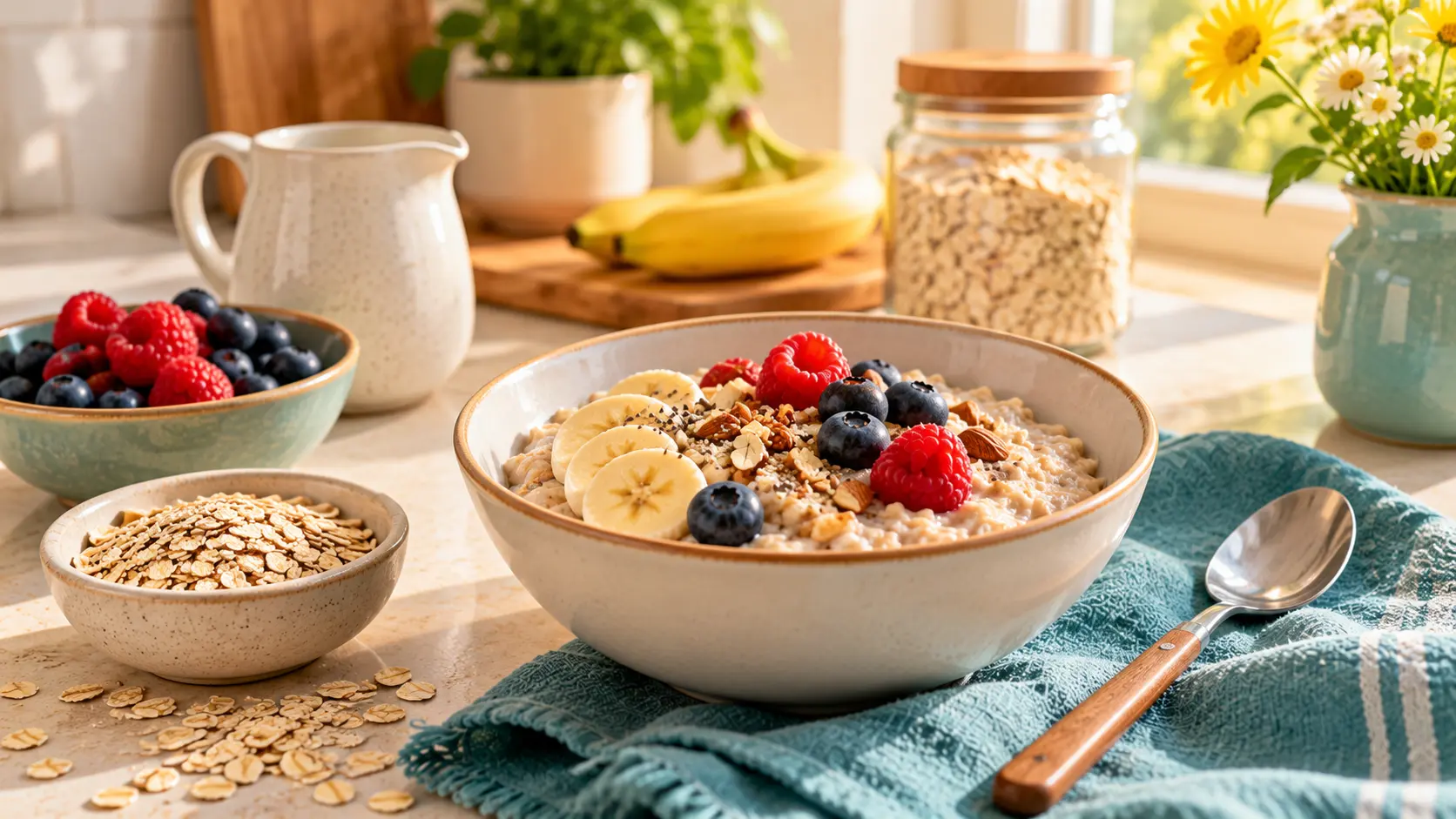
Oats are a familiar grain that can become porridge, overnight oats, baked goods, or a savory meal. They provide carbohydrates for everyday energy, fiber, and some protein and minerals. What matters most is how you use them in a varied eating pattern—not whether a bowl of oats is a miracle food.
QUICK INSIGHT
About Oat Nutrition Benefits
Common name: Oats. Botanical grain: Avena sativa. What we eat: The edible oat kernel, usually processed into groats, steel-cut oats, rolled flakes, or flour. Nutritional highlights: Whole-grain carbohydrates, dietary fiber—including beta-glucan soluble fiber—some protein, and minerals. Easy uses: Hot oatmeal, overnight oats, pancakes, baking, and savory grain bowls.
What do oats provide?
Plain oats contain starch, dietary fiber, modest amounts of protein and fat, and minerals such as iron and magnesium. Their fiber includes beta-glucan, which becomes viscous in water. Added sugars, flavored packets, toppings and the liquid used for cooking can change the nutrition of a finished bowl. [1, 2]
The table uses an illustrative 40 g dry portion of plain raw oats, calculated from a USDA FoodData Central–attributed 100 g oats entry. It is not a measurement of cooked porridge, and values vary by product and database entry. Verify against the exact oats product label when precision matters. [1]
| Nutrient | Approximate amount per 40 g dry oats | Why it matters |
|---|---|---|
| Energy | 152 kcal | Fuel from the food as a whole |
| Carbohydrate | 27.1 g | Main source of food energy |
| Dietary fiber | 4.0 g | Adds fiber to the eating pattern |
| Protein | 5.3 g | Contributes to total daily protein |
| Total fat | 2.6 g | Naturally occurring fat |
Source basis: USDA FoodData Central–attributed “oats, raw” values per 100 g: 379 kcal, 67.7 g carbohydrate, 10.1 g fiber, 13.2 g protein, and 6.5 g fat. This is a generic raw-oats composition estimate, not a branded product specification; the underlying FoodData Central item number could not be independently checked for this draft. [1]
What benefits have evidence—and what has limits?
Fiber and cholesterol
Oats are one source of beta-glucan soluble fiber. Research underlying U.S. FDA-authorized labeling recognizes a relationship between diets low in saturated fat and cholesterol that include sufficient oat or barley beta-glucan and a lower risk of coronary heart disease. The regulation specifies 3 g or more of beta-glucan per day in this dietary context; it is not a claim that any one bowl treats high cholesterol or heart disease. [2]
The total fiber number in the table is not the same as the beta-glucan amount. Do not assume a 40 g serving provides 3 g of beta-glucan.
Digestion and everyday meals
Fiber-containing whole grains can help people build a more varied, fiber-rich diet. Some people find oats filling and easy to prepare. But oats do not “detox” the body, cure constipation, or guarantee stable blood sugar for everyone. The type of oats, portion, additions, overall meal and individual circumstances matter. [1–3]
Ways to eat oats without a complicated recipe
| Meal idea | Quick approach | Useful adjustment |
|---|---|---|
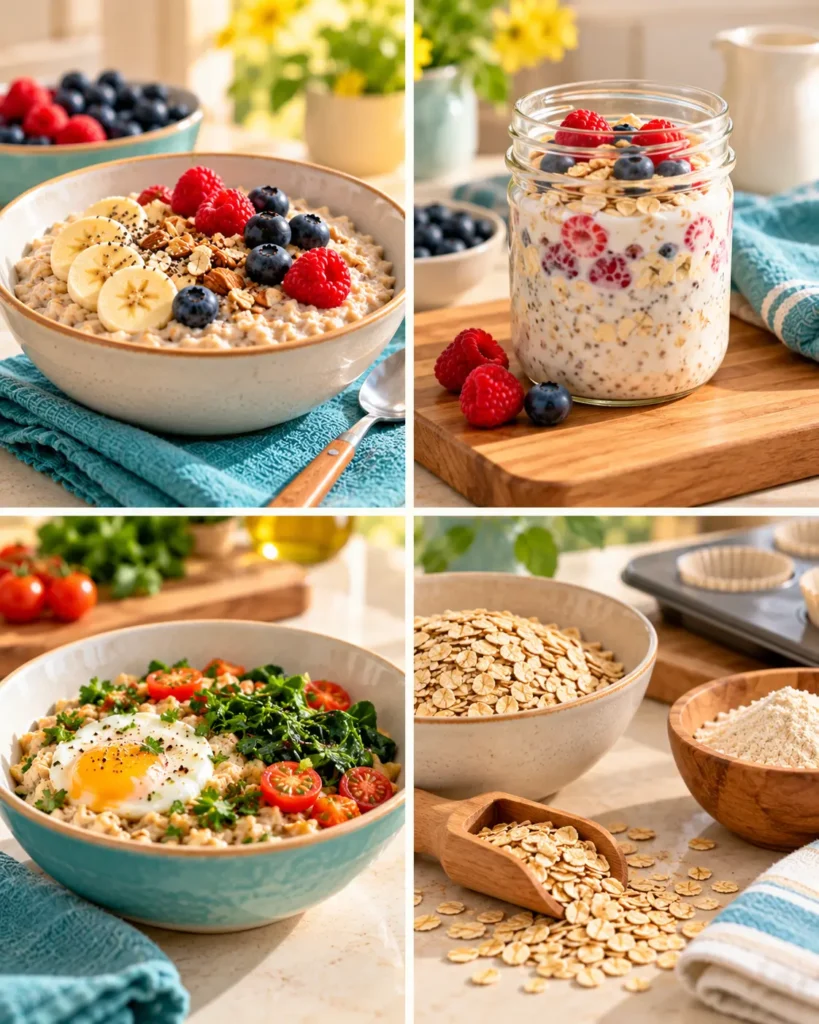
| Simple oatmeal | Cook plain rolled oats with water or milk according to the package | Add fruit or nuts; keep sweeteners to taste |
| Overnight oats | Refrigerate oats in an appropriate liquid in a covered container | Use safe refrigeration and eat within a reasonable storage window |
| Savory bowl | Cook oats and add vegetables or a cooked egg or tofu | Use leftovers and seasonings you enjoy |
| Baking | Use oats or oat flour in appropriate baked recipes | Texture and substitutions differ from wheat flour |
| Portable snack | Pair oats-based food with fruit or yogurt | Check added sugar and allergens on packaged products |
Oat forms: what changes?
Oat groats retain the whole edible kernel and usually need more cooking. Steel-cut oats are chopped groats with a chewy texture. Rolled oats are steamed and flattened, making them quicker to cook. Quick oats are more finely processed for faster preparation. Oat flour is finely ground oats for baking; oat bran is a fiber-rich fraction. Different processing changes texture and cooking time, but a plain oat form is not automatically “bad” because it cooks quickly. [2]
Instant flavored oatmeal can be convenient; look at the label if you are comparing added sugars or sodium. Oat drinks are not nutritionally interchangeable with dry oats or dairy milk; check whether protein and nutrients have been added.
Shopping, storage, and practical portions
For a simple staple, choose plain oats in a form you will actually use. Start with the portion suggested on the package, then adjust based on appetite, needs, and what else is in the meal. Store dry oats sealed in a cool, dry place, and follow package guidance; discard products that smell rancid, show moisture damage, or develop pests. Refrigerate prepared oats promptly and use standard food-safety practices.
Who should be careful?
Celiac disease or strict gluten avoidance: Although oats do not naturally contain wheat, barley, or rye gluten, cross-contact during growing and processing is common. Choose oats labeled gluten-free if you need them, and ask a clinician or dietitian whether oats are suitable for your individual celiac care. [3]
Food allergy or sensitivity: Avoid oats if you have a diagnosed oat allergy, and pay attention to other ingredients in flavored or prepared products. If a sudden allergic reaction includes breathing trouble or swelling of the tongue or throat, seek urgent care.
Digestive comfort: Increasing fiber quickly may cause gas or bloating. Add fiber-containing foods gradually, use appropriate fluids, and seek assessment for persistent or concerning digestive symptoms. A medically prescribed diet may call for individualized choices.
A useful first step
Try plain oats in a meal you already eat. Add one food you enjoy—berries, seeds, yogurt, cooked vegetables, or a protein source—and notice whether the combination is convenient and satisfying. There is no need to take an oat supplement or buy specialized products to start.
Read next
For a realistic breakfast, start with What a Balanced Breakfast Actually Needs. For combining foods across a whole day, use How to Build a Balanced Day of Eating. If you are curious about a different everyday ingredient, see Hemp Seeds: Nutrition, Benefits, and How to Use Them.
What a Balanced Breakfast Actually Needs — https://ugetwell.com/nutrition/what-a-balanced-breakfast-actually-needs/
How to Build a Balanced Day of Eating — https://ugetwell.com/how-to/build-balanced-day-of-eating/
Hemp Seeds: Nutrition, Benefits, and How to Use Them — https://ugetwell.com/foods/hemp-seeds/
References
1. USDA FoodData Central–attributed raw oats composition (secondary display; exact USDA item ID requires verification) — https://www.caloriexpert.com/food/oats-raw-2708489
USDA FoodData Central database — https://fdc.nal.usda.gov/
2. FDA health-claim regulation: soluble fiber from whole oats and barley, 21 CFR 101.81 — https://www.law.cornell.edu/cfr/text/21/101.81
3. NIDDK: Eating, Diet, & Nutrition for Celiac Disease — https://www.niddk.nih.gov/health-information/digestive-diseases/celiac-disease/eating-diet-nutrition