
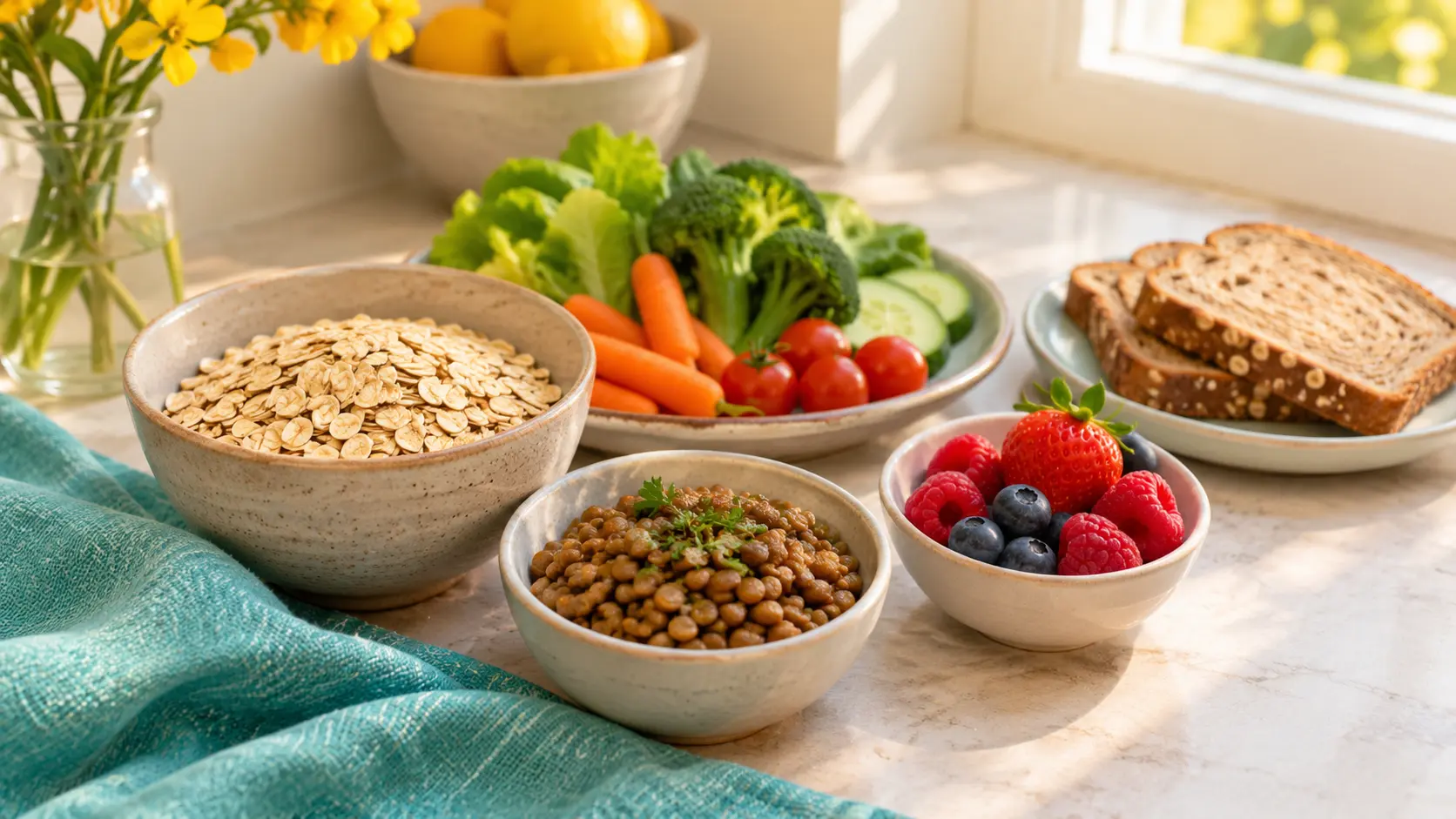
Adding fiber is a practical way to support regular bowel habits, but changing everything overnight can leave you feeling gassy or bloated. A gradual approach lets you add familiar foods, notice your comfort, and adjust without turning meals into a math exercise.
Start with one small change to a food you already eat. Keep the rest of your routine familiar while you see how your digestion responds.
Quick Start
Goal: Add fiber-rich foods gradually while keeping meals comfortable.
What you need: One familiar fiber-rich food, your usual meals, and access to appropriate fluids. No supplement or special equipment is required.
Effort: Choose one change at a time; review how you feel over several meals or days rather than forcing a deadline.
Start here: Add a modest portion of fruit, vegetables, oats, or beans to one meal you regularly eat.
Important limitation: More fiber is not the right self-care step for everyone, particularly with certain digestive conditions or new, unexplained symptoms.
Before You Begin
Think about where fiber currently appears in your meals: vegetables, fruits, legumes, whole grains, nuts, and seeds. You do not need to count every gram to take a useful first step. If you are tracking intake, compare similar portions and read package labels rather than guessing nutrient amounts.
Fiber has different properties. Some kinds absorb water and soften stool; others add bulk or are broken down by gut bacteria. That is one reason a sudden large increase can affect gas, stool frequency, and comfort differently from person to person.
If your clinician has prescribed a low-fiber or restricted diet—for example around a procedure or for a specific bowel condition—follow that plan instead. If you have difficulty swallowing, bowel narrowing or obstruction concerns, or significant unexplained digestive symptoms, discuss changes with a healthcare professional first.
How to Increase Fiber Gradually: Seven Steps
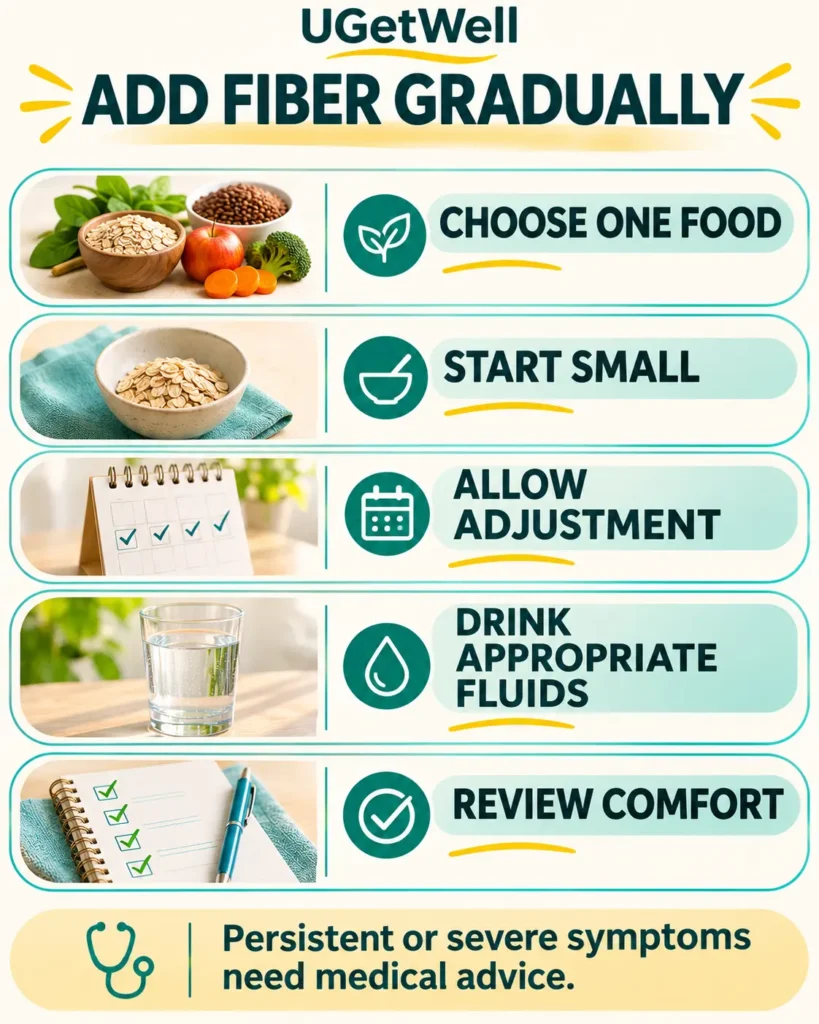
1. Choose one regular meal
Pick breakfast, lunch, dinner, or a familiar snack. It is easier to notice a change when you do not redesign your entire menu at the same time.
2. Add one small fiber-rich food
Try berries alongside breakfast, a small spoonful of beans in soup, oatmeal instead of a lower-fiber cereal, or an extra portion of vegetables with lunch. Choose a food you enjoy and can obtain consistently.
3. Keep that change steady before adding another
Give yourself time to notice how your bowel habits and comfort respond. If things feel comfortable, add another modest fiber-rich choice later. The exact pace can vary; there is no universal calendar that everyone must follow.
4. Match your fluid intake to your needs
Drink fluids regularly as appropriate for your health. Water and other suitable drinks help fiber work comfortably, especially when constipation is a concern. People with medically restricted fluids should follow their clinician’s instructions rather than increasing drinking automatically.
5. Vary fiber sources as you progress
Over time, rotate among fruits, vegetables, legumes, and whole grains instead of relying on a single food or supplement. Variety also brings other nutrients and different textures to meals.
6. Pay attention to comfort, not just totals
Note bothersome gas, bloating, cramping, constipation, or diarrhea. If discomfort follows a large change, scale back to the last comfortable amount and progress more slowly. Symptoms that are persistent or unusual should not be dismissed as adjustment.
7. Review your routine and make the next change
Ask what you can maintain: Is there at least one additional fiber-rich food in your usual week? Is it affordable and enjoyable? Does your digestion tolerate it? Repeat the process only when it makes sense.
A Simple Example: Build on Foods You Already Eat
| Usual meal | One practical change | Next option, if comfortable |
|---|---|---|
| Breakfast with toast | Choose whole-grain toast or add fruit | Try oatmeal on another day |
| Soup at lunch | Add a small portion of beans or lentils | Include a vegetable side later |
| Afternoon snack | Pair a familiar snack with fruit | Try nuts or seeds if appropriate |
| Dinner with rice | Mix in a little brown rice or extra vegetables | Gradually adjust the balance |
These are examples, not required portions or a fixed meal plan. Food tolerance and accessibility matter more than following an exact sequence.
Make It Easier
- Limited time: Keep frozen vegetables, canned low-sodium beans, or ready-to-eat fruit available. Rinse canned beans when useful.
- Sensitive digestion: Start with one smaller change and keep a simple note of the food and how you felt. Some legumes and certain vegetables can increase gas for some people.
- Texture or chewing needs: Consider well-cooked vegetables, soft fruit, oatmeal, or thoroughly cooked lentils when appropriate.
- On a budget: Dried or canned beans, oats, seasonal produce, and frozen vegetables can be practical choices.
- No appetite for tracking: Use a simple yes/no weekly check instead of counting grams.
Check Your Result
You have completed the first round when you can name one new fiber-rich food you added, describe whether it was comfortable, and decide to keep, reduce, or adjust it. That is useful progress even if you have not reached a numeric fiber goal.
Optional note: “I added a little oatmeal with breakfast on several days. It was comfortable, so I will try fruit next.” This is an illustrative example, not clinical evidence.
Troubleshooting Common Problems
| Problem | What to try | When to seek help |
|---|---|---|
| More gas or bloating | Reduce the size or speed of the change; avoid adding several high-fiber foods at once | If symptoms persist, are significant, or have no clear explanation |
| Hard stools continue | Review overall fluid intake, activity, and food variety; discuss ongoing constipation with a clinician | If constipation does not improve with self-care |
| Loose stools or cramps | Pause the most recent change and review possible triggers | If symptoms are persistent, severe, or associated with concerning signs |
| Hard to sustain | Return to one affordable, familiar change | If medically prescribed restrictions make the approach uncertain |
What the Evidence Supports—and What It Does Not
NIDDK recommends obtaining enough fiber and adding it gradually to allow the body to adjust. Fiber-rich foods and suitable fluids are established parts of constipation care, but they are not a guaranteed solution for every type of bowel symptom. A large increase can cause gas and bloating, especially in people with sensitive digestion. There is not strong evidence for a single day-by-day schedule that suits everyone. This guide therefore uses a flexible, food-first progression rather than a rigid dosing plan.
A clinician or dietitian can help tailor intake when digestive conditions, medication effects, medical diets, or other individual circumstances complicate the picture.
Safety First: When Not to Push Through
Seek prompt medical advice for constipation with blood in the stool or rectal bleeding, persistent abdominal pain, vomiting, fever, inability to pass gas, or unexplained weight loss. Sudden severe pain or signs of serious illness warrant urgent or emergency care. Do not simply keep adding fiber in the face of these symptoms.
Fiber supplements are not necessary to follow this guide. If considering one, check with a clinician or pharmacist when you take medications, have swallowing difficulties, have digestive disease, or follow fluid restrictions. Do not stop prescribed medication or change a prescribed medical diet based on this article.
What to Do Next
For a broader explanation of fiber types, food sources and limitations, read the Dietary Fiber guide. If ongoing symptoms are your main concern, the Digestive Wellness overview can help you consider the bigger picture. For a practical nutrition framework, the Balanced Day of Eating guide provides flexible meal ideas.
Related reading:
Digestive Wellness: A Whole-Picture Guide — https://ugetwell.com/health/digestive-wellness/
How to Build a Balanced Day of Eating — https://ugetwell.com/how-to/build-balanced-day-of-eating/
Practical Takeaway
Choose one enjoyable, accessible fiber-rich food; add it in a modest amount; drink appropriate fluids; and see how your digestion responds before making the next change. Consistency and comfort matter more than a perfect food log.