
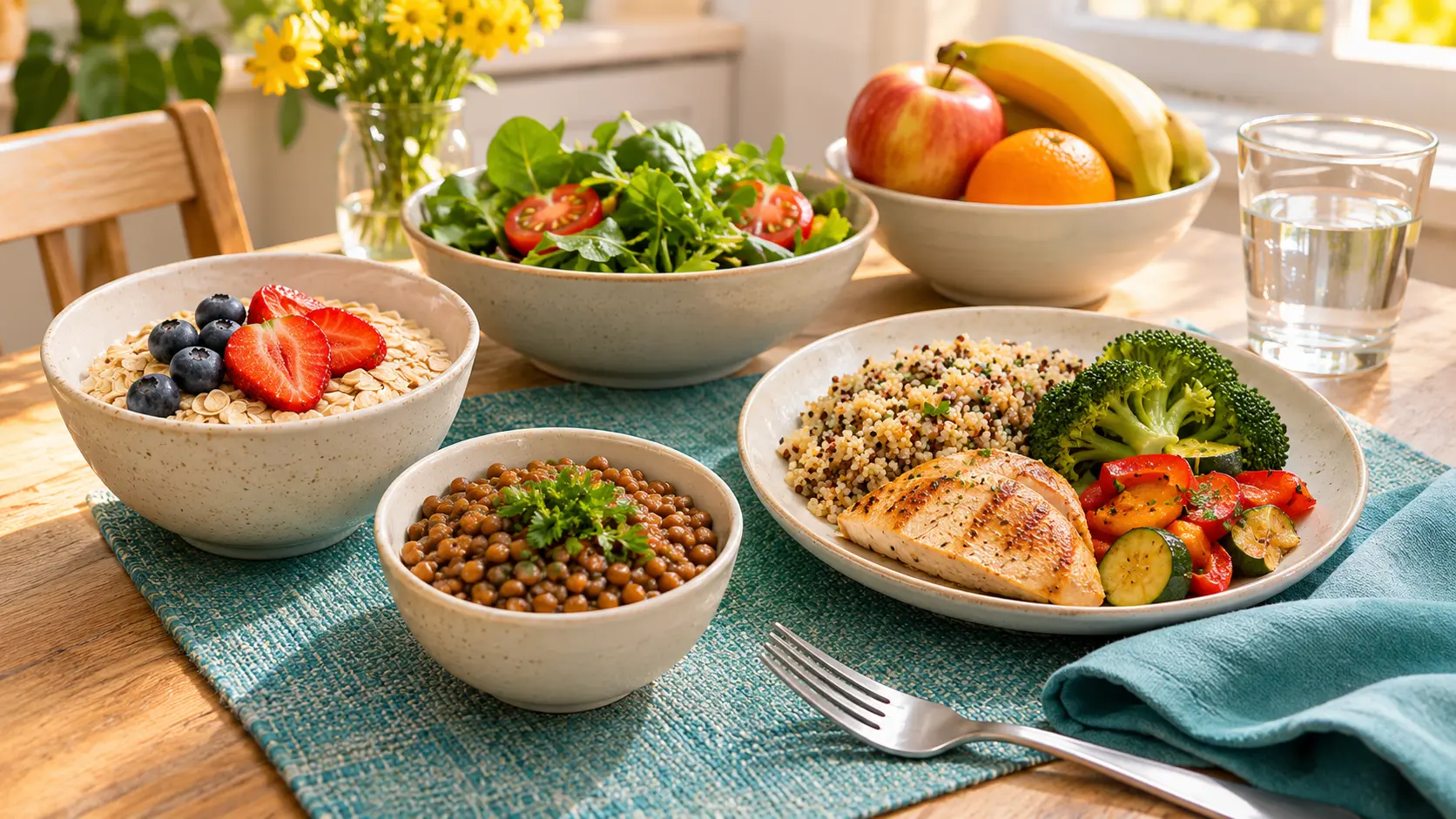
Stress can change appetite, meal timing, sleep, and what feels manageable to cook. Nutrition cannot remove the source of stress, but a flexible eating pattern can help you meet everyday needs when your routine is disrupted. Start with reliable meals and fluids before looking for a special nutrient or supplement.
QUICK INSIGHT
About Nutrition for Stress
Bottom line: Regular, adequate meals and a varied diet can support general health during stressful periods; no specific food has been shown to reliably switch off stress.
Evidence snapshot: General healthy-eating guidance is well established; evidence that individual foods or nutrients directly treat psychological stress is much less certain.
Foods worth prioritizing: Familiar combinations of grains or starches, protein foods, produce, and appropriate drinks.
Practical route: Keep one easy meal and one backup snack available; adjust caffeine based on sleep and symptoms.
Key safety point: Persistent inability to eat, significant unintended weight change, severe symptoms, or thoughts of self-harm need appropriate professional support.
Why eating can feel different when you are stressed
Stress sometimes changes hunger, digestion, energy, or interest in food. Some people skip meals unintentionally; others snack more often or rely on takeout because planning feels difficult. These reactions are understandable, and they do not indicate a particular nutrient deficiency. CDC guidance recognizes appetite and energy changes as possible effects of stress. [1]
The immediate goal is not a perfect menu. It is a practical way to get enough food and drink while keeping your choices varied over time. If food access, time, disability, medication, or a medical condition limits options, work with what is feasible rather than applying rigid rules.
Eating patterns worth knowing
1. Start with a reliable meal rhythm
A predictable breakfast, lunch, dinner, or another schedule that fits your workday can reduce the chance that an unexpectedly busy day leaves you without food. Meal frequency is not a treatment for stress, and different schedules work for different people. If you have diabetes, an eating disorder, or another condition requiring a specific plan, follow individualized guidance.
Easy example: Keep a shelf-stable option, such as whole-grain crackers with canned beans or a nut butter, for a day when lunch gets delayed. Add fruit or vegetables when available.
2. Make food combinations more useful than individual “superfoods”
Protein foods such as eggs, beans, lentils, tofu, dairy, fish, or poultry contribute to normal body maintenance. Whole grains, vegetables, fruit, and legumes contribute fiber and other nutrients. Unsaturated-fat sources such as nuts or olive oil can round out a meal. These are general nutrition benefits—not proof that a particular meal lowers cortisol or treats anxiety. [1, 2]
3. Keep drinks straightforward
Water is a practical default. Fluid needs vary with climate, activity, health status, and diet. Dehydration can affect how you feel, but extra water beyond your needs is not a specific stress treatment. [3]
4. Check how caffeine fits your day
Coffee and tea can be part of a normal eating pattern, but caffeine can worsen jitters, palpitations, or sleep problems for some people. Caffeine sensitivity varies. If you notice a pattern, try changing the amount or timing rather than assuming you must stop completely. Energy drinks may contain substantial caffeine; review the label, particularly when combining multiple products. [3]
5. Be cautious about using alcohol as a stress strategy
Alcohol does not address the source of stress and can create additional health and sleep problems. Choosing not to drink is a valid option. If drinking is becoming difficult to control or seems necessary to cope, seek support rather than handling it alone. [1]
Foods that fit a stressful day: side-by-side choices
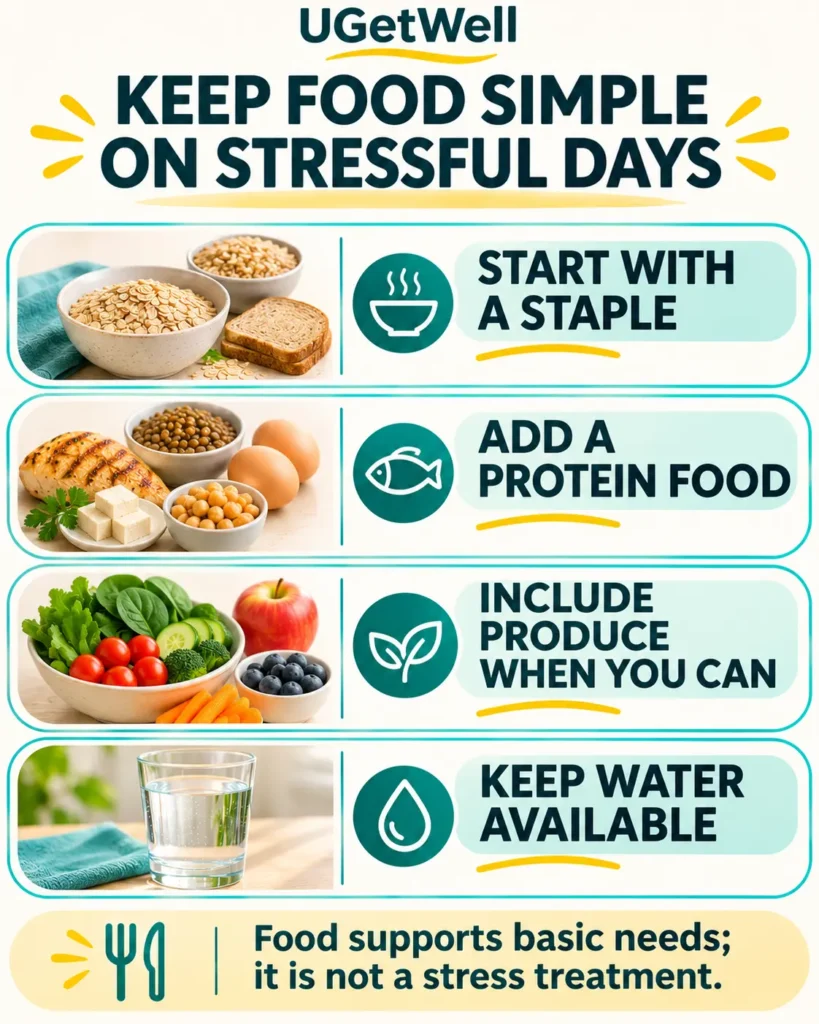
The examples below are flexible meal-building ideas, not a ranked list of proven stress treatments.
| Food group | Contribution | Low-effort use | What to watch |
|---|---|---|---|
| Beans and lentils | Plant protein and fiber | Add canned, rinsed beans to soup or a grain bowl | Increase fiber gradually if it causes discomfort |
| Oats and whole grains | Carbohydrate, often fiber | Oatmeal with yogurt or fruit; whole-grain toast | Choose forms and portions that fit appetite |
| Eggs, tofu, dairy or alternatives | Protein; other nutrients vary by food | Egg sandwich, tofu stir-fry, yogurt | Check allergens and individual restrictions |
| Fruit and vegetables | Fiber and varied vitamins/minerals | Frozen vegetables, prewashed salad, fruit | Fresh, frozen, and canned all can be practical |
| Nuts and seeds | Unsaturated fats; some protein and fiber | Add to oatmeal or have with fruit | Avoid with allergy; choose safe textures for children |
What do nutrients actually tell us about stress?
Nutrients such as magnesium, B vitamins, iron, and protein support normal physiological functions. But knowing that a nutrient matters to the body does not show that taking extra amounts will reduce stress for someone whose intake is already adequate. Diet quality is broader than one nutrient, and stress-related symptoms are not a reliable way to diagnose a deficiency.
If your diet has become very limited, you have lost weight unexpectedly, or you are at risk of a deficiency, a registered dietitian or clinician can help assess your actual needs. For the specific evidence on magnesium and stress, use our published guide rather than treating magnesium as a universal solution.
Food, supplements, and the evidence gap
Eating a varied diet to meet nutritional needs differs from taking concentrated products intended to change stress symptoms. Studies of supplements often use particular extracts, amounts, populations, and short follow-up periods. Their results cannot automatically be transferred to everyday foods or to products with different formulations.
For example, NIH reviews suggest some ashwagandha extracts may reduce perceived stress in small short-term studies, but preparations differ and long-term safety is uncertain. Possible liver and thyroid effects, interactions, and pregnancy-related cautions matter. This is not a recommendation to self-treat with ashwagandha. [4]
Magnesium supplements also require context: the nutrient is essential, but extra supplementation is not an established stress treatment for everyone. High supplemental amounts can cause adverse effects and may interact with medicines. [5]
A “stress support” label is not the same as proof of benefit. Before starting a product, check the exact ingredients and discuss possible interactions with a clinician or pharmacist—especially if pregnant, breastfeeding, taking prescription medicines, or managing chronic illness.
A realistic day: combine, do not perfect
Breakfast: oatmeal with yogurt or fortified soy yogurt and fruit.
Lunch: leftover rice or another grain with lentils or chicken and vegetables.
Snack: fruit with nuts, or crackers with hummus.
Dinner: a simple pasta, potato, or grain dish with vegetables and a protein food.
Drinks: water or other appropriate beverages according to thirst and individual needs.
These are examples, not a required schedule or personalized meal plan. If your appetite is low, smaller accessible meals may feel easier; if you need more substantial meals, adapt accordingly.
Five practical choices for a difficult week
- Choose one reliable meal you already enjoy, and list its simplest ingredients.
- Keep a backup option for a day when cooking or shopping does not happen.
- Pair a convenient carbohydrate food with a protein food when practical, then add produce when available.
- Notice whether late caffeine or alcohol is affecting your sleep or stomach; adjust one thing at a time.
- At the end of the week, ask: Did I get enough to eat and drink? Which option was easiest to repeat?
What food alone cannot do
A nutritious diet can be part of taking care of yourself, but it cannot by itself resolve unmanageable workloads, financial strain, interpersonal problems, anxiety disorders, or other causes of persistent distress. Protecting sleep, asking for support, movement, and changes to stressful circumstances may matter as much as—or more than—specific food choices. [1]
If stress is disrupting eating, daily functioning, or sleep for an extended period, seek professional advice. Prompt care is appropriate for significant dehydration, persistent vomiting, or concerning unintentional weight loss. If you are in immediate danger or have thoughts of suicide, call emergency services; in the United States, call or text 988 for crisis support. [1]
Practical takeaway
Begin with the smallest useful change: keep one workable meal and one backup snack within reach. Build variety over time, review how caffeine and alcohol affect you, and be skeptical of supplements that promise quick stress relief.
Related Reading
How to Build a Balanced Day of Eating
Healthy Snacks: How to Choose Something Filling and Practical
Magnesium for Stress: What the Evidence Says
Protein and Everyday Energy: Why Adequate Intake Matters
References
[1] CDC. Managing Stress. https://www.cdc.gov/mental-health/living-with/index.html