
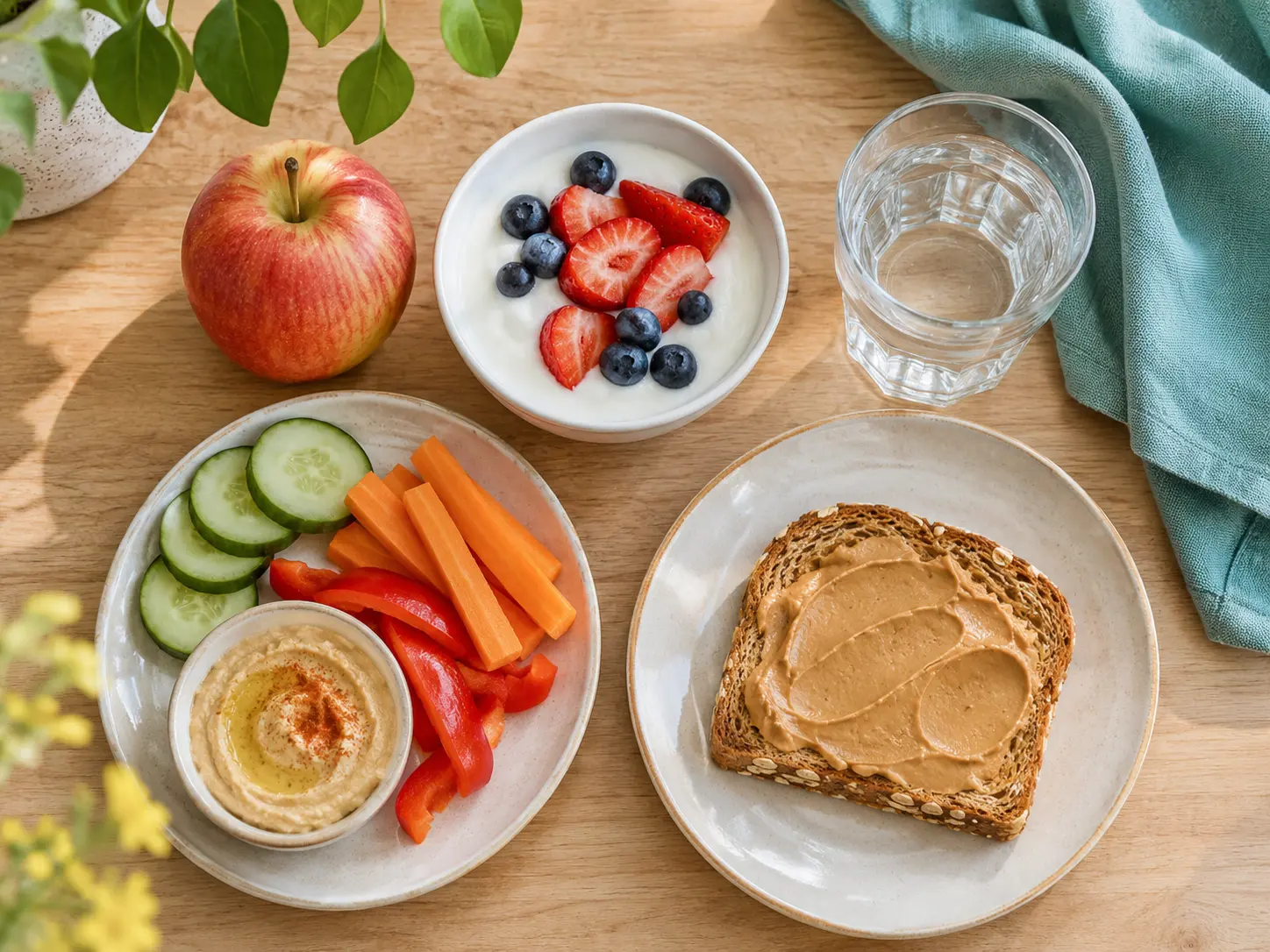
A snack can be as simple as fruit, yogurt, crackers, or leftovers. The useful question is not whether a food has a “healthy” label, but whether it fits your hunger, tastes, schedule, budget, and overall eating pattern. There is no single snack that works best for everyone.
QUICK INSIGHT
About Healthy Snacks
Choose something you enjoy and can access regularly; a mix of fiber-containing foods and protein-rich foods can be a practical way to build a more substantial snack.
A snack does not have to be perfectly balanced. Match the amount to your hunger and when you expect to eat next.
The evidence supports healthy eating patterns more strongly than claims that any particular snack prevents weight gain or guarantees lasting fullness.
Try one easy pairing today: fruit and yogurt, vegetables and hummus, or whole-grain toast and nut or seed butter.
What makes a snack satisfying?
Satisfaction involves more than calories or a single nutrient. Appetite, portion size, taste, meal timing, sleep, activity, and personal preferences all matter. Fiber-rich foods such as fruit, vegetables, beans, and whole grains; protein foods such as yogurt, eggs, tofu, and beans; and foods containing unsaturated fats such as nuts can each contribute something useful to a snack. They are not magic ingredients, and people respond differently.
A simple framework is to start with a food you like, then ask whether adding another food group would make it more convenient or satisfying. You might add hummus to carrots, yogurt to berries, or a small amount of nut butter to toast. This is a flexible idea rather than a rigid formula. USDA MyPlate and the American Heart Association both use food-group combinations in their practical snack guidance [1, 2].
Seven practical snack choices — and when each helps
1. Fruit with plain yogurt or a fortified soy alternative
Fruit brings flavor and dietary fiber; plain yogurt contributes protein, while protein amounts vary widely among dairy and plant alternatives. If using a soy alternative, check the label because formulations differ. Try fresh berries, sliced banana, or canned fruit packed in water. Choose a suitable dairy-free option if needed.
2. Vegetables with hummus or another bean dip
Carrots, bell peppers, cucumber, and other vegetables provide varied textures, while chickpea-based hummus adds legumes. Use prepared vegetables for convenience, or frozen vegetables cooked and cooled when raw vegetables are difficult to chew. Pack dip separately if traveling.
3. An apple or pear with nut or seed butter
The fruit offers fiber and water, while nut or seed butter adds flavor and fat plus some protein. Spread it thinly on slices or toast, adjusting the amount to appetite. For nut allergies, use an appropriate seed-based alternative after checking ingredient and cross-contact labels.
4. Whole-grain crackers with cheese, tofu, or tuna
Crackers make an easy base; add a protein-rich topping and, if available, sliced tomato or cucumber. Compare crackers for whole-grain ingredients and sodium rather than trusting front-package words such as “multigrain.” Keep refrigerated foods properly chilled.
5. Roasted chickpeas, edamame, or a small bowl of lentils
Legumes are versatile, often economical sources of fiber and plant protein. You can season cooked lentils for a savory snack, choose thawed prepared edamame, or make roasted chickpeas. Increase legumes gradually if they cause gas or bloating; choose textures appropriate for chewing and swallowing.
6. Popcorn with nuts or seeds
Plain air-popped popcorn is a whole-grain option. Add unsalted nuts or seeds if you want a more substantial combination, taking allergy and choking precautions into account. Butter-heavy, heavily salted, and candy-coated versions have a different nutrient profile.
7. Leftovers or a small sandwich
A snack does not have to come from a snack aisle. Half a bean sandwich, a small portion of yesterday’s grain bowl, or leftover tofu and vegetables may be easier and more satisfying than purchasing special “snack” products. Store and reheat per food-safety instructions.
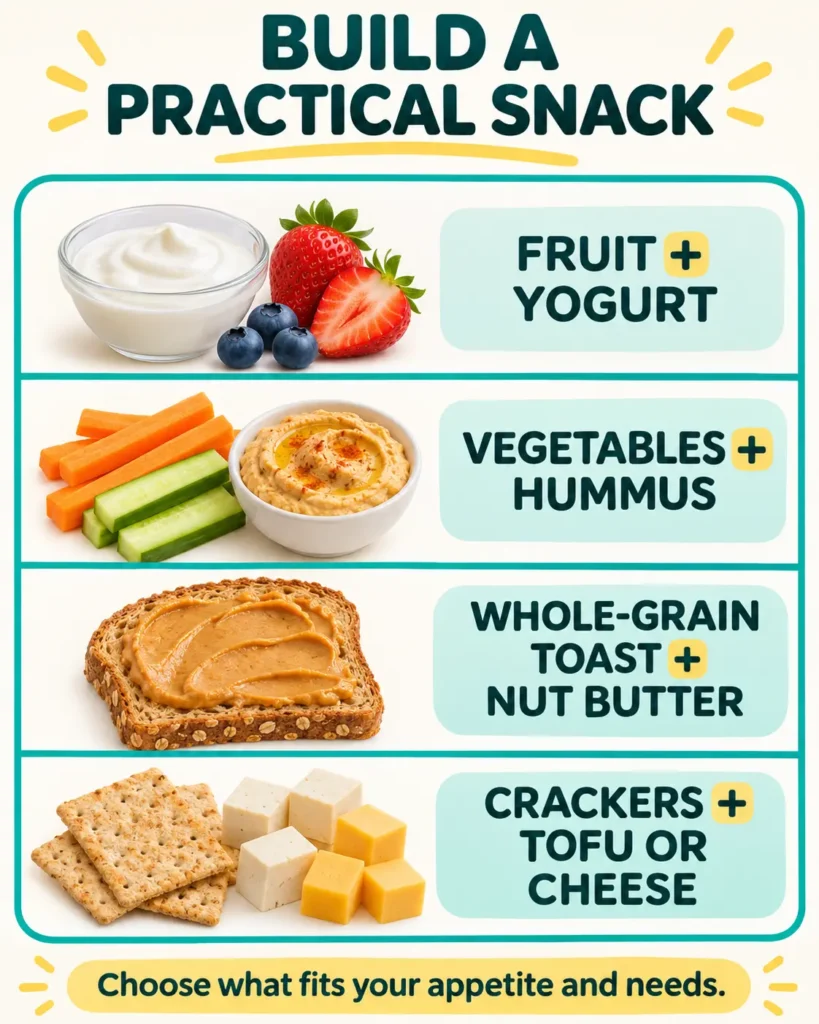
A quick side-by-side snack guide
| Choice | What it offers | Easy option | Consider |
|---|---|---|---|
| Fruit + plain yogurt | Fruit fiber; yogurt protein | Berries with plain yogurt | Check sugar and dairy tolerance |
| Vegetables + hummus | Produce plus legumes | Carrots and hummus | Refrigeration; texture |
| Toast + nut/seed butter | Whole grain plus fat/protein | Toast with thin spread | Allergies; portion preference |
| Crackers + protein food | Convenient mix | Whole-grain crackers + tofu | Sodium; safe storage |
| Legume snack | Fiber and plant protein | Seasoned cooked lentils | Increase fiber gradually |
| Popcorn + seeds | Whole grain plus optional add-in | Plain popcorn with seeds | Age/chewing considerations |
| Small leftovers | Uses what you already have | Half a grain bowl | Food-storage safety |
How to choose for your real day
When you are busy
Keep two no-preparation options available, such as fruit, whole-grain crackers, shelf-stable nut or seed butter, or an individually portioned food that works with your dietary needs. Refrigerated foods need a cold pack if they will be out for extended periods.
When the next meal is several hours away
Choose a more substantial combination, such as yogurt and fruit or a small sandwich, rather than automatically reaching for the smallest packaged item. How much feels right depends on your hunger and daily needs; no universal snack size is required.
When money is tight
Try seasonal or frozen fruit, carrots, oats, popcorn kernels, canned beans, or homemade hummus. Store brands and larger packages divided into reusable containers can sometimes reduce cost, but check unit prices rather than assuming bulk is cheaper.
When you do not feel hungry
There is no need to force a snack simply because it is “snack time,” unless you follow a medical nutrition plan or other individualized advice. An occasional snack can be useful, but a planned schedule is not necessary for everyone.
When you want something sweet or crunchy
Choose what you enjoy. Pairing a sweet food with fruit or yogurt may fit your preferences; a crunchy option might be popcorn or vegetables with dip. Flexible eating is more sustainable than categorizing all treats as forbidden.
How to read packaged snack claims
“Natural,” “protein-packed,” and “healthy” on the front of a package do not replace the Nutrition Facts label. Compare serving size, added sugars, sodium, saturated fat, and fiber where relevant. Ingredient lists can help identify whole grains or allergens; protein content varies by product. USDA and CDC guidance favors a variety of nutrient-dense foods, while the American Heart Association recommends looking beyond marketing claims [1–4].
What research does—and does not—tell us
Public-health dietary guidance supports patterns containing fruits, vegetables, whole grains, varied protein foods, and foods lower in added sugars and sodium [1–4]. The advice to combine food groups is practical guidance, not proof that one specific pairing causes weight loss, corrects metabolic disease, or keeps everyone full for a defined number of hours.
Food studies vary by population, total diet, portion, and outcomes measured. A finding about a nutrient or an entire dietary pattern should not be converted into a promise for a particular snack. If blood glucose, cholesterol, weight, or fatigue is a medical concern, consider the overall diet and appropriate professional care, not a single snack in isolation.
Safety and individual needs
- Food allergies: nuts, peanuts, milk, soy, sesame, fish, and other allergens may appear in snack products or shared manufacturing environments. Read labels each time.
- Choking or swallowing concerns: whole nuts, popcorn, hard raw vegetables, and some fruit shapes may be unsuitable for young children or people with swallowing difficulties. Choose age- and ability-appropriate textures.
- Food safety: refrigerate perishable yogurt, cheese, cooked beans and leftovers promptly; wash produce and follow package storage directions.
- Digestive conditions: increased fiber or certain legumes may cause discomfort; adjust gradually and seek individual guidance for conditions requiring specialized diets.
- Diabetes, kidney disease, eating disorders, or medically prescribed diets: snack composition and timing may require personalized guidance. This article does not replace an individualized nutrition plan.
A small step to try today
Pick one snack you already like, identify an easy companion from another food group, and make sure the combination is realistic for the next few days. Then notice whether it is convenient and satisfying for you. Keep what works; adjust what does not.
Frequently asked questions
Do I need protein in every snack?
No. Protein-containing foods are useful options, but meals and snacks work together over the day. A piece of fruit on its own can also be a reasonable snack.
Are packaged snacks always unhealthy?
No. Products vary, and many nutritious options come packaged. Read the label for ingredients and nutrients relevant to your needs; convenience matters too.
Is snacking necessary for metabolism?
There is no universal rule that everyone must snack to “boost metabolism.” Meal patterns should fit hunger, preferences, schedule, and any specific medical needs.
References
1. USDA MyPlate. Healthy Snacking With MyPlate. 2022 (PDF).https://www.myplate.gov/sites/default/files/2024-06/TipSheet-12-Healthy-Snacking-With-MyPlate.pdf
2. American Heart Association. Healthy Snacking.https://www.heart.org/en/healthy-living/healthy-eating/add-color/healthy-snacking
3. CDC. How to Have Healthier Meals and Snacks. Updated April 29, 2026.https://www.cdc.gov/healthy-weight-growth/healthy-eating/meals-snacks.html
4. American Heart Association. Make better snack choices with these healthy tips. 2022.https://www.heart.org/en/news/2022/11/28/make-better-snack-choices-with-these-healthy-tips
5. NIDDK. Health Tips for Adults.https://www.niddk.nih.gov/health-information/weight-management/healthy-eating-physical-activity-for-life/health-tips-for-adults