

A good night’s rest does not depend on one trick, supplement, or perfect routine. Sleep is shaped by your body clock, daily habits, health, environment, and the way your mind responds to stress. We look at Sleep & Rest through five connected approaches: Herbal, Nutrition, Physical, Mental, and Lifestyle. The goal is to help you find reasonable next steps—not to make you responsible for circumstances you cannot fully control.
QUICK INSIGHT
About Sleep & Rest
Sleep quality matters as much as time in bed. Start with a consistent wake time, a realistic wind-down routine, and a look at factors such as caffeine, stress, noise, and medications. Herbs and supplements are not proven substitutes for evidence-based insomnia care. If poor sleep persists or affects your daytime life, ask a healthcare professional about assessment and CBT-I.
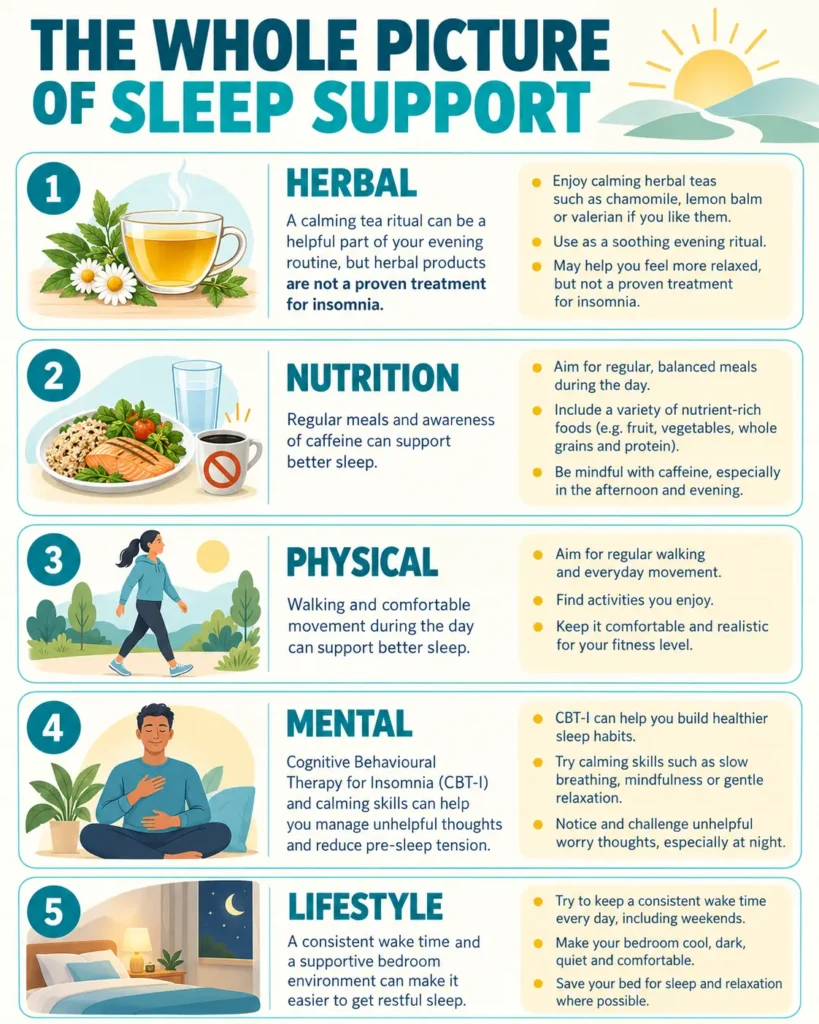
The Whole Picture of Sleep Support
The five approaches below can support healthy sleep habits, but they have different strengths and limitations. We place them together because sleep patterns rarely arise from a single factor. If you have chronic insomnia or another sleep disorder, professional evaluation is an important additional part of the picture.
1. Herbal
The strategy: Treat herbal preparations as optional comfort rituals rather than established insomnia therapies. Effects depend on the herb, preparation, person, and other medicines; “natural” does not guarantee safe or effective.
Chamomile: A gentle tea ritual for winding down; clinical evidence does not establish chamomile as an insomnia treatment. Avoid if you have a relevant plant allergy.
Valerian: Usually sold as tea or extract; trials for insomnia have shown inconsistent results, with uncertain long-term safety.
Lavender: An aroma or tea may feel relaxing, but evidence for aromatherapy as an insomnia treatment is limited. Oral products differ substantially from smelling lavender.
Lemon balm: Commonly consumed as tea or extract for calmness; sleep-specific human evidence remains preliminary. Check interactions and possible drowsiness.
Passionflower: Available as teas or extracts; evidence that it meaningfully treats persistent insomnia is limited, and sedation can be relevant.
Do not combine sedating herbs or sleep products with alcohol, prescription sedatives, or each other without professional guidance. Pregnancy, breastfeeding, chronic conditions, and drug interactions warrant extra caution.
2. Nutrition
The strategy: Build regular, adequate meals and notice whether evening stimulants or large late meals are disrupting sleep. Food supports general health; it is not a stand-alone insomnia therapy.
Magnesium: Supports normal nerve and muscle functions; sources include pumpkin seeds, legumes, and leafy greens. Supplemental magnesium has not been established as a routine insomnia treatment.
Tryptophan-containing protein foods: Eggs, soy foods, and dairy contain this amino acid, but eating them has not been proven to cure insomnia.
Vitamin B6: Involved in normal nervous-system processes; sources include chickpeas, fish, and potatoes. More supplemental B6 is not inherently better and excess can be harmful.
Caffeine can have lingering alerting effects; experiment with an earlier cutoff based on your sensitivity. Alcohol may make people drowsy initially but can fragment sleep later. Avoid prescribing rigid food rules if they are impractical or medically inappropriate.
Caffeine can affect sleep differently depending on timing and individual sensitivity. Learn more in our guide to caffeine timing and sleep.
3. Physical
The strategy: Use comfortable daytime movement and light exposure to support regular activity and sleep timing; choose adaptations that fit your abilities and health.
Walking: A manageable way to add regular movement, ideally with some outdoor daylight when practical.
Gentle yoga or stretching: May support relaxation or perceived sleep quality for some people; do not confuse these effects with proven treatment for chronic insomnia.
Tai chi: A low-impact movement option studied for sleep quality in some groups; evidence varies by population and program.
Intense activity close to bedtime bothers some people but not everyone. Adjust timing rather than assuming evening activity is always harmful. Talk with a clinician before major activity changes if you have exertional symptoms or mobility limitations.
4. Mental
The strategy: Reduce the struggle around sleep and address repeating worry patterns with approaches matched to the problem.
CBT-I: For adults with chronic insomnia, multicomponent cognitive behavioral therapy for insomnia has strong guideline support as initial treatment. It is a structured treatment, not simply generic positive thinking or a list of sleep tips.
A short worry note: Writing tomorrow’s priorities earlier in the evening can help some people set aside repetitive planning. It is a low-risk practice, not a validated insomnia cure.
Relaxation practices: Gentle breathing, progressive relaxation, or guided imagery may reduce tension; benefits for insomnia are more limited when used alone than within CBT-I.
If bedtime triggers dread, rumination, trauma symptoms, or persistent anxiety, seek qualified support. Avoid attempting intensive sleep restriction without appropriate guidance, particularly with high sleepiness or other health issues.
5. Lifestyle
The strategy: Aim for repeatable conditions that make sleep more likely, not a rigid “perfect sleeper” checklist.
Consistent timing: A regular wake-up time helps anchor your daily schedule; shift workers and caregivers may need flexible approaches.
Bedroom conditions: Try a cool, dark, comfortable room; use affordable light or noise adjustments where possible.
Wind-down boundary: Reduce stimulating tasks and bright screens when feasible, especially if they keep your mind alert.
Naps and irregular hours: Notice whether late or lengthy naps reduce sleepiness at bedtime, while remembering that rest needs differ.
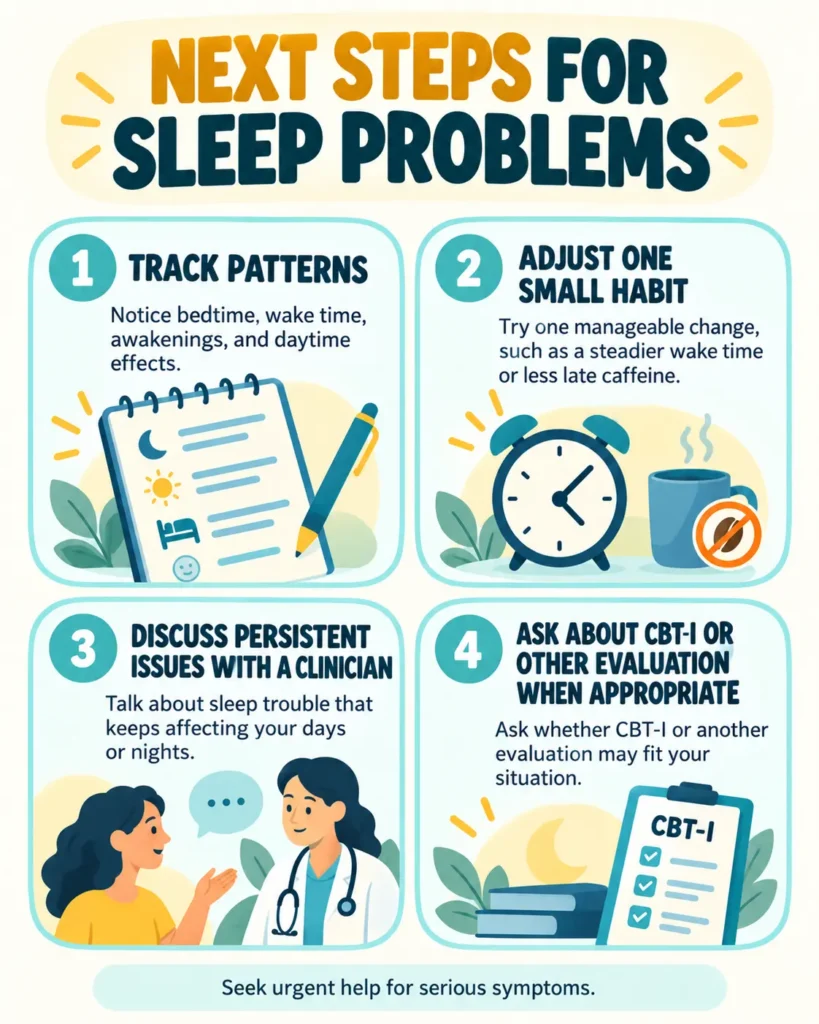
Sleep diary: Record sleep and wake times, awakenings, caffeine, medicines, and daytime functioning for a week or two to support a care conversation.
Sleep-hygiene improvements can support sleep, but the AASM advises against sleep hygiene as the sole treatment for chronic insomnia.
A consistent routine can make sleep habits easier to maintain. Explore our practical guide to building a consistent sleep routine.
Why sleep can be difficult even when you are tired
Sleep pressure generally increases the longer you are awake, while the circadian system influences when your body is primed for sleep. Stress-related alertness, light exposure, schedules, pain, breathing problems, or medications can interfere with those signals. Feeling depleted or mentally exhausted is not always the same as being ready to fall asleep. These are interacting influences—not a way to diagnose the cause of one difficult night.
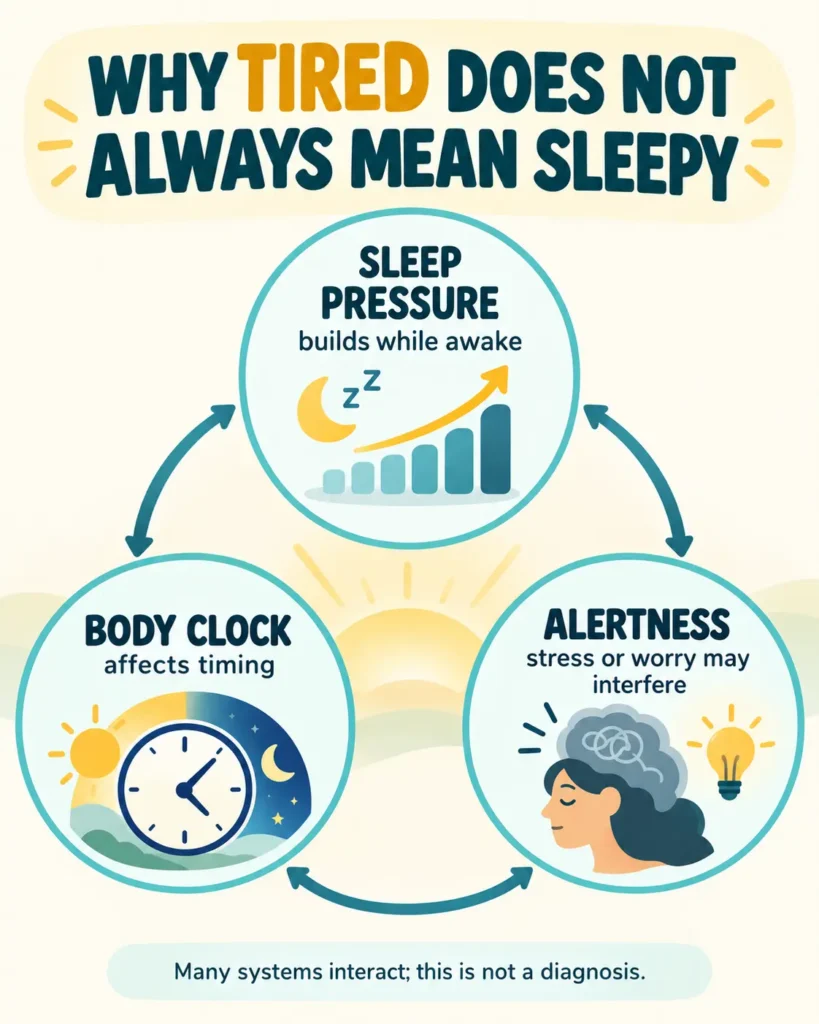
Feeling exhausted does not always mean falling asleep will be easy. Our guide to stress and sleep explores how stress, alertness, and sleep pressure interact.
Common sleep patterns—and what they may suggest
Trouble falling asleep: Timing mismatch, worry, stimulant exposure, discomfort, and other factors may contribute.
Waking during the night: Noise, alcohol, pain, breathing-related symptoms, or insomnia patterns may play a role. A particular clock time does not establish a diagnosis.
Waking too early: Changes in schedules, mood, environment, or health may contribute; discuss persistent effects.
Sleeping enough hours but still feeling unrefreshed: Sleep quality, sleep-disordered breathing, and other health issues deserve consideration.
A person can experience more than one pattern. What matters is the repeated pattern and its effects on functioning—not a single bedtime or awakening.
If you frequently wake during the night, explore why you might wake up at 3 AM and what different patterns may suggest.
What the evidence supports—and where it is limited
| Approach | What we can reasonably say |
|---|---|
| CBT-I for chronic insomnia | Strong guideline support for multicomponent treatment in adults. |
| Regular habits and bedroom changes | Useful foundations; not sufficient as the only treatment for chronic insomnia. |
| Exercise, yoga, tai chi, relaxation | May support general well-being or sleep quality; effects vary by practice and population. |
| Herbs and melatonin | Evidence is often limited or inconsistent for chronic insomnia; product safety and indication differ. |
| Prescription medicines | Sometimes appropriate after individualized review of benefits, risks, duration, and alternatives. |
For recurring sleep difficulties, our guide to chronic insomnia and evidence-based treatments explains why CBT-I is often recommended as first-line care.
A realistic seven-day starting plan
Pick one or two changes you can sustain. Keep wake-up time reasonably consistent; notice late caffeine, alcohol, and nighttime light; make your bedroom more comfortable within your means; spend some time moving or outdoors if safe; and briefly note your sleep pattern and how you function during the day. You do not need to do all of this perfectly. If symptoms persist or daytime functioning suffers, use the diary to start a clinical conversation rather than endlessly adding sleep hacks.
When to seek professional care
Arrange a routine appointment for recurring difficulty falling or staying asleep, fatigue that affects daily functioning, or persistent worry about sleep. Ask about potential underlying causes, medication effects, and whether CBT-I is appropriate. Seek prompt assessment for loud snoring with witnessed breathing pauses or gasping, or pronounced daytime sleepiness—especially if driving or safety is affected. Do not drive when dangerously sleepy. Severe breathing difficulty, chest pain, or another immediate medical emergency requires emergency services.
Not every sleep problem can be solved through daily habits. Learn when to seek professional help for sleep problems and how to prepare for an appointment.
A practical way forward
Choose a sustainable first adjustment, notice what changes, and remember that poor sleep is not a personal failure. Healthy habits can support rest, while persistent insomnia and other sleep disorders deserve evidence-based assessment and care.
References
American Academy of Sleep Medicine — Behavioral and psychological treatments for chronic insomnia (2021) — https://pmc.ncbi.nlm.nih.gov/articles/PMC7853203/
NIH NCCIH — Sleep Disorders and Complementary Health Approaches — https://www.nccih.nih.gov/health/sleep-disorders-and-complementary-health-approaches
NIH NCCIH — Melatonin: What You Need To Know — https://www.nccih.nih.gov/health/melatonin-what-you-need-to-know/
NIH NHLBI — Sleep Deprivation and Deficiency: How Much Sleep Is Enough — https://www.nhlbi.nih.gov/health/sleep-deprivation/how-much-sleep
NIH NHLBI — How Sleep Affects Your Health — https://www.nhlbi.nih.gov/health/sleep-deprivation/health-effects
NIH NCCIH — Chamomile: Usefulness and Safety — https://www.nccih.nih.gov/health/chamomile