

Eating well can be simpler than assembling the perfect plate. A few reliable meals, familiar ingredients, and convenient options can help you meet everyday nutrition needs—even when your schedule or appetite changes.
Explore our practical guides to protein, fiber, grains, snacks, and building a balanced day. They explain what foods provide, how to use them, and why ongoing tiredness deserves a broader look than food alone.
QUICK INSIGHT
About Nutrition & Energy
Start with one meal you already eat. Consider adding a protein food, a fruit or vegetable, or a fiber-rich grain or legume—whichever fits your needs and is easiest to manage. There is no single food that guarantees more energy, and persistent fatigue may have causes unrelated to diet.
Start here: the most useful nutrition guides
Choose the question that matters most today. Each guide stands alone, so you do not need to follow them in order.
Build a flexible day of eating
How to Build a Balanced Day of Eating — Make a simple plan for meals and snacks without rigid rules.
Understand protein and everyday energy
Protein and Everyday Energy: Why Adequate Intake Matters — Learn why sufficient protein supports everyday functions—and why extra protein is not a quick fix for tiredness.
Find satisfying snack combinations
Healthy Snacks: How to Choose Something Filling and Practical — Compare accessible snack combinations for different routines and appetites.
Build a practical breakfast
What a Balanced Breakfast Actually Needs — Focus on satisfying, adaptable breakfast basics.
Explore familiar foods
Whole foods do different jobs in an eating pattern. Oats can offer fiber-rich grain options; lentils provide a combination of protein and fiber; seeds can add variety and useful nutrients. There is no requirement to eat every food here.
Oats: Nutrition, Benefits, and Everyday Uses — Easy ideas for an affordable grain used in breakfast and beyond.
Lentils: Nutrition, Benefits, and How to Use Them — A versatile legume for soups, salads, and simple mains.
Hemp Seeds: Nutrition, Benefits, and How to Use Them — Ways to use seeds as part of meals rather than as a miracle ingredient.
Understand the building blocks
Fiber, protein, and other nutrients have different roles. Food composition explains what you consume; it does not prove that a particular food will prevent fatigue or treat a health condition.
Dietary Fiber: Types, Food Sources, Benefits, and Safety — Find out how types of fiber differ and why comfort matters when increasing intake.
How to Increase Fiber Gradually and Comfortably — A practical next step if you want to add fiber-rich foods without abrupt changes.
Magnesium: Benefits, Food Sources, Supplements, and Safety — Read a nutrient profile before assuming that a supplement is needed.
Choose a useful next step
Use this simple guide to pick where to begin:
| If you want to… | Open this guide |
|---|---|
| Make meals easier | How to Build a Balanced Day of Eating |
| Plan a convenient snack | Healthy Snacks |
| Add affordable plant foods | Oats or Lentils |
| Understand persistent low energy claims | Protein and Everyday Energy |
| Increase fiber with less discomfort | How to Increase Fiber Gradually |
A low-effort example: add lentils to a familiar soup, serve oatmeal with fruit, or pair an apple with yogurt or a suitable alternative. These are flexible examples—not required portions or a prescribed meal plan.
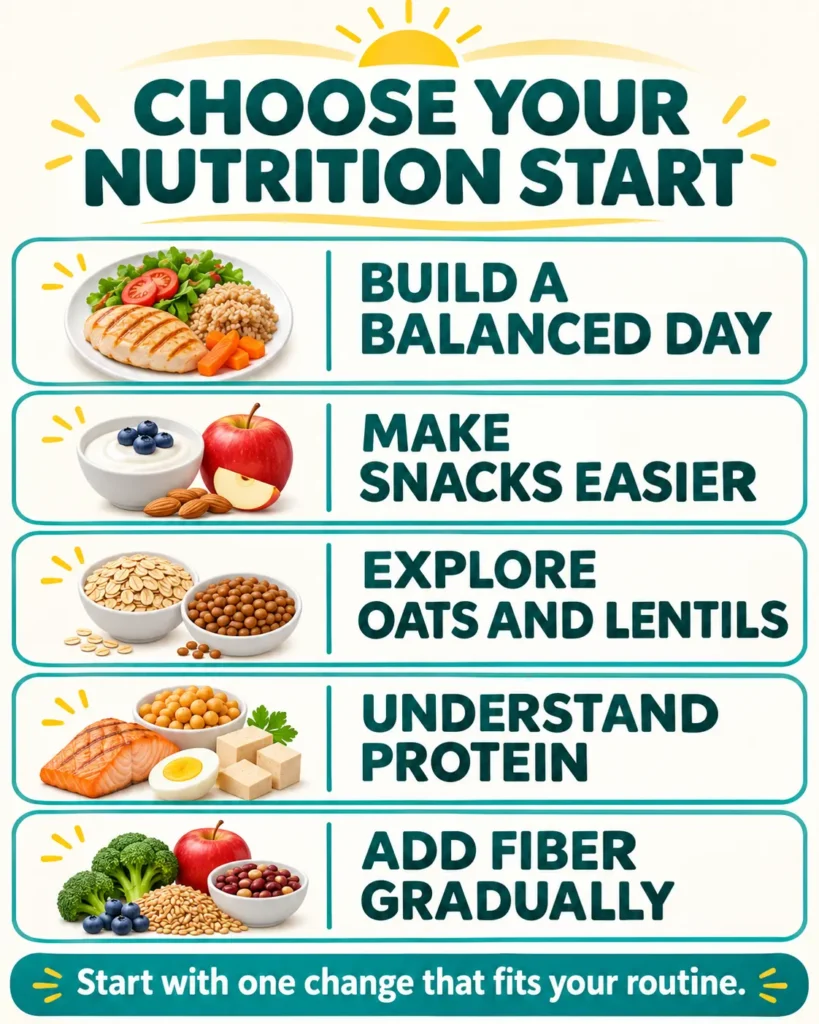
Eating well does not have to be expensive or complicated
Frozen produce, canned beans, plain oats, leftovers, eggs, and shelf-stable options can all be useful. Food choices should fit allergies, cultural preferences, appetite, access, and any health-related dietary requirements. If a meal pattern is too burdensome, simplify it rather than pursuing perfection.
When food is not the whole answer to low energy
Diet supports normal body function, but feeling exhausted can also involve sleep, stress, medications, anemia, thyroid conditions, and other health issues. If fatigue lasts for weeks, affects ordinary activities, or is unexplained, talk with a healthcare professional rather than relying on supplements or restrictive diets. Seek prompt medical help for severe or sudden concerning symptoms.
For broader support, our guide to nutrition during stressful periods is also available:
Nutrition for Stress: Eating Patterns, Nutrients, and Supplements — Food routines and the limitations of stress-related supplement claims.
A practical takeaway
Pick one guide and one realistic meal change this week. Learn how the food fits your life, notice whether it is workable, and adjust as needed. Consistency and variety matter more than a perfect menu.